The Enigmatic Life and Contested Legacy of Explorer and Operative Leonard Francis Clark

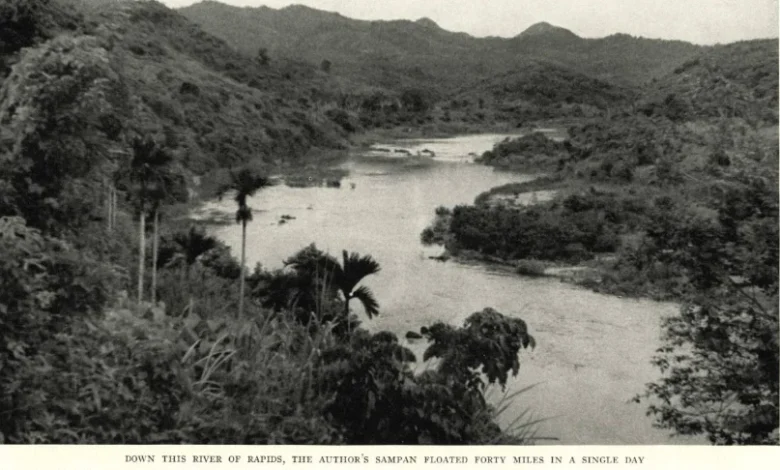
Born in British Columbia in 1907, Leonard Francis Clark remains one of the most polarizing figures in the history of 20th-century exploration. A man who occupied the murky intersection of intelligence gathering, professional mountaineering, and literary myth-making, Clark’s life reads like a synthesis of pulp fiction and geopolitical history. While he was celebrated in his lifetime as a daring adventurer, modern scrutiny suggests that his primary legacy is not that of an explorer, but of a complex operative whose narratives were frequently embellished to serve personal or state interests. His mysterious death in the Venezuelan Amazon in 1957 serves as a final, fitting chapter to a life defined by deliberate obfuscation.
A Chronology of Ambition and Intelligence
Leonard Clark’s trajectory was marked by a rapid transition from a young wanderer to a seasoned government asset. Following his birth in Canada and his subsequent upbringing in California after the death of his father, Clark pursued a life of mobility. By the 1930s, he had established himself as a traveler, undertaking expeditions in Borneo and later in the South China Sea. These early years provided the foundation for his recruitment by the Office of Strategic Services (OSS), the precursor to the Central Intelligence Agency.
During the Second World War, Clark operated extensively within the China-Burma-India theater. His association with General Dai Li—often described as the "Himmler of China"—placed him at the center of brutal anti-Communist operations. Clark’s role in organizing guerrilla networks and facilitating the Japanese surrender in Taiwan solidified his status within Western intelligence circles. However, his work in the late 1940s, particularly his 1949 expedition to Tibet, suggests his motives were far from purely scientific. Operating with the support of the anti-Communist warlord Ma Bufang, Clark attempted to map potential escape routes and defensive positions, aiming to establish the Tibetan highlands as a bulwark against the encroaching People’s Liberation Army.

Scientific Discrepancies and Geographic Claims
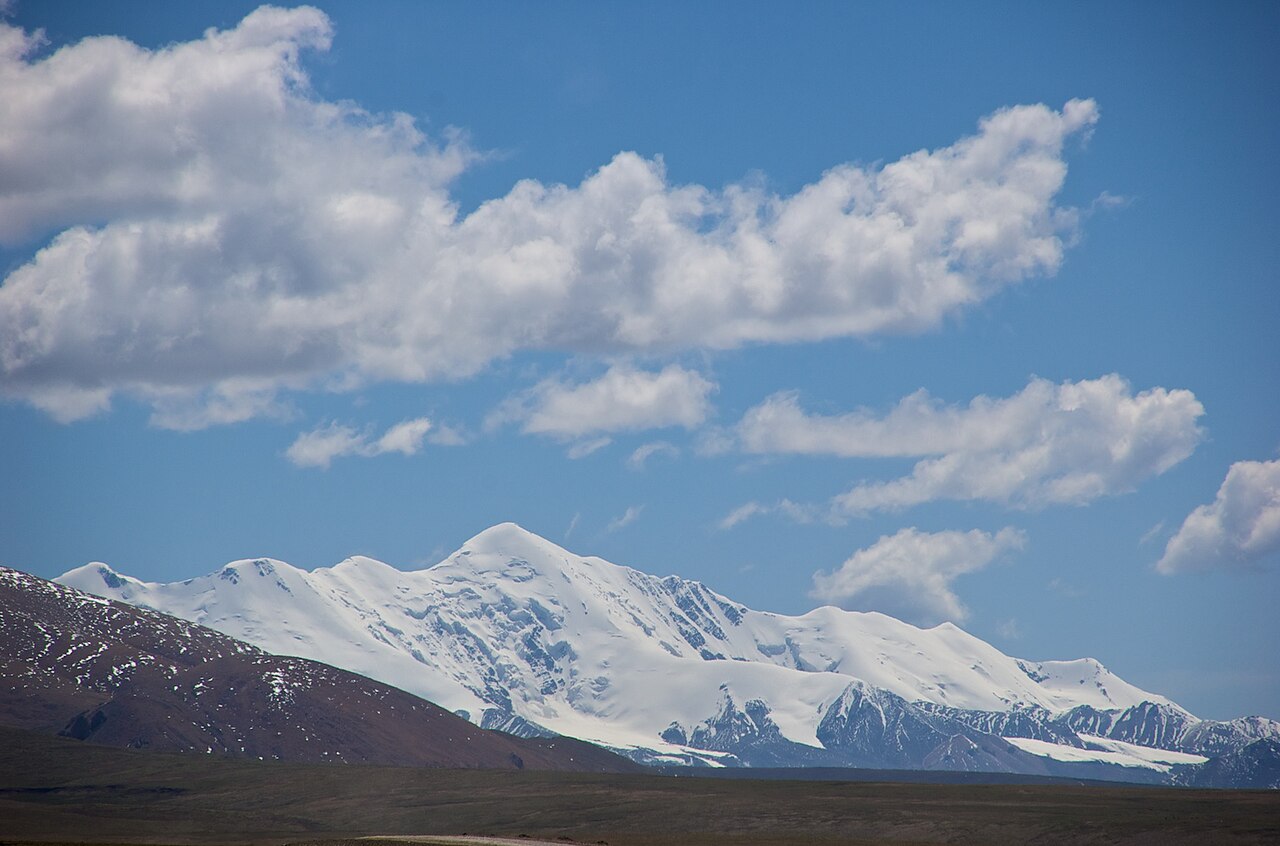
Clark’s literary output, including works like The Marching Wind and The Rivers Ran East, brought his exploits to a global audience. Yet, these accounts were immediately met with skepticism by the scientific community. His claim that the mountain Amne Machin stood at 9,040 meters—making it taller than Mount Everest—was rapidly dismantled by cartographers and mountaineers.
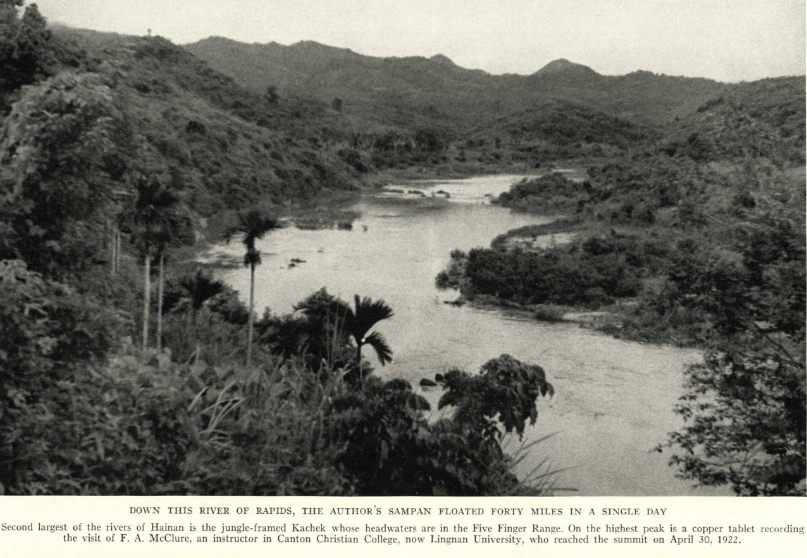
The analytical consensus, spearheaded by experts such as Bradford Washburn, highlighted a fundamental lack of rigor in Clark’s surveying methodology. Where professional geographers utilized precise triangulation and established instrumentation, Clark relied on inconsistent data and equipment that he himself admitted was subpar. This pattern of exaggeration extended to his anthropological observations. His descriptions of indigenous peoples in Hainan and the Amazon often mirrored the tropes of contemporary pulp fiction rather than objective ethnographic study. His claims regarding the heights of local populations and the presence of specific fauna, such as venom-spitting snakes in South America—a region where such species do not exist—further undermined his credibility as an explorer.

The Canton Incident: A Diplomatic and Legal Crisis
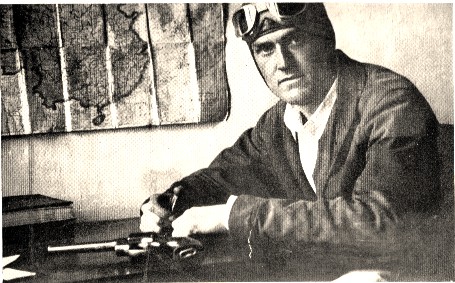
The most tangible evidence of Clark’s clandestine life occurred in November 1949, when a violent confrontation in Canton left two fellow intelligence officers dead. The incident, which resulted in the deaths of Harold Harris and Willard Freeman, remains shrouded in ambiguity. Official reports described a domestic scene involving a .32 caliber pistol, an alleged affair, and a struggle that left Clark wounded.
The legal fallout was significant. With the Chinese Communist Party tightening its grip on the region, Clark’s detention presented a diplomatic liability for the United States. The intervention of General William Donovan, the former head of the OSS, proved critical. Through high-level State Department pressure, Clark was secured a release, purportedly to prevent the disclosure of sensitive intelligence regarding his work with Dai Li. This event underscores the extent to which Clark’s "exploration" was frequently secondary to his role as a high-stakes intelligence operative.
Extractive Agendas and Colonialist Undertakings
Beyond his role as a spy, Clark’s expeditions were intrinsically linked to Western economic interests. In his hunt for the mythic city of El Dorado, he acted as a bridge for commercial entities interested in the vast, untapped resources of the South American interior. His documentation of medicinal plants was not merely a scientific endeavor but a survey for pharmaceutical potential.
Baron Wolfenegg’s candid remark regarding the utility of Clark’s writing for "colonizing this vast jungle" highlights the broader, often ignored implication of his work: the commodification of the Amazonian frontier. Clark provided a romanticized veneer for activities that ultimately facilitated the expansion of extractive capitalism. His books served as both a distraction from and a justification for the encroaching influence of foreign corporations in indigenous territories.
The Final Mystery: Death in the Orinoco
The circumstances of Leonard Clark’s death in 1957 remain as contentious as his life. Whether he succumbed to an accident, such as a drowning, or was killed by indigenous groups, as some accounts suggest, is impossible to verify with total certainty. His death at age 49, deep in the diamond-rich regions of the Orinoco, effectively prevented any final accounting of his career.
Historical records regarding his death are sparse, hindered by the remote nature of his final expedition and his penchant for operating outside of formal, transparent channels. In many respects, his demise mirrors the narrative arc he constructed for himself: an enigmatic figure disappearing into the "wild," leaving behind a trail of conflicting stories and unverified claims.

Conclusion: Evaluating a Complex Legacy
The case of Leonard Clark forces a critical evaluation of the "Great Explorer" archetype. By comparing his published accounts with archival data, census records, and contemporary scientific critiques, one finds a portrait not of a pioneer, but of a calculated myth-maker. His legacy is one of moral and factual ambiguity.
As a writer, he possessed a talent for capturing the public imagination; as an operative, he was a fixture in the shadow wars of the Cold War. However, his failure to adhere to the empirical standards of his time, combined with his role in facilitating extractive geopolitical agendas, relegates his scientific contributions to the realm of fiction. The "secret face" that Clark alluded to in his writing may indeed be the only part of his story that accurately reflected his reality. In the final analysis, Leonard Clark stands as a reminder that the history of exploration is often written by those who, above all else, understood how to craft a compelling, if ultimately hollow, narrative.
Related posts: