Thompson Rome officially opens its doors as a premier art-focused destination within a restored 1940s landmark

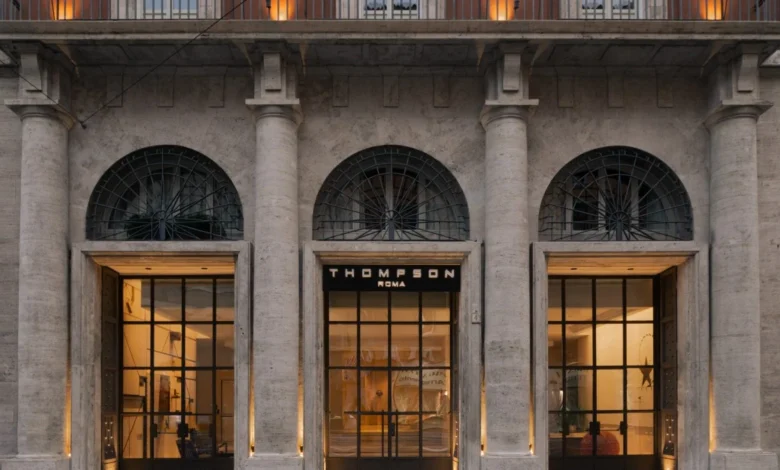
The Eternal City has long served as a global epicenter for art and architectural history, but the landscape of luxury hospitality in Rome is undergoing a significant transformation with the official opening of the Thompson Rome. Situated within a meticulously restored 1940s landmark, the property represents a strategic expansion for the Thompson Hotels brand, a boutique lifestyle flag under the Hyatt Hotels Corporation umbrella. By blending mid-century modern architectural heritage with contemporary design sensibilities, the hotel seeks to position itself as a focal point for both international travelers and the local Roman cultural scene.

Architectural Significance and Historical Preservation
The building housing the Thompson Rome is not merely a hotel site; it is a piece of post-war Italian architectural history. Constructed in the 1940s, the structure embodies the austere, rationalist design movements that defined Rome’s urban expansion during that era. The restoration process, which took several years to complete, required a delicate balance between modernizing the infrastructure to meet current hospitality standards and preserving the original facade and internal structural integrity.
Restoration architects worked closely with local authorities to ensure that the character of the 1940s building remained intact. This included the retention of original stone elements, the restoration of historical staircases, and the careful integration of modern glazing to improve energy efficiency without compromising the building’s aesthetic profile. The result is a synthesis of historical grandeur and industrial-chic refinement, offering a distinct departure from the more traditional, ornate baroque hotels often found in the city center.

The Art-Focused Concept
What distinguishes the Thompson Rome from its competitors in the competitive Roman luxury market is its explicitly art-centric programming. Rather than relying on generic decor, the hotel functions as a curated gallery space. The interior design team collaborated with local Roman artists and international curators to source works that reflect the city’s complex history and its vibrant contemporary art scene.
The lobby and public spaces serve as rotating exhibition areas. By fostering partnerships with local galleries and individual creators, the hotel intends to create a "living room" environment where guests are exposed to emerging Italian talent. This strategy aligns with the broader "Thompson" brand philosophy, which emphasizes a sense of place and local immersion, moving away from the standardized luxury experience of larger, more traditional hotel chains.

Chronology of the Project
The journey to the opening of the Thompson Rome has been a multi-year endeavor marked by meticulous planning and execution:
- 2021: Initial acquisition of the 1940s landmark property by investment groups affiliated with Hyatt’s expansion strategy.
- 2022: Architectural assessments and the commencement of structural preservation efforts.
- 2023: Interior design conceptualization, focusing on the blend of mid-century aesthetics and modern luxury.
- 2024: Construction and retrofitting phases, involving extensive infrastructure upgrades to meet 21st-century sustainability and safety codes.
- 2025: Final staging, installation of art collections, and pre-opening staff training to align with the brand’s high-touch service standards.
- October 2026: Official opening to the public, marking the brand’s entry into the Roman hospitality market.
Supporting Data: The Rome Hospitality Market
The entry of Thompson Rome into the Italian market comes at a time of robust growth for Rome’s luxury travel sector. According to data from the Italian National Institute of Statistics (ISTAT) and recent tourism market reports, Rome has consistently seen a year-over-year increase in luxury room inventory demand.

In 2025, Rome recorded one of its highest tourist arrivals in a decade, with a notable shift toward "experiential travel." Luxury travelers are increasingly prioritizing properties that offer cultural engagement rather than just premium amenities. Market analysts note that the luxury hospitality segment in Rome has grown by approximately 12% in revenue per available room (RevPAR) over the past 24 months. The Thompson Rome’s focus on art and design is a direct response to this demand, catering to a demographic that values cultural capital alongside comfort.
Official Responses and Strategic Positioning
While official statements from Hyatt leadership emphasize the brand’s commitment to growth, the move into Rome is viewed as a calculated step to bolster the company’s presence in high-traffic European capitals. "Rome is an essential city for our portfolio," a Hyatt spokesperson indicated in a recent corporate briefing regarding European expansion. "Our goal with the Thompson brand is to create spaces that act as a bridge between the historical legacy of the city and the contemporary lifestyle of the modern traveler."

Industry experts suggest that the Thompson brand’s "lifestyle" classification provides a competitive advantage. Traditional luxury hotels in Rome are often associated with heritage and formal service, whereas the Thompson model focuses on a more relaxed, social-oriented atmosphere. This approach is designed to attract a younger demographic of affluent travelers—the "millennial luxury" segment—who are less interested in traditional white-glove service and more focused on curated experiences, social connectivity, and aesthetic authenticity.
Broader Impact and Urban Implications
The opening of the Thompson Rome has implications for the surrounding district. Large-scale restorations of this nature often catalyze further development in their immediate vicinity. As the property draws high-net-worth individuals, auxiliary businesses—such as upscale boutiques, high-end dining, and smaller art galleries—often follow.

However, such developments also bring the responsibility of managing the impact on the local community. The project has undergone rigorous environmental and urban impact assessments to ensure that it contributes positively to the neighborhood. By repurposing an existing structure rather than engaging in new construction, the project demonstrates a commitment to sustainable development, a growing priority for European city planners.
Analyzing the Future of the Boutique Luxury Segment
The success of the Thompson Rome will likely serve as a litmus test for the viability of the "lifestyle luxury" model in Italy’s historic centers. While legacy properties continue to dominate the high-end market, the shifting preferences of travelers suggest that the appetite for boutique-style hotels is only growing.

The inclusion of art-focused programming is not merely an aesthetic choice; it is a business strategy designed to ensure repeat visits. By changing the art collections periodically, the hotel provides a reason for guests to return, effectively turning the property into a destination that evolves over time. This dynamic approach contrasts sharply with the static nature of traditional luxury hotels, which often rely on unchanging decor.
Conclusion: A New Chapter for Roman Hospitality
As the Thompson Rome welcomes its first guests, the industry will be watching closely to see how the marriage of 1940s history and contemporary art resonates with the global traveler. The project stands as a testament to the enduring appeal of Rome as a destination, while simultaneously proving that the city is capable of evolving its hospitality offerings to meet the needs of a new generation.

By grounding its identity in the history of the building and the vibrancy of the current art scene, the Thompson Rome has successfully established itself as more than just a place to sleep. It is an active participant in the city’s cultural dialogue, setting a new benchmark for how global hotel brands can meaningfully integrate into the historic fabric of Europe’s oldest cities. Whether this model becomes the standard for future developments remains to be seen, but for now, the Thompson Rome represents a sophisticated addition to one of the world’s most storied travel destinations.