The Ultimate Guide to European Travel Connectivity: Navigating eSIM Data Plans and Avoiding High Roaming Fees


Staying connected while traveling through Europe has undergone a significant technological shift in recent years, moving away from physical plastic SIM cards toward embedded digital technology known as eSIMs. Traditionally, international travelers arriving in European destinations relied on purchasing local prepaid SIM cards at airports, kiosks, or carrier storefronts, a process that required swapping tiny cards and meticulously keeping track of home-country chips. Today, the widespread adoption of embedded subscriber identity modules allows modern smartphone users to connect seamlessly to European mobile carriers entirely through software. This evolution offers unprecedented convenience for tourists, business travelers, and backpackers alike, though navigating the expanding marketplace of digital data plans requires a clear understanding of technical specifications, pricing models, and regional coverage limitations.

The Necessity of Reliable Mobile Data in Modern Europe
For contemporary travelers, maintaining high-speed mobile data access throughout Europe is no longer a luxury but an operational necessity. Relying on sporadic free public Wi-Fi networks has proven increasingly impractical across major European cities. The daily infrastructure of modern European tourism and travel is deeply digitized. Essential functions—such as accessing digital railway and airline boarding passes, utilizing real-time navigation via Google Maps or Apple Maps, booking rideshare services like Uber, scanning QR-code restaurant menus, and utilizing contactless mobile payment systems—depend entirely on a stable, high-speed cellular data connection. Furthermore, public transportation networks rely on internet connectivity to provide real-time schedule updates, service disruptions, and platform changes, making uninterrupted cellular data an indispensable travel asset.

Comparative Analysis: International Roaming vs. Prepaid eSIM Plans
Travelers originating from North America, Australia, and other non-European regions frequently consider utilizing international data roaming packages offered by their domestic domestic telecommunications providers. However, these traditional domestic carrier plans often present severe financial and technical drawbacks. Major domestic providers commonly structure their international offerings around daily pass models or limited monthly allowances accompanied by steep overage penalties.

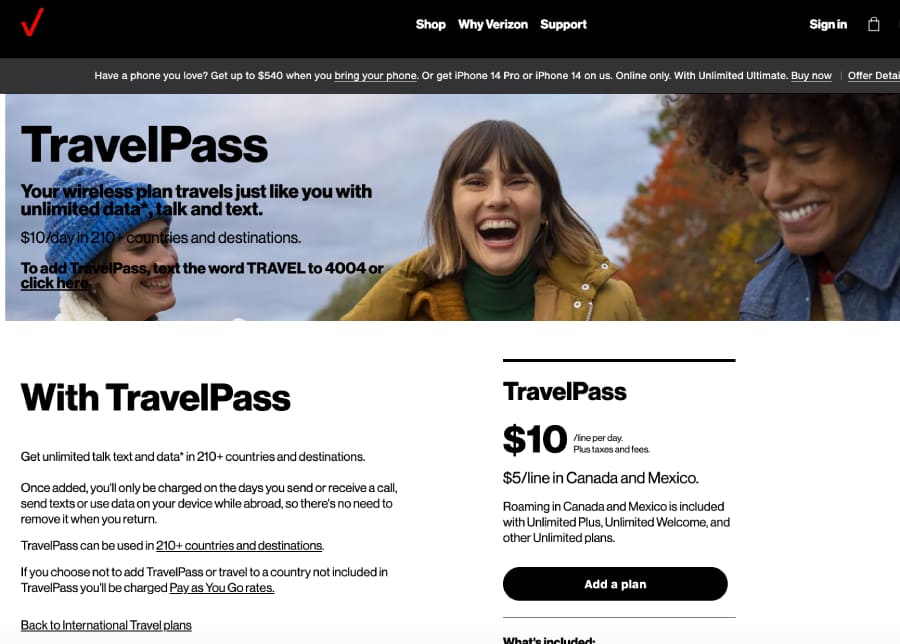
For instance, prominent U.S. carriers such as AT&T and Verizon typically charge standardized daily international fees for users accessing data abroad, while simultaneously imposing throttling thresholds that reduce connection speeds to sluggish 3G levels after heavy daily usage. Other major operators advertise unlimited international data but cap high-speed allotments at modest thresholds, reducing subsequent speeds to basic 2G connections that struggle to load basic web applications or navigation tools. Upgrading these domestic plans for higher-speed international data frequently incurs substantial premium charges.
In contrast, utilizing prepaid third-party eSIM data plans acquired specifically for European travel can reduce overall connectivity costs significantly. While domestic daily passes accumulate rapidly over a multi-week itinerary, specialized European eSIM data packages typically cost a fraction per day, providing far superior data allowances and unthrottled high-speed network connections.
Leading European eSIM Providers and Data Plan Options
The European telecommunications landscape benefits uniquely from regulatory policy changes enacted by the European Union, which outlawed mobile data roaming fees across member states. Consequently, a data plan purchased from an operator in one EU country operates seamlessly across all other EU member nations without incurring additional roaming charges. Industry experts and frequent travelers frequently highlight several standout eSIM providers and specific packages optimized for European travel.

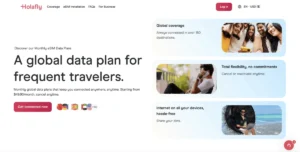
Holafly offers comprehensive eSIM solutions characterized by unlimited data packages with customizable durations ranging from one to ninety days. This structure eliminates the risk of travelers over-purchasing or under-purchasing data for their specific itinerary length, with daily rates scaling more economically for extended durations.
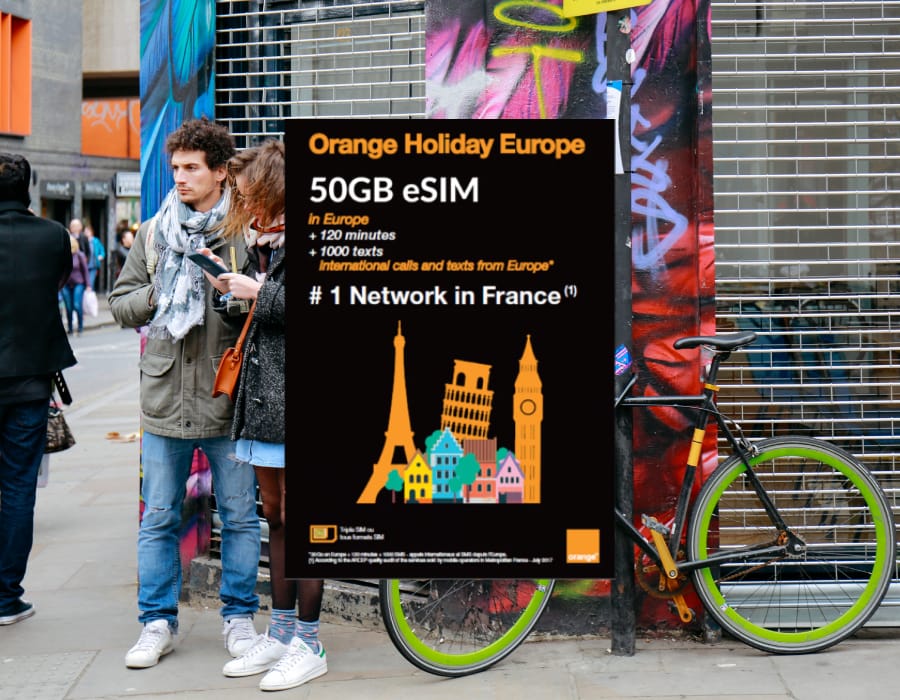
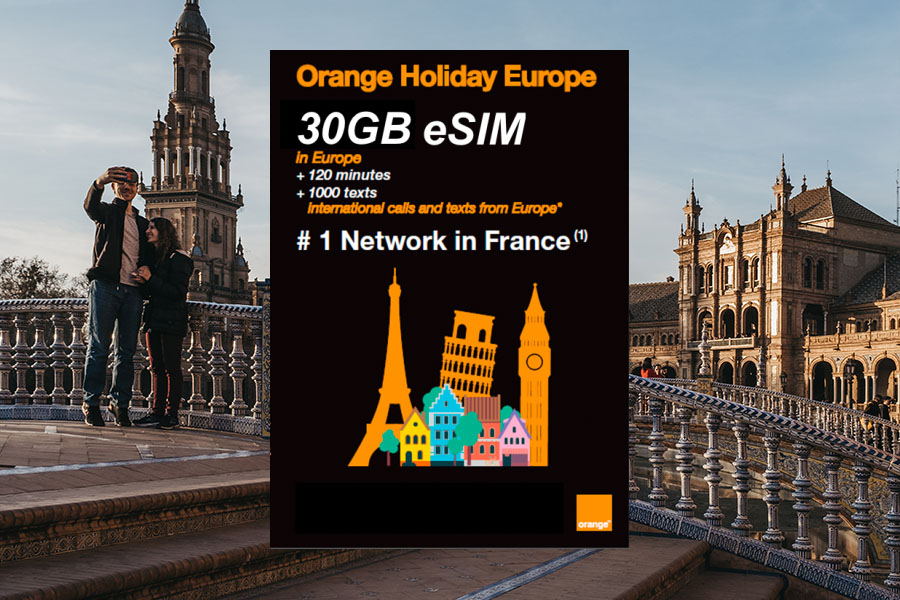
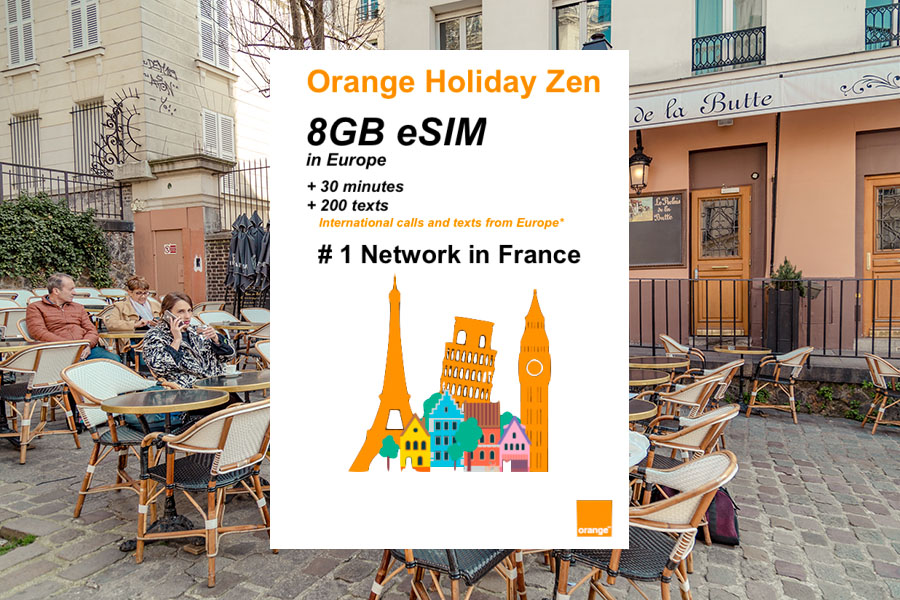
SimOptions functions as an official digital marketplace for major established European telecommunications networks, including Orange, Bouygues Telecom, and O2. Among their most popular offerings is the Orange Holiday Europe eSIM series. The standard 30GB variant, valid for fourteen days, and the enhanced 50GB or 70GB variants, valid for twenty-eight days, provide robust high-speed data allotments alongside traditional voice calling and text messaging features. Crucially, these plans assign the user an active French phone number capable of making and receiving calls throughout Europe, while fully permitting mobile hotspot tethering to share data with other devices.
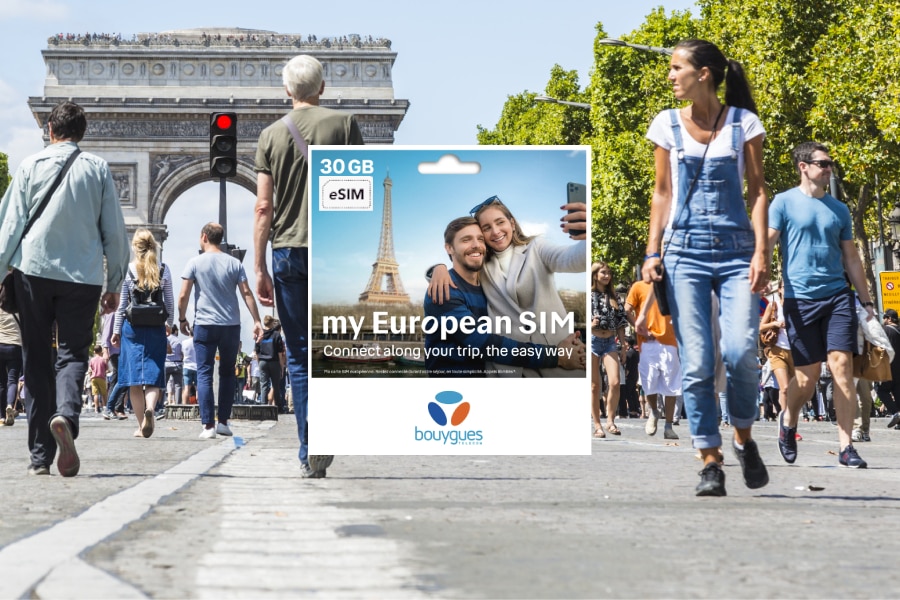
Similarly, Bouygues Telecom offers a competitive European eSIM package featuring substantial data allowances and unlimited voice calls within Europe over a thirty-day validity period. For budget-conscious or lighter data users, options such as the Smart Comfort X eSIM provide modest data caps without accompanying voice minutes, relying on internet-based communication applications for voice and messaging needs.
Technical Fundamentals: Understanding eSIM Technology

An eSIM functions as a digital equivalent of the traditional physical SIM card. Rather than inserting a physical chip into a dedicated tray on the side of a smartphone, users activate a digital profile by scanning a quick response (QR) code or installing a carrier application. This technological advancement offers multiple operational benefits for international travelers.
First, the elimination of physical card swapping removes the risk of losing or damaging the traveler’s primary domestic SIM card. Second, the dual-SIM capabilities of modern smartphones enable users to maintain their home-country phone number active for critical security functions—such as receiving banking fraud alerts, two-factor authentication codes, and important text messages—while simultaneously routing all cellular data usage through the affordable European travel eSIM. Furthermore, digital delivery allows purchasers to acquire and pre-install their eSIM profiles prior to departure, avoiding shipping fees and allowing immediate activation upon arrival.
Device Compatibility and Regional Coverage Considerations
Virtually all modern smartphones manufactured since 2019 support eSIM technology, including recent generations of Apple iPhones and major Android manufacturers such as Google Pixel and Samsung Galaxy. Notably, smartphone models sold within the United States market, beginning with the iPhone 14 series, have omitted physical SIM card trays entirely, operating exclusively on dual eSIM architecture. International models continue to offer hybrid physical and digital dual-SIM functionality.
Despite the broad coverage provided by EU roaming regulations, travelers must remain mindful of geographic outliers. Switzerland and the United Kingdom are not members of the European Union, meaning certain regional data plans may exclude coverage for these nations unless explicitly stated. Travelers planning excursions to Switzerland or the UK should verify network partner lists before purchasing a specific eSIM package. Additionally, travelers must ensure their mobile devices are factory-unlocked by their domestic carriers prior to departure to prevent software-based network restrictions from blocking alternative eSIM profiles.
Strategic Recommendations for Managing Mobile Data Abroad
To maximize efficiency and minimize unexpected data consumption while traveling in Europe, digital connectivity experts recommend several practical strategies. Users should download offline maps via Google Maps prior to departure, as satellite GPS functionality operates independently of cellular data networks. Relying on messaging applications such as WhatsApp facilitates seamless communication with local contacts, hotels, and hosts without requiring traditional cellular voice minutes. Finally, carrying a portable external power bank is strongly advised, as continuous navigation, photography, and background data synchronization accelerate battery depletion on mobile devices during extended days of sightseeing.