JetBlue President Marty St. George Warns of Continued Airfare Volatility Amid Escalating Operational Costs

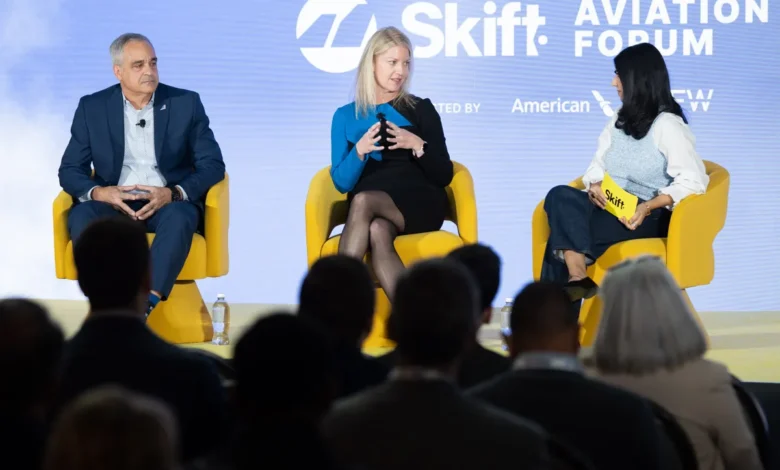
JetBlue President Marty St. George has signaled that the airline industry remains in a state of pricing instability, noting that current fare structures have yet to reach a sustainable equilibrium. As carriers grapple with a persistent surge in operational expenditures—ranging from rising labor costs to fluctuating fuel prices—St. George’s assessment underscores the ongoing pressure on airline balance sheets. This commentary serves as a precursor to his featured appearance at the Skift Aviation Forum 2026, where he is scheduled to engage in a high-level dialogue with Brian Sumers, Editor of The Airline Observer. The session, slated for Wednesday, November 11, serves as a pivotal bridge between the conclusion of the Skift Commerce Summit and the opening of the aviation-focused conference at the TWA Hotel at JFK International Airport.
The Economic Backdrop of Modern Aviation Pricing
The airline industry is currently navigating a complex economic landscape characterized by the "triple threat" of inflationary pressures: labor, maintenance, and fuel. In recent fiscal quarters, major U.S. carriers have reported significant spikes in non-fuel expenses, driven largely by new labor contracts that have increased pilot and flight attendant wages to historic levels. While post-pandemic demand for leisure travel initially provided carriers with the pricing power to pass these costs onto consumers, that momentum has begun to decelerate.
JetBlue’s internal projections reflect a broader industry reality. During recent earnings calls, airline executives have pointed to a shift in consumer behavior, where the "revenge travel" spending spree has given way to a more price-sensitive environment. St. George’s assertion that pricing has not found its equilibrium suggests that airlines are still experimenting with how much of the increased cost burden can be absorbed by the passenger before demand elasticity triggers a downturn in bookings.
Chronology of Industry Challenges: 2024–2026
The lead-up to the 2026 forum at the TWA Hotel is defined by several key milestones that have shaped current pricing strategies:
- Early 2024: The industry experienced a brief period of margin expansion as capacity constraints prevented oversupply, allowing for sustained high ticket prices.
- Late 2024 to Mid-2025: Operational costs began to outpace revenue growth. The cost per available seat mile (CASM) rose across the industry, driven by increased airport infrastructure fees and aging fleet maintenance requirements.
- November 2025: Major U.S. carriers began to revise their 2026 guidance, acknowledging that the "post-pandemic premium" was effectively evaporating.
- November 11, 2026: The Skift Commerce Summit concludes with the St. George-Sumers keynote, setting the stage for 2027 strategic planning.
Data Analysis: The Fuel and Labor Equation
Commercial and revenue leaders across the aviation sector are currently focused on a single, critical variable: the fuel-to-fare ratio. Historically, fuel accounted for roughly 20% to 25% of an airline’s total operating expense. In the current economic climate, that percentage remains highly volatile due to geopolitical tensions affecting global oil supply chains.
Supporting data from the Bureau of Transportation Statistics (BTS) indicates that while jet fuel prices have stabilized compared to the peaks of 2022, they remain roughly 30% higher than the five-year pre-pandemic average. When this is coupled with the wage increases—which for some airlines have reached cumulative double-digit growth—the "break-even" load factor for domestic flights has moved higher. This means that airlines must fill more seats at higher prices just to cover the cost of operating a single flight, leaving little room for the price drops that consumers have historically expected during off-peak seasons.
Official Perspectives and Industry Reaction
While St. George has been vocal about the necessity of pricing recalibration, his peers at competing legacy and low-cost carriers have echoed similar concerns. During recent industry roundtables, executives have suggested that the current pricing model is undergoing a structural change. Rather than relying on massive, across-the-board fare hikes, airlines are increasingly turning to unbundled services and dynamic ancillary pricing to bridge the revenue gap.
The consensus among industry analysts is that the era of "cheap travel" is unlikely to return in the near term. The financial community, specifically equity analysts covering the airline sector, has been pressuring management teams to prioritize margin recovery over market share. As noted in the program guide for the Skift Aviation Forum, "Five Decisions in the Room," leadership teams are now tasked with deciding how to optimize their network footprints in 2027—a task that directly hinges on whether they can maintain current fare levels without alienating the core consumer base.
Broader Implications for the 2027 Strategic Horizon
The discourse at the TWA Hotel is expected to focus heavily on the 2027 planning cycle. For commercial leaders, the central challenge is determining if the market will bear further price increases, or if the industry has reached a "ceiling" where demand will begin to contract significantly.
Several key implications arise from this situation:
- Capacity Discipline: If pricing power continues to wane, airlines may resort to aggressive capacity cuts to maintain fare levels. This would result in reduced flight frequencies on secondary routes, potentially affecting connectivity in smaller markets.
- Product Segmentation: Airlines are likely to double down on premium-cabin offerings. By focusing on business and "premium-leisure" travelers who are less price-sensitive, carriers hope to insulate their revenue streams from the volatility of the economy-class market.
- Ancillary Revenue Expansion: Expect a continued push toward monetizing every aspect of the passenger experience. From seat selection to expedited boarding and inflight services, the base fare is increasingly being treated as a commodity, while "total trip cost" becomes the primary revenue driver.
- Operational Efficiency: With limited room to raise prices, the focus will shift to internal cost-cutting. This includes the accelerated retirement of older, fuel-inefficient aircraft and the implementation of AI-driven scheduling tools to minimize fuel burn and labor overtime.
Conclusion: The Path to Equilibrium
As Marty St. George prepares to take the stage, the industry stands at a crossroads. The transition from the volatile, pandemic-recovery era to a sustainable long-term model requires a delicate balance of cost management and revenue optimization. The aviation sector has proven remarkably resilient over the last three years, but the challenge of 2027 will be defined by the ability to navigate a consumer base that is increasingly weary of high prices.
The upcoming sessions at the Skift Aviation Forum are not merely theoretical; they represent the frontline of decision-making for an industry that supports millions of jobs and serves as the backbone of global commerce. As revenue leaders analyze their 2027 models, the question posed by the forum—how much of the fuel bill can fares carry?—will remain the defining metric of the year to come. Whether the industry finds its equilibrium through market correction or through structural shifts in how passengers pay for air travel remains to be seen, but the urgency of the conversation is undeniable.
The dialogue at JFK will provide the first public glimpse into how the nation’s top carriers intend to manage these pressures while maintaining the operational integrity and customer service standards that the market demands. With the 2027 planning season officially commencing, the industry is entering a period where the margin for error is thinner than ever, and the strategies formulated in the next few days will likely dictate the financial trajectory of the airline sector for the remainder of the decade.