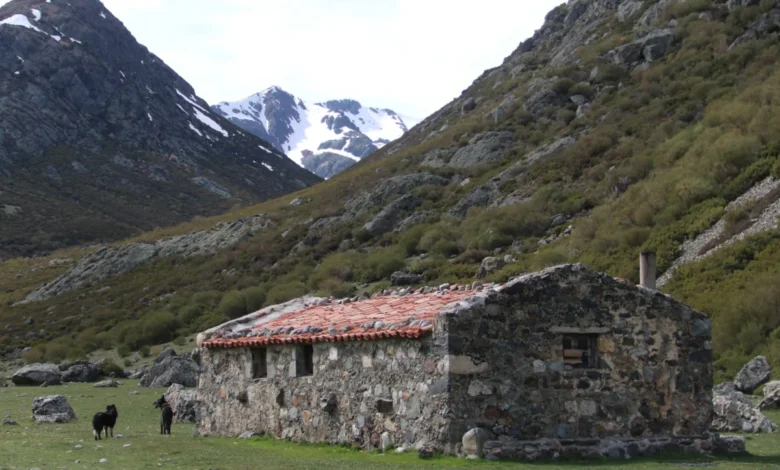
The first thing one notices in an abandoned Spanish village is the absolute, authoritative presence of avian life. Outside crumbling stone facades, swallows swoop zestfully up and down in wavy crests and troughs, cutting through the mountain air, darting through broken windows and shattered front doors at reckless speed, and slipping through structural gaps in the masonry with astonishing precision before alighting casually in their nests. It is a spectacle that suggests they not only know every shadowed corner of the building but that they hold absolute title to the real estate.
In truth, they do own the place. With no human inhabitants remaining, nature has reasserted its dominion. According to demographic and municipal estimates, Spain contains more than 3,000 entirely abandoned villages, a stark physical manifestation of a sweeping socioeconomic phenomenon known locally as la España Vaciada—the Emptied Spain.
This rural exodus is not isolated to the Iberian Peninsula. Across vast swaths of rural Europe, demographic shifts, agricultural modernization, and urbanization have left millions of hectares of once-cultivated land devoid of human stewardship. As humans retreat to metropolitan centers, the natural world is rapidly moving back in, transforming the continent’s ecological landscape and sparking intense debate among conservationists, economists, and rural policymakers regarding the future of European ecosystems.
Main Facts and the Scope of Rural Depopulation
The depopulation of Spain’s interior is one of the most significant demographic shifts in modern Western European history. The geographic epicenter of this trend is often referred to as the "Lapland of Southern Europe"—a vast, mountainous, and arid interior region spanning provinces such as Teruel, Soria, Guadalajara, and Cuenca.
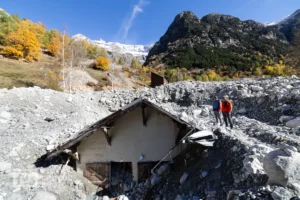
In villages like Las Casillas de Bezas, located in the eastern province of Teruel, the physical evidence of this evacuation is striking. Visitors navigating the high-stepping terrain over encroaching brambles and ducking darting swallows are confronted with a profound existential question: are they walking through the remnants of an ancient, forgotten past, or are they stepping into a profound, experimental future of deep rewilding?
Statistical data underscores the severity of the crisis. While Spain’s total population has grown in recent decades largely due to international immigration, its rural interior has hollowed out. More than half of Spain’s 8,100 municipalities are currently classified as being at risk of severe depopulation. Provinces like Teruel boast population densities lower than four inhabitants per square kilometer—comparable to the least populated areas of Arctic Scandinavia, yet situated in the heart of a major Western European economy.
Chronology of the Spanish Rural Exodus
To understand how thousands of villages arrived at total abandonment, demographers point to a specific, accelerated timeline of economic and social transformation in the 20th century.
- Pre-1950s (Agrarian Subsistence): For centuries, Spain’s interior sustained a largely agrarian, self-sufficient population. Villages like Las Casillas de Bezas were nodes of intense human activity, characterized by terrace farming, livestock grazing, and forestry management that fundamentally shaped the surrounding Mediterranean landscape.
- 1960–1975 (The Great Rural Flight): Under the Plan de Estabilización and rapid industrialization policies of the Franco regime, Spain experienced a massive internal migration. Millions of rural residents abandoned their agricultural homesteads to seek employment in industrial hubs such as Madrid, Barcelona, Valencia, and Bilbao, as well as northern European manufacturing centers.
- 1980s–1990s (Institutional Neglect and Mechanization): Following the return to democracy and Spain’s entry into the European Economic Community (now the European Union), modern agricultural machinery rendered small-scale, mountainous farming economically unviable. Public infrastructure investments concentrated heavily on urban centers, accelerating the closure of rural schools, medical centers, and transport links.
- 2000s–Present (The Threshold of Total Abandonment): The demographic baseline collapsed as aging rural populations passed away without heirs remaining in the villages. This resulted in the official or de facto abandonment of thousands of settlements, leaving municipal districts to be absorbed by neighboring towns or left entirely to nature.
Supporting Data and Ecological Implications
As human activity ceases, ecological succession takes over. Data compiled by environmental research institutes across Europe indicate that millions of hectares of agricultural land have been abandoned over the last half-century. In Spain alone, forest coverage has expanded significantly over the past 50 years, largely reclaiming former pastures and marginal crop fields.
This spontaneous rewilding has triggered profound ecological consequences:
- Faunal Recovery: Large mammals that were once pushed to the brink of extinction or local eradication in Spain—such as the Iberian wolf (Canis lupus signatus), the Eurasian lynx (Lynx lynx), wild boar, and red deer—are naturally expanding their ranges. Avian species, raptors, and insects are registering population increases in areas free from agricultural pesticides and intensive human disturbance.
- Vegetation Succession: Grasslands and shrublands are transitioning into dense scrub and secondary forests. While this increases carbon sequestration in certain areas, it introduces new environmental management challenges.
- The Wildfire Paradox: The accumulation of unchecked biomass—dead wood, dense brush, and unmanaged forests—has drastically increased the risk and intensity of catastrophic wildfires. Without traditional livestock grazing and localized forestry management to act as natural firebreaks, abandoned landscapes are frequently more vulnerable to extreme blazes during severe summer drought conditions.
Official Responses and Policy Interventions
The depopulation crisis has finally forced a systemic response from regional, national, and European Union authorities. For decades, the phenomenon was viewed merely as an inevitable consequence of economic modernization. Today, it is treated as a critical national security, cultural, and environmental challenge.
The Spanish government, under various administrations, has established the Comisionado frente al Reto Demográfico (Commissioner for the Demographic Challenge) and implemented the National Strategy against Demographic Challenge. These frameworks aim to inject public investment into rural digitalization, tax incentives for residents in depopulated areas, and support for remote working infrastructure to attract urban professionals back to the countryside—a trend colloquially accelerated by the post-pandemic rise of remote work.
Concurrently, the European Union’s Common Agricultural Policy (CAP) has increasingly shifted its focus toward supporting environmental stewardship, ecosystem services, and sustainable rural development. Agencies and NGOs are launching pilot initiatives to reintroduce traditional extensive livestock farming, recognizing that human-managed grazing is often ecologically superior to passive, unmanaged abandonment in preventing catastrophic wildfires.
Sociologists and rural development advocates, however, argue that government responses often fall short. Representatives from rural advocacy groups, such as Teruel Existe—which successfully transitioned from a social movement into a political party represented in the national parliament—argue that mere economic subsidies are insufficient. They demand constitutional guarantees for equal access to public services, healthcare, education, and high-speed telecommunications, asserting that rural depopulation is fundamentally a crisis of citizenship rights rather than mere economics.
Broader Impact and Future Outlook
The transformation of Spain’s emptying countryside offers a fascinating preview of broader European and global trends. As global urbanization rates continue to climb—with projections indicating that over two-thirds of the world’s population will live in urban areas by 2050—vast tracts of marginal rural land worldwide are expected to experience similar paths of abandonment and ecological reversion.
The implications of this "deep future" are complex and polarized. On one hand, the return of apex predators, the expansion of forests, and the recovery of native biodiversity represent a historic victory for conservation biology. Environmentalists point to Spain’s deserted highlands as proof that nature possesses an extraordinary capacity to heal when human pressures are lifted.
On the other hand, the loss of cultural heritage, the erosion of traditional ecological knowledge, and the tangible dangers of unmanaged, fire-prone wilderness remind observers that human stewardship has long played a defining role in shaping resilient ecosystems. The challenge for the 21st century will not be choosing between a fully human-dominated landscape and a completely wild one, but rather finding a sustainable equilibrium where ecological rewilding and human habitation can coexist in the vast spaces left behind by the modern world.
Related posts: