An Insider Guide to Trekking the Himalayas in Bhutan: Routes, Winter Expeditions, and the Historic Trans Bhutan Trail

The tourism landscape of the Kingdom of Bhutan is experiencing a significant evolution as international travel resumes, bringing renewed global attention to the Himalayan nation’s carefully guarded trail networks. Known for its visionary Gross National Happiness index and strict environmental conservation policies, Bhutan has long limited mass tourism through a sustainable development fee. However, recent infrastructure restoration—most notably the revival of the ancient Trans Bhutan Trail—has opened new pathways for hikers and cultural enthusiasts seeking low-impact adventures in high-altitude environments.
Historical Context and the Reopening of Ancient Pathways
Bhutan’s trail networks are rooted in centuries of history, initially functioning as critical trade conduits and pilgrimage routes connecting remote valleys in western Bhutan with Tibet. For generations, these footpaths were the only thoroughfares linking the kingdom’s formidable fortresses, known as dzongs, and sacred Buddhist monasteries. However, following modernization efforts and road construction in the 1960s, many of these historic stone paths fell into disuse and disrepair.
The restoration of Bhutan’s trails gained unprecedented momentum during the COVID-19 pandemic. Capitalizing on a period when international tourism was paused, the Bhutan Canada Foundation and the Tourism Council of Bhutan spearheaded an ambitious restoration project. Over 900 furloughed workers, local craftsmen, and community members were deployed to rebuild hundreds of miles of footpaths and historic bridges. This culminated in the landmark reopening of the 403-kilometer (250-mile) Trans Bhutan Trail in April 2022—the first time the cross-country route has been accessible to the public in six decades.
Navigating Bhutan’s Premier Routes: The Druk Path Trek
Among Bhutan’s diverse hiking portfolio, the Druk Path Trek remains one of the most frequently requested routes for travelers seeking a balance of alpine wilderness and cultural heritage. Spanning roughly 36 to 45 kilometers (22 to 28 miles), the trail traces an old mule route connecting the western valleys of Paro and Thimphu.

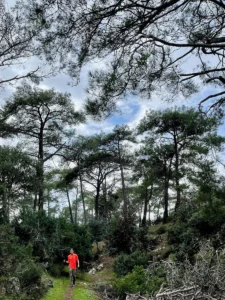
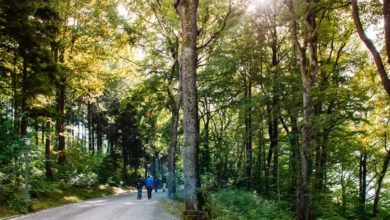
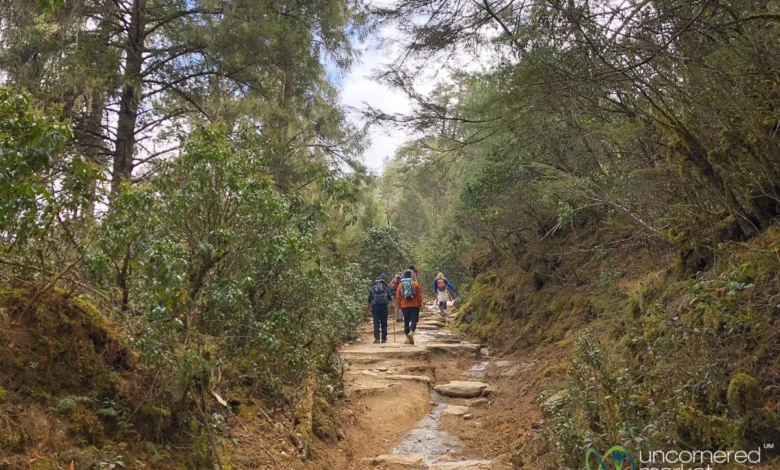
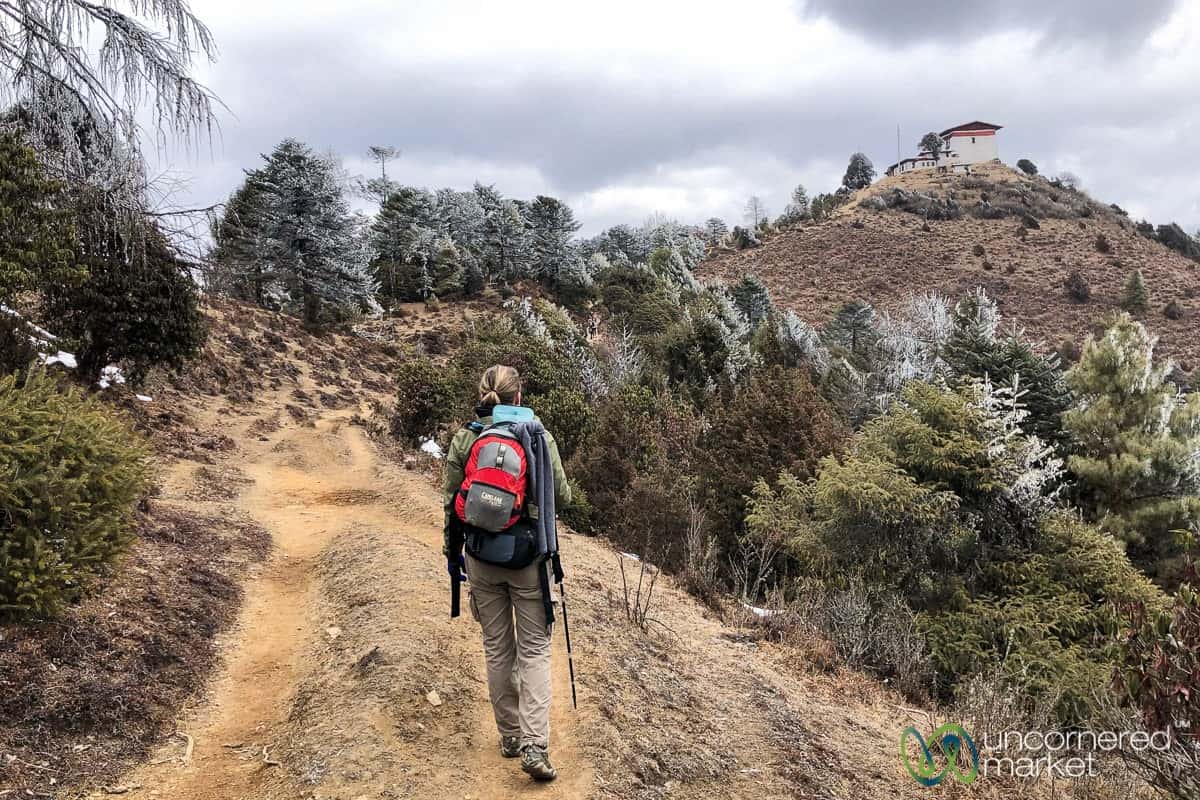
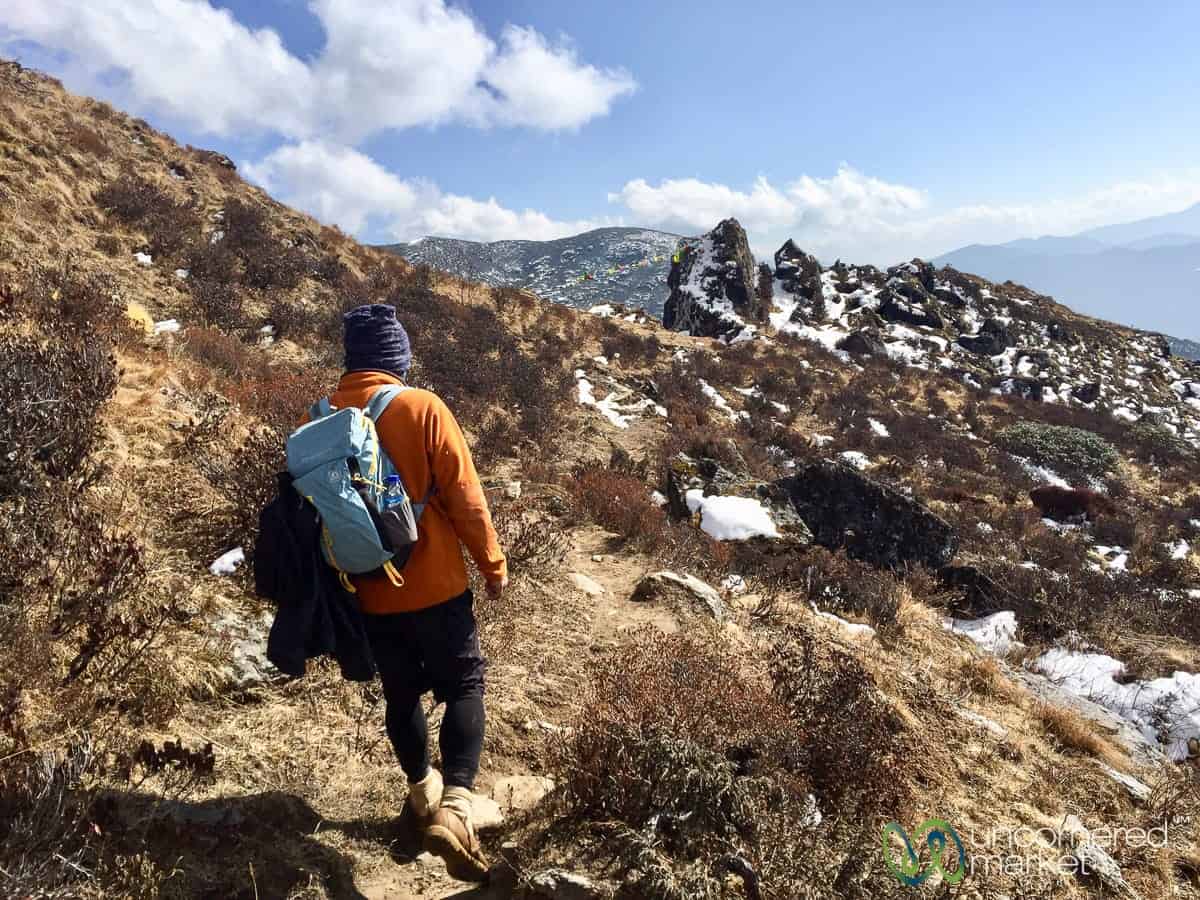
The route typically requires four to six days to complete, depending on group pacing and acclimatization schedules. The journey takes hikers through dense pine forests, fragrant rhododendron thickets, and stark, windswept mountain ridges dotted with alpine lakes. The highest point of the Druk Path Trek is the Labana Pass, sitting at an elevation of 4,200 meters (13,800 feet). Because the trail and its accompanying campsites regularly exceed 3,800 meters, the route is classified as medium-difficulty, requiring a solid baseline of physical fitness and preparation for high-altitude exertion.
Day-by-Day Route Overview
The standard four-day itinerary presents a gradual physical challenge designed to test and build hiker stamina:
- Day 1 (Ta Dzong to Tshokam): The journey begins with a brief van transfer above Paro, followed by an ascent through mid-alpine forest trails. Hikers pass the 15th-century Jele Dzong temple before arriving at the Tshokam campsite at 3,800 meters.
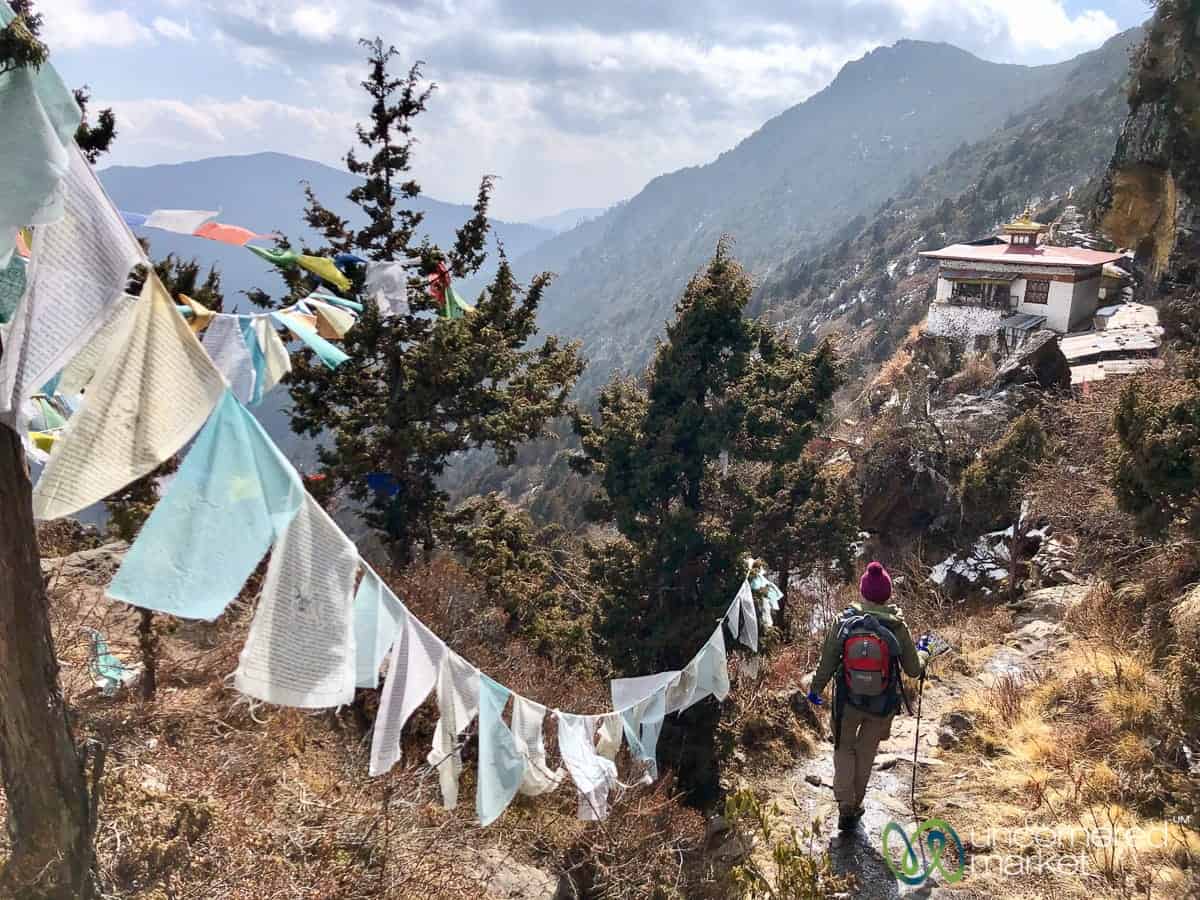
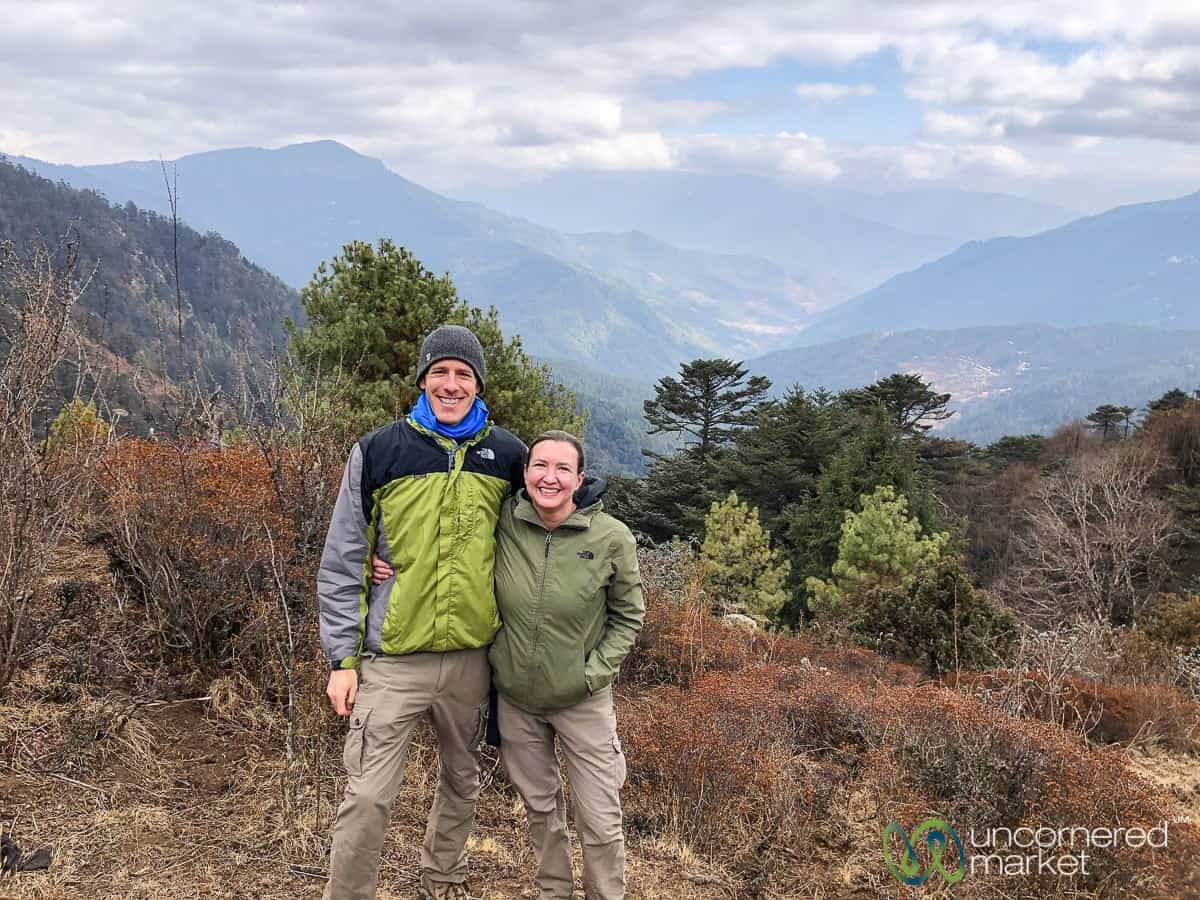
- Day 2 (Tshokam to Simkotra Lake): Featuring steep, sustained inclines through rhododendron thickets, this leg traverses ridge trails leading to Janye Tsho, an overlook adorned with traditional prayer flags. The day concludes at Simkotra Lake (4,000 meters), the highest-elevation campsite on the route.
- Day 3 (Simkotra Lake to Phajoding Monastery): Representing the physical peak of the trek, hikers ascend to Labana Pass (4,200 meters) for panoramic views of the distant snow-capped Himalayas. The trail then descends toward the 14th-century Thujidrak Goemba temple, nestled directly into a mountain rock face, before ending near Phajoding Monastery.
- Day 4 (Phajoding Monastery to Thimphu): The final leg consists of a steady, downhill forest trek that gradually returns hikers to lower elevations, culminating near the capital city of Thimphu.
Winter Trekking: A Specialized Alpine Experience
While the peak trekking seasons traditionally fall during the spring (April to May) and autumn (September to November) months—when clear skies prevail and rhododendrons bloom—selected travelers have begun exploring the winter window between late January and early February.
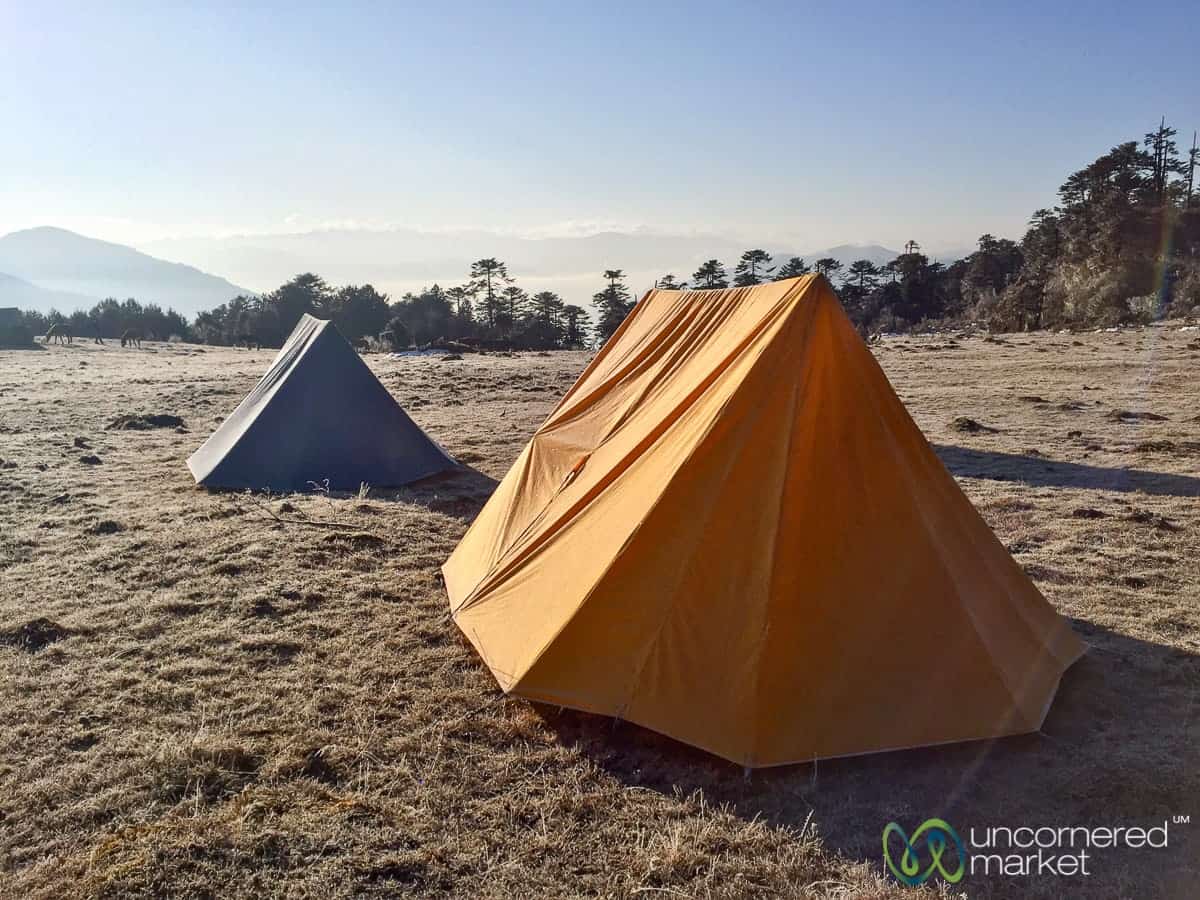
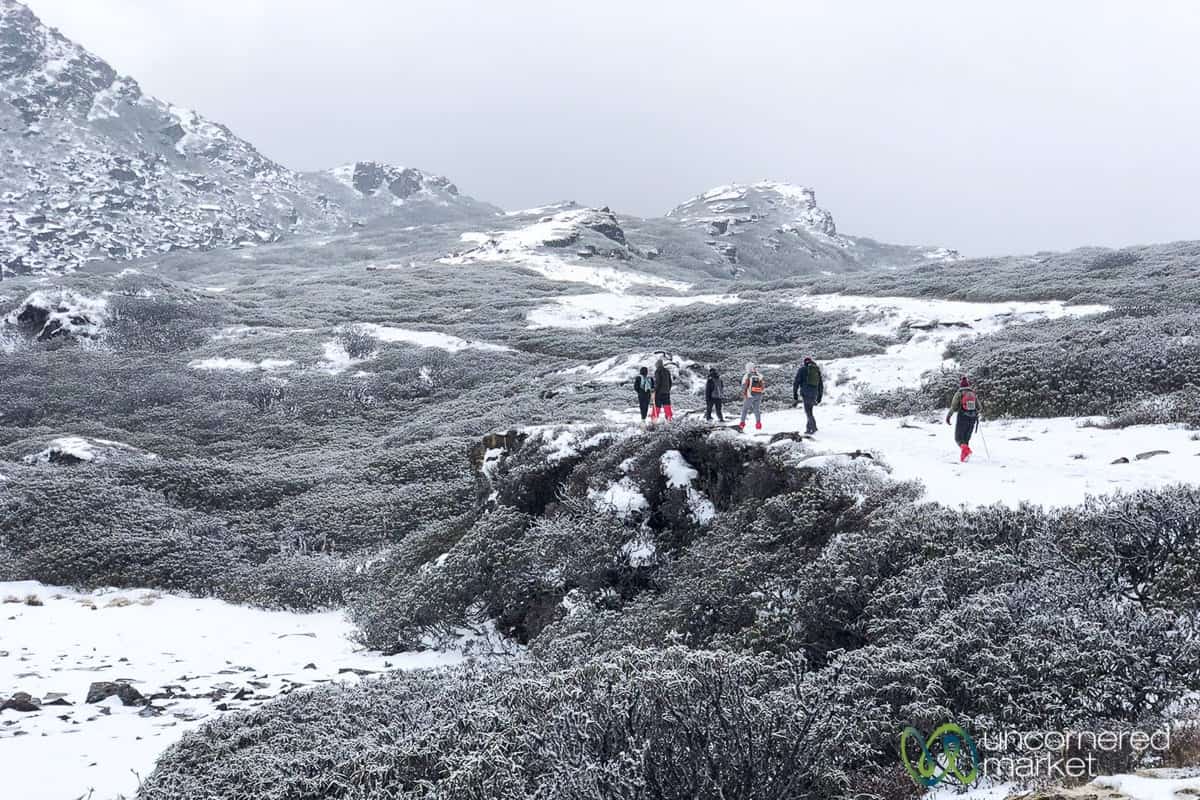
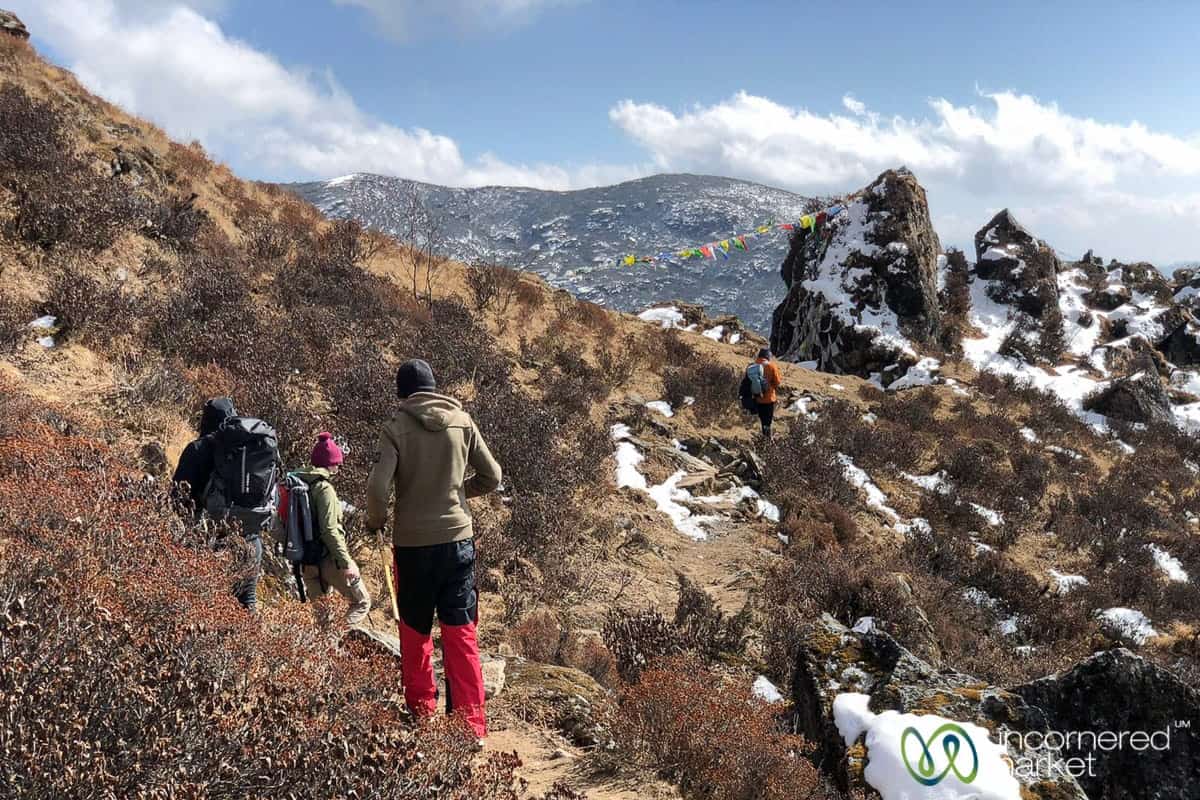
Winter expeditions present a distinct set of operational parameters. Nighttime temperatures at high-altitude campsites can plummet to -10 degrees Celsius (14 degrees Fahrenheit), and snow cover is common along ridge paths. Rather than impeding travel, proponents of winter trekking note that snow-covered landscapes offer profound stillness, complete trail solitude, and crisp, clear morning vistas. However, winter ascents require rigorous cold-weather gear, including sub-zero-rated sleeping bags, waterproof outerwear, and heightened caution on icy trail segments.
Infrastructure, Logistics, and Community-Based Tourism
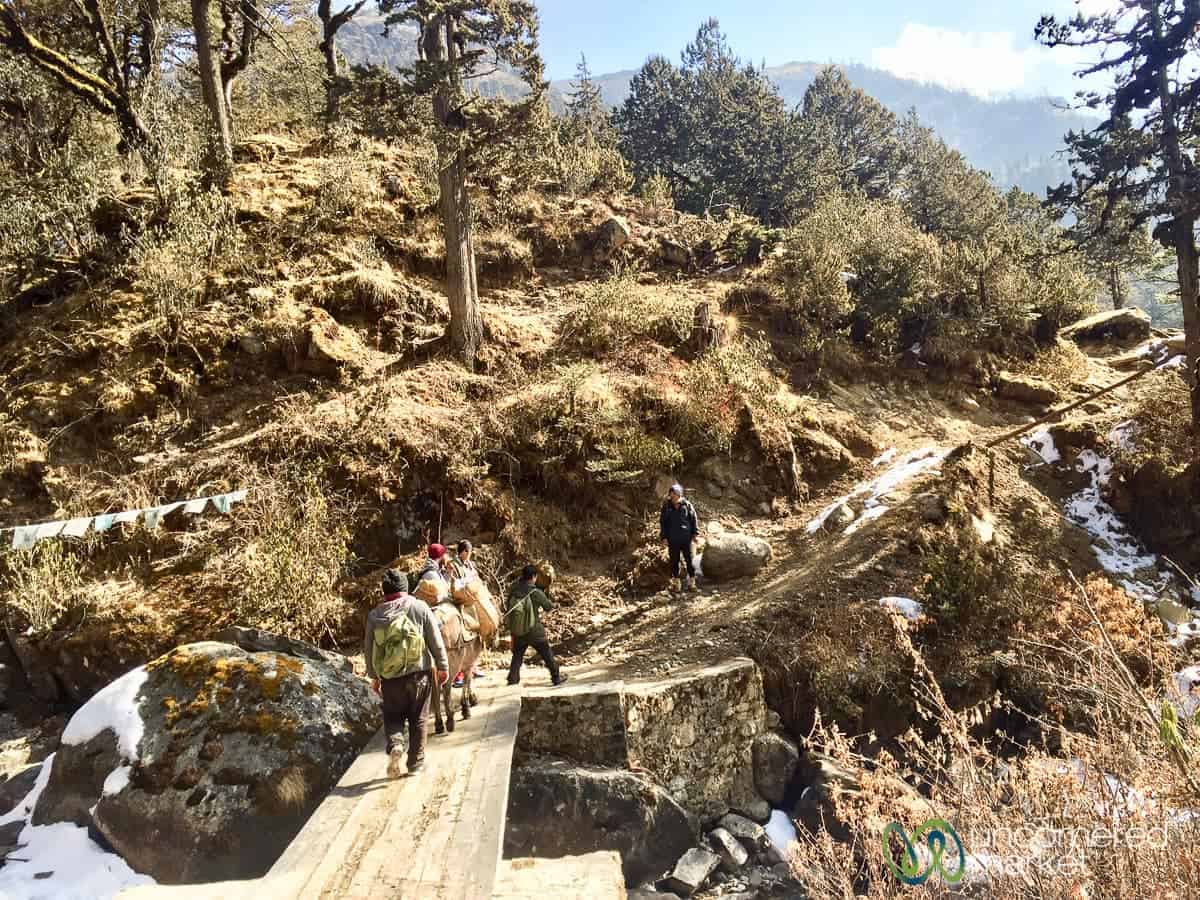
Under Bhutan’s tourism model, independent trekking is prohibited; all foreign nationals must book their itineraries through authorized local tour operators. This regulatory framework ensures that treks are fully supported by professional guides, camp cooks, and pack animal handlers (typically utilizing mules or horses).
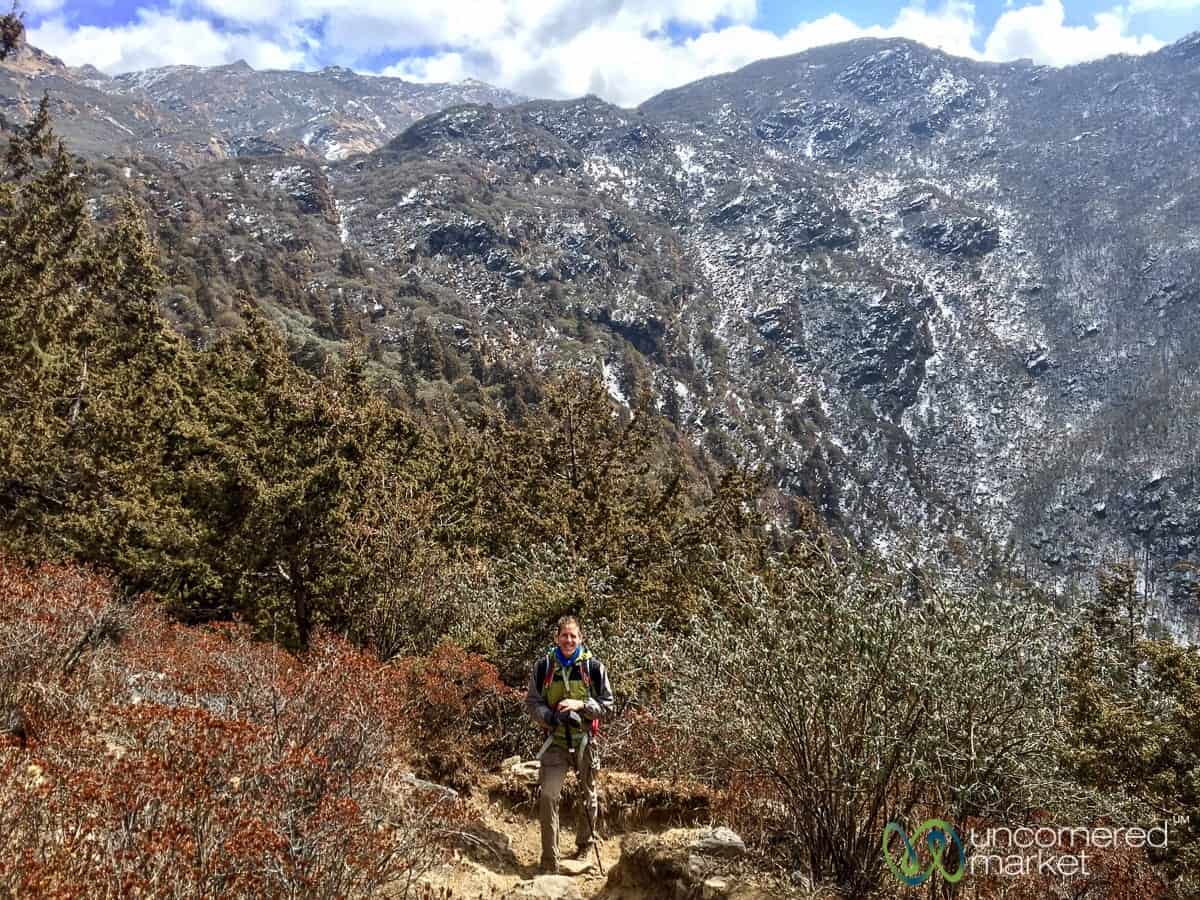
Tour operators supply comprehensive logistical support, erecting dining and sleeping tents, preparing multi-course hot meals, and managing waste disposal via dedicated campsite latrines. This structured support system minimizes environmental degradation and ensures strict adherence to Bhutan’s zero-waste initiatives, particularly along sensitive routes like the Trans Bhutan Trail.
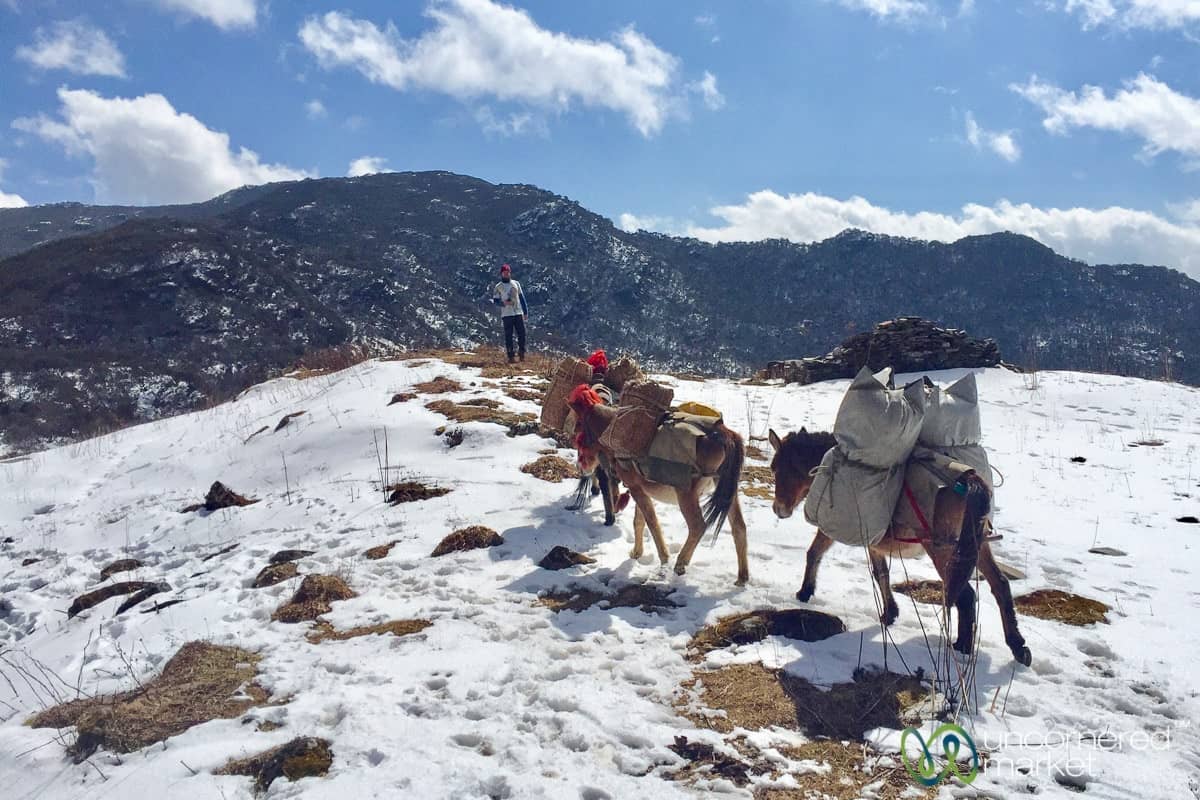
Furthermore, recent tourism initiatives emphasize community-based tourism models. Rather than relying solely on tented camping, newer itineraries—such as those offered by adventure operators partnering with the Trans Bhutan Trail—incorporate village homestays and locally sourced farm produce. This approach directly distributes tourism revenues to rural communities, aligning traveler experiences with the kingdom’s broader sustainability goals.
Preparation and Essential Packing Guidelines
For prospective trekkers, physical conditioning should focus on endurance and cardiovascular capacity through hill walking or stair climbing prior to arrival. Acclimatization is another critical factor; reputable tour programs typically incorporate preliminary day hikes—such as an excursion to Kila Goempa near Paro—to help visitors adjust to oxygen levels before embarking on multi-day backcountry routes.
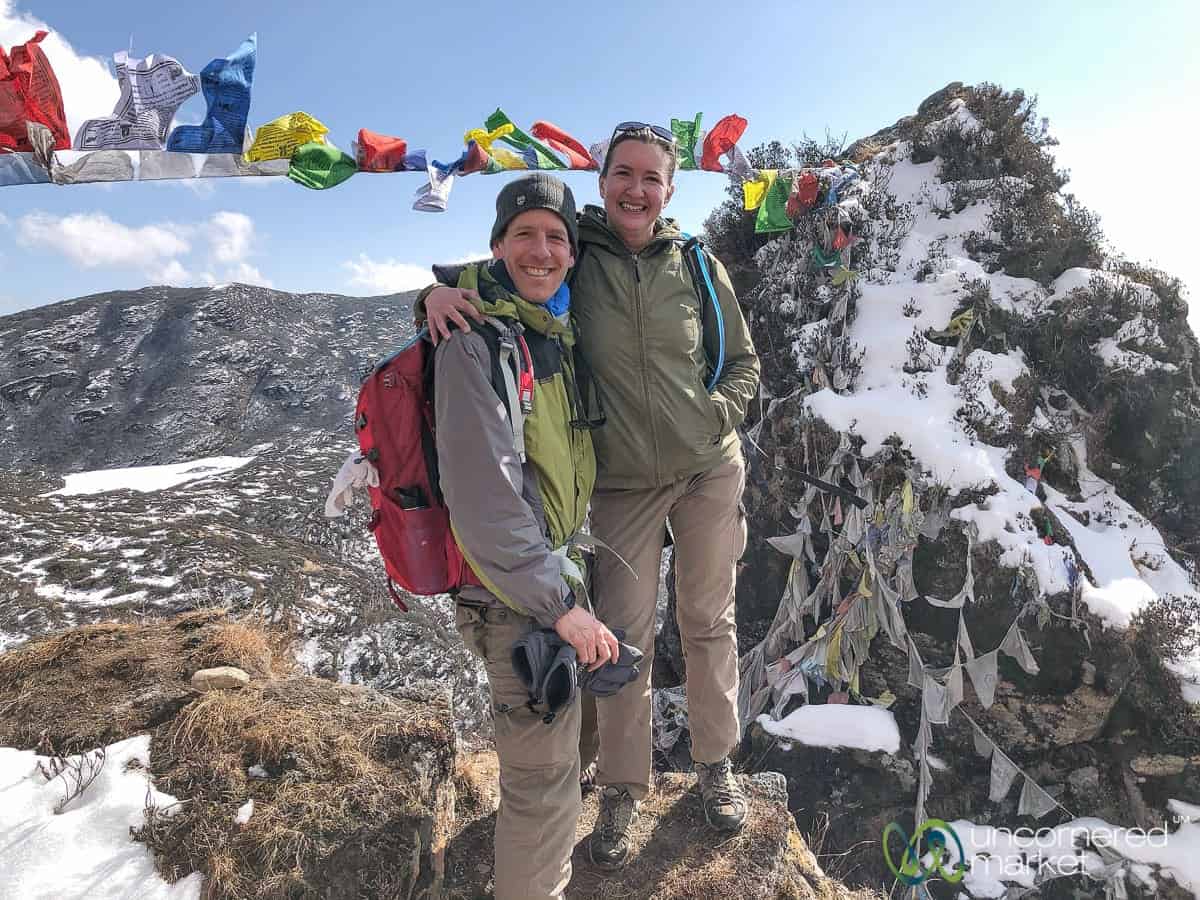
Hydration remains the primary defense against altitude sickness. Hikers are advised to consume multiple liters of water daily, utilizing easily accessible water bladders and relying on boiled water provided at campsites or portable purification systems.
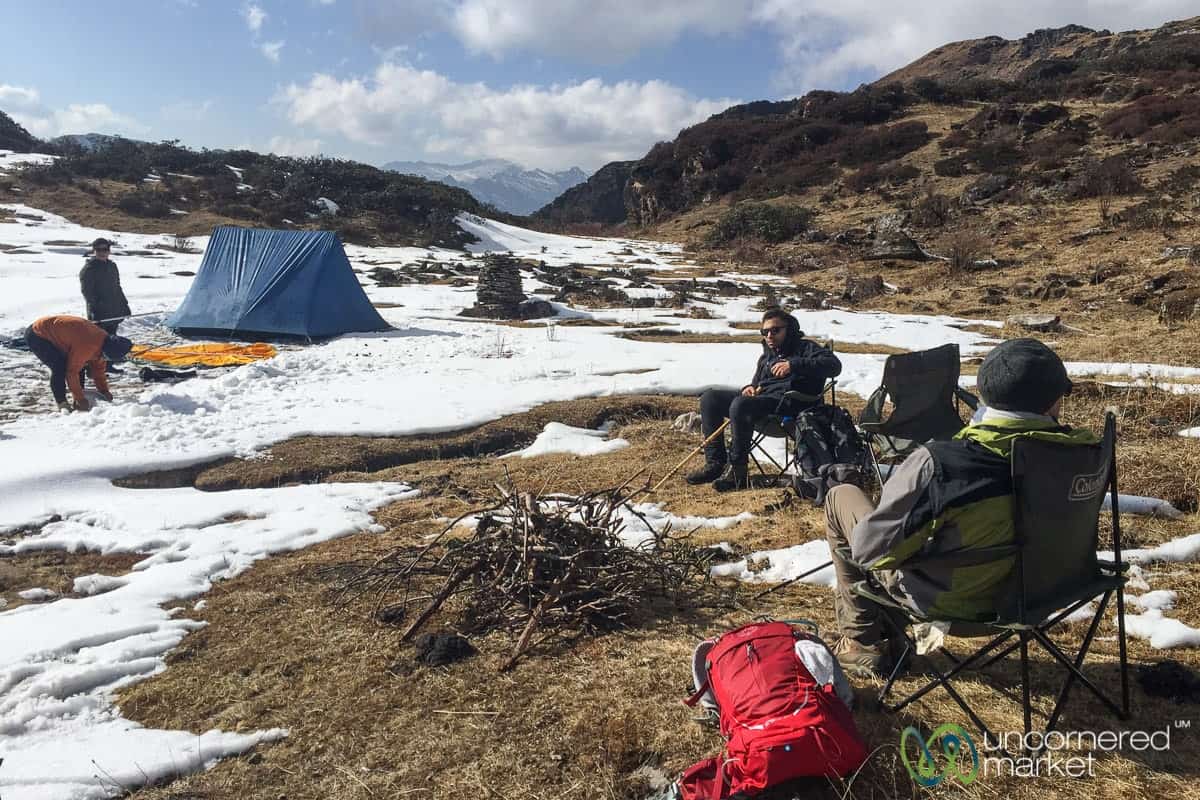
Packing lists must prioritize layered clothing systems to manage fluctuating diurnal temperatures. Standard gear requirements include:
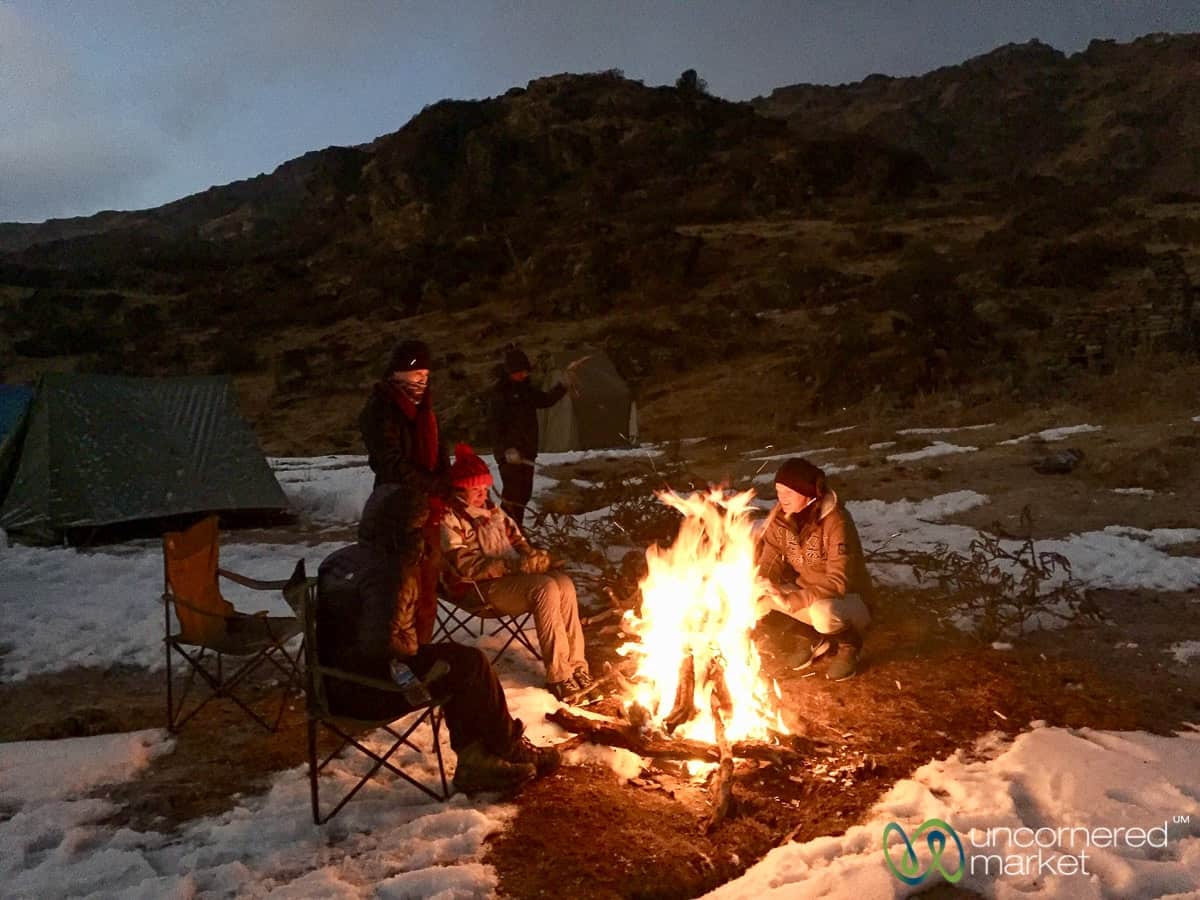
- A cold-weather sleeping bag rated comfortably to -10 degrees Celsius (15 degrees Fahrenheit).
- A durable, lightweight daypack (24 to 34 liters) equipped with a rain cover.
- Collapsible trekking poles to assist with stability on steep, uneven, or snow-covered descents.
- Moisture-wicking base layers, insulating mid-layers, and a reliable waterproof outer shell.
As Bhutan continues to refine its tourism framework, the integration of ancient historical trails with modern sustainable travel practices ensures that the kingdom remains a premier, low-impact destination for global outdoor enthusiasts. Whether navigating the high-altitude ridges of the Druk Path or exploring newly restored community pathways, travelers participate in a carefully regulated tradition that prioritizes cultural preservation, environmental protection, and deep wilderness immersion.