AJ 42 Recommended Reading Explores Indigenous Stewardship, Ecological Recovery, and Human Geography

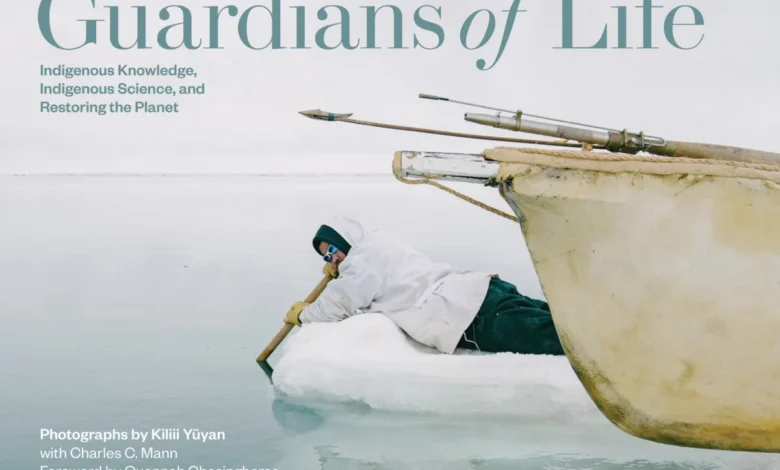
The intersection of indigenous land management, environmental conservation, and ecological recovery takes center stage in the latest literary curation from Adventure Journal 42. Featuring a carefully selected roster of six compelling titles, this edition’s Recommended Reading list examines humanity’s complex relationship with the natural world. Among the standout works is Guardians of Life by acclaimed National Geographic photographer Kiliii Yüyan, published by Braided River in 2026. This foundational text anchors a broader literary exploration that spans ancient traditions, modern conservation policy, historical reckonings in national parks, and the philosophical reimagining of our global ecosystem.
The inclusion of these six titles—ranging from investigations into indigenous stewardship and the vital ecological role of bogs to historical reassessments of Yosemite, elegies for reindeer-herding cultures, accounts of sixteenth-century castaways, and expansive ecological perspectives viewing the world as a unified tree—offers readers a comprehensive view of contemporary environmental literature. At the forefront of this collection is Yüyan’s visual and textual argument for restoring land management authority to the indigenous communities who have safeguarded global biodiversity for millennia.
Main Facts and the Case for Indigenous Stewardship
At the heart of Guardians of Life lies a compelling statistical reality: indigenous territories currently comprise approximately 37 percent of all remaining natural, unfragmented lands on Earth. Furthermore, these same lands harbor an estimated 80 percent of the planet’s remaining terrestrial biodiversity. Through a combination of rigorous reporting, historical analysis, and nearly 200 striking photographs captured across nine distinct Native communities, Yüyan builds a rigorous case that traditional ecological knowledge is not merely a relic of the past, but an indispensable tool for addressing contemporary ecological crises, including climate change and mass extinction.
The book challenges mainstream conservation models that historically relied on fortress conservation—evicting indigenous peoples from their ancestral homelands to create parks and reserves. Instead, Yüyan demonstrates that human habitation, when guided by cultural stewardship and reciprocal relationships with local ecosystems, actively enhances biodiversity. The text presents human communities not as external disruptors of nature, but as integral, dependent components of a living web where the health of the community is inextricably linked to the vitality of the flora and fauna surrounding it.
Chronology and Historical Context of Indigenous Resource Management
To fully understand the urgency and validity of the arguments presented in Guardians of Life, it is essential to examine the historical timeline of legal and political struggles over indigenous land rights and wildlife management.
In 1977, a pivotal conflict arose when the International Whaling Commission (IWC) instituted a ban on bowhead whale hunting. For the Iñupiat people of Alaska, hunting the bowhead whale is not merely a dietary practice or an economic enterprise; it is the cornerstone of their culture, social structure, and spiritual identity, dating back thousands of years. The sudden prohibition threatened to sever an ancient, sustainable relationship between the community and the marine mammals that sustain them.
Rather than accepting the external restriction, the Iñupiat leadership organized, documented their sustainable harvesting practices, and took their case to the United States court system. In a landmark legal victory, the Iñupiat successfully defended their cultural rights and secured the legal authority to self-manage their subsistence whale harvest under scientific quotas.
The results of this indigenous-led management strategy were profound and quantifiable. Over the subsequent three decades of Iñupiat stewardship, the bowhead whale population nearly tripled. This historical milestone serves as a central pillar in Yüyan’s thesis: when indigenous peoples are empowered to manage their traditional territories and resources, both human communities and wildlife populations thrive.
Supporting Data and Global Environmental Implications
The data compiled within Guardians of Life aligns with a growing body of peer-reviewed scientific research published by international bodies, including the Intergovernmental Science-Policy Platform on Biodiversity and Ecosystem Services (IPBES). Scientific studies consistently show that deforestation rates, habitat loss, and carbon emissions are significantly lower on indigenous-managed lands compared to government-run or privately owned protected areas.
Despite comprising less than five percent of the global human population, indigenous peoples protect vast carbon sinks in the Amazon basin, the Arctic, Southeast Asia, and North America. The global implications of these findings are profound. As international climate negotiations increasingly focus on nature-based solutions to mitigate carbon emissions, policymakers are facing mounting pressure to incorporate indigenous land rights into binding environmental treaties.
Critics of traditional state-controlled conservation models point out that centralized bureaucratic agencies often lack the local, generational data required to manage dynamic ecosystems effectively. By contrast, indigenous stewardship adapts to shifting climatic conditions through generational observation and adaptive management techniques.
Broader Literary Context in Adventure Journal 42
While Kiliii Yüyan’s work provides a stark look at marine and terrestrial sovereignty in the Arctic and beyond, the other five books featured in the Adventure Journal 42 recommendation list expand the thematic scope of the collection, offering varied entry points into environmental philosophy and history.
The case for bogs, another title highlighted in the curation, draws attention to peatlands—ecosystems that have historically been dismissed as useless swamps but are now recognized as vital carbon reservoirs capable of storing twice as much carbon as all the world’s forests combined. By reframing bogs as essential climate infrastructure, the featured literature challenges readers to reconsider landscapes traditionally viewed through the lens of economic utility rather than ecological function.
The curation also features a critical reckoning with Yosemite National Park. This text peels back the romanticized veneer of early American conservation mythology to examine the displacement of the Ahwahnechee people and the complex, often exclusionary history that birthed the modern national park system. By confronting these historical truths, the literature encourages a more honest appraisal of public lands management in the United States, balancing the celebration of natural beauty with the recognition of historical injustices.
Further expanding the geographic and cultural horizons, the list includes a moving elegy for reindeer-herding cultures navigating the pressures of industrial development, climate change, and shifting geopolitical borders in the northern latitudes. This narrative captures the daily realities of pastoralists whose ancient migratory patterns are increasingly disrupted by modern infrastructure and warming temperatures.
Rounding out the recommended reading are a gripping account of a sixteenth-century castaway navigating unfamiliar coastlines and indigenous survival strategies, and a philosophical work that re-imagines the world not as a collection of isolated resources, but as a vast, interconnected tree where every branch and root shares a common destiny.
Official Responses and Conservation Community Reactions
The release of Guardians of Life and the broader discourse championed by Adventure Journal 42 have elicited significant commentary from environmental NGOs, policy analysts, and indigenous leaders alike.
Representatives from indigenous advocacy organizations have welcomed the growing mainstream recognition of traditional ecological knowledge. Spokespersons emphasize that true conservation cannot succeed without securing legal land titles for indigenous communities, who frequently face violent reprisals, illegal logging, and mining encroachment on their ancestral domains.
Meanwhile, mainstream conservation agencies and governmental departments of natural resources are gradually shifting their paradigms. Increasingly, international conservation bodies are moving away from top-down enforcement models and toward collaborative co-management agreements. These frameworks empower local and indigenous populations to share decision-making authority, integrate traditional knowledge with modern conservation science, and participate directly in monitoring ecosystem health.
However, challenges remain. Legal frameworks in many nations still prioritize state ownership of subsurface minerals and natural resources, creating friction between national development agendas and indigenous sovereignty. Observers note that translating the photographic and narrative arguments of books like Guardians of Life into enforceable legislation requires sustained political will and international cooperation.
Conclusion and Future Outlook
The curation presented in Adventure Journal 42 serves as a timely reminder that the answers to our most pressing ecological challenges often lie in ancient frameworks of reciprocity and respect for the natural world. Through the striking imagery of Kiliii Yüyan and the diverse perspectives of its companion titles, the recommended reading list bridges the gap between historical awareness and future-oriented environmental policy.
As global policymakers grapple with biodiversity loss and accelerating climate change, the evidence compiled across these six books points toward an inescapable conclusion: the long-term health of the planet depends heavily on restoring agency, land rights, and management authority to the peoples who have successfully guarded the earth for generations. The literature does not merely invite contemplation; it issues a call to action for a fundamental restructuring of how humanity interacts with the living systems that sustain us all.