Delta Air Lines Sunsets Popular Text Message Customer Support in Favor of AI-Powered Delta Concierge

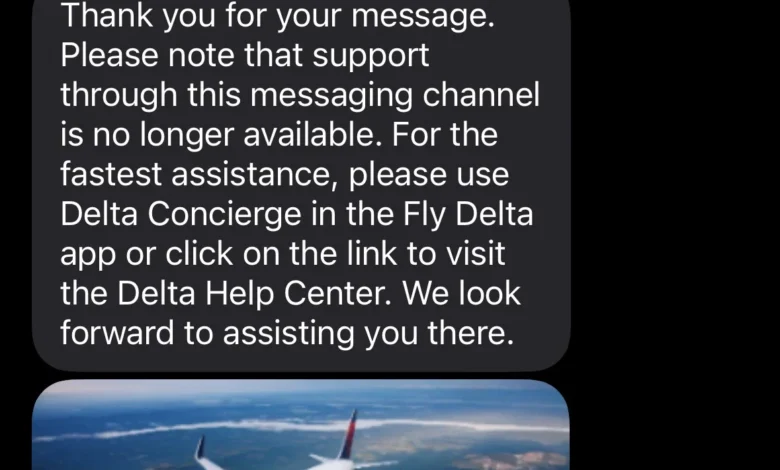
Delta Air Lines has officially retired its long-standing text message customer support feature, a move that eliminates one of the most popular and efficient alternatives to traditional telephone queues for stranded or inquiring passengers. For years, the capability to message airline agents directly via SMS provided travelers with a seamless method to manage flight disruptions, cancellations, and rebookings without enduring prolonged hold times.
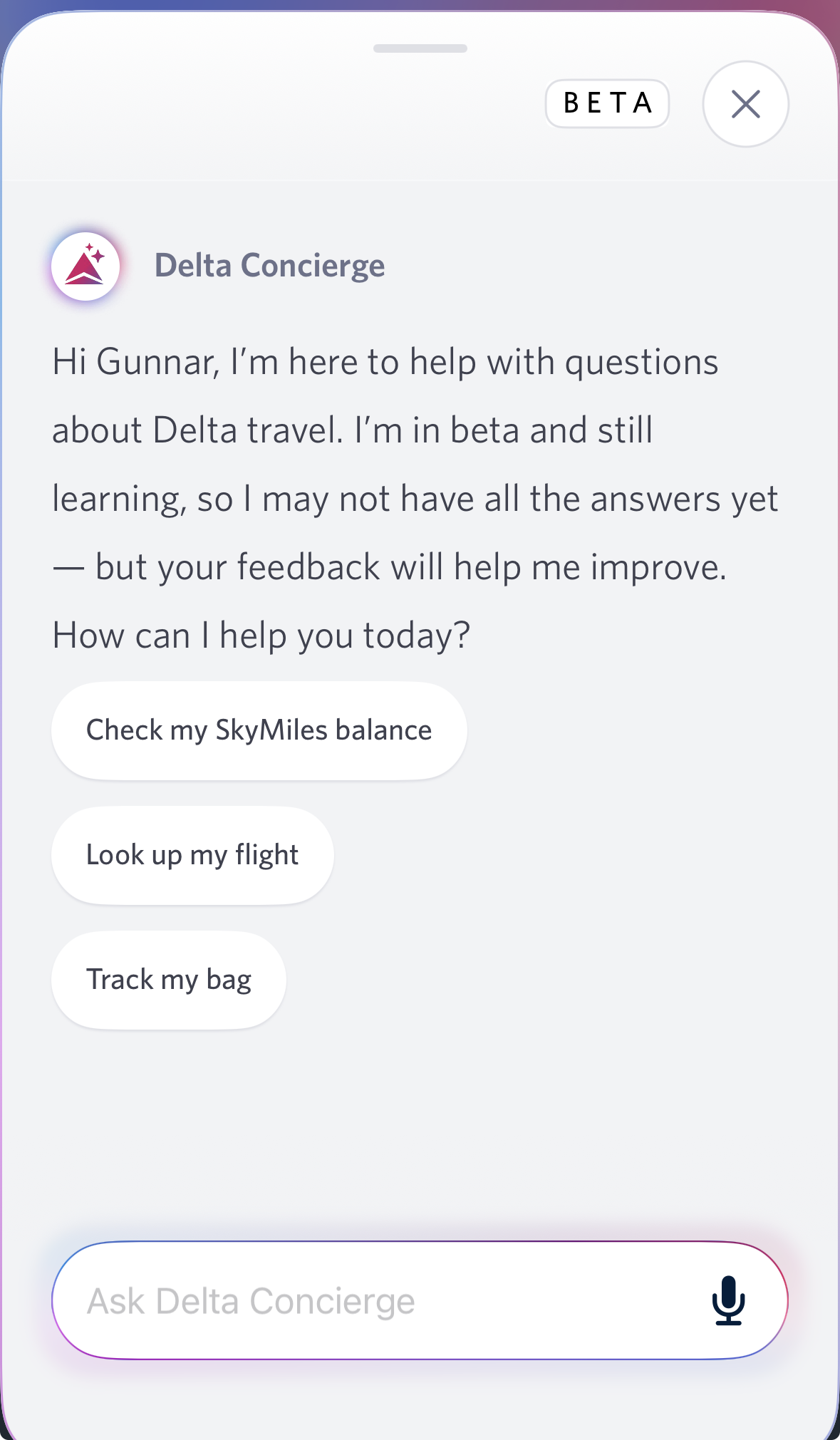
The sunsetting of the direct text channel represents a significant shift in Delta’s digital customer service strategy. The airline is now funneling passengers toward "Delta Concierge," a newly introduced, AI-powered chatbot integrated directly into the Fly Delta mobile application. While the carrier positions this automated tool as a modern upgrade designed to streamline support, early user experiences indicate that transitioning away from human-led text support introduces friction, longer connection times, and a heavier reliance on traditional phone lines.

The Evolution of Delta Digital Support and the Rise of SMS
The introduction of SMS-based customer support years ago was widely praised by frequent flyers as an industry-leading innovation. At a time when major airlines relied heavily on congested call centers or cumbersome web-based chat portals, Delta’s text messaging service allowed passengers to step out of airport queues, board connecting flights, or go about their daily routines while waiting for a representative.
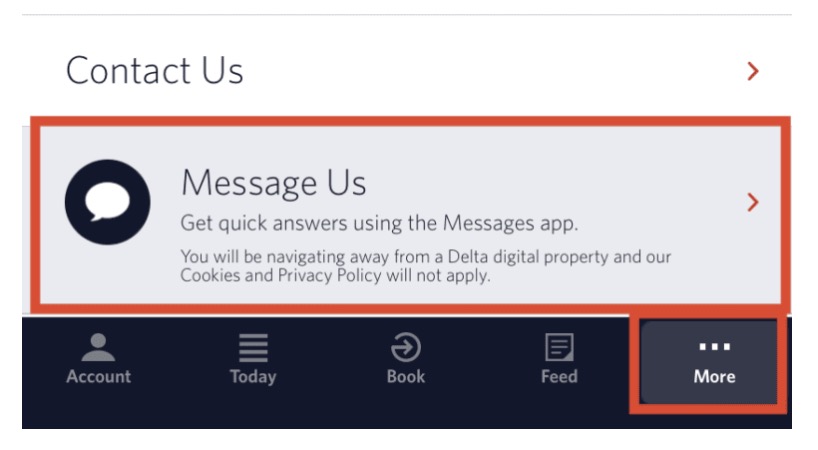
The mechanism was straightforward: travelers initiated a dialogue through a dedicated link within the Fly Delta app, which launched a native text messaging window on their smartphone. Although requests initially passed through an automated triage system, passengers were swiftly handed off to human agents who possessed deep operational knowledge. Furthermore, because the communication occurred via standard text messaging, users received push notifications whenever an agent replied. This asynchronous communication model eliminated the need to keep the application open, distinguishing it from conventional in-app chat systems that frequently dropped connections or drained device battery.
Over successive years, Delta refined the platform. Response times were accelerated, wait-time estimates were integrated into the message thread, and the human agents staffing the line were frequently lauded for their efficiency in handling complex ticketing issues, seat assignments, and irregular operations caused by inclement weather.
Transition to the AI-Powered Delta Concierge
The phasing out of the direct text messaging channel aligns with a broader industry trend toward artificial intelligence and in-app automation. Delta’s replacement tool, the Delta Concierge, operates entirely within the confines of the Fly Delta mobile environment. Explicitly branded by the airline as a beta-testing feature, the AI chatbot is designed to handle routine inquiries autonomously, ranging from baggage tracking to basic itinerary management.
However, aviation analysts and frequent travelers have noted that the shift from an open SMS protocol to a closed, AI-first ecosystem has immediate drawbacks. Under the new framework, travelers seeking human intervention must first navigate a series of automated prompts with the chatbot. Once the AI agrees to transfer the query to a live representative, the connection process is frequently reported to be erratic.
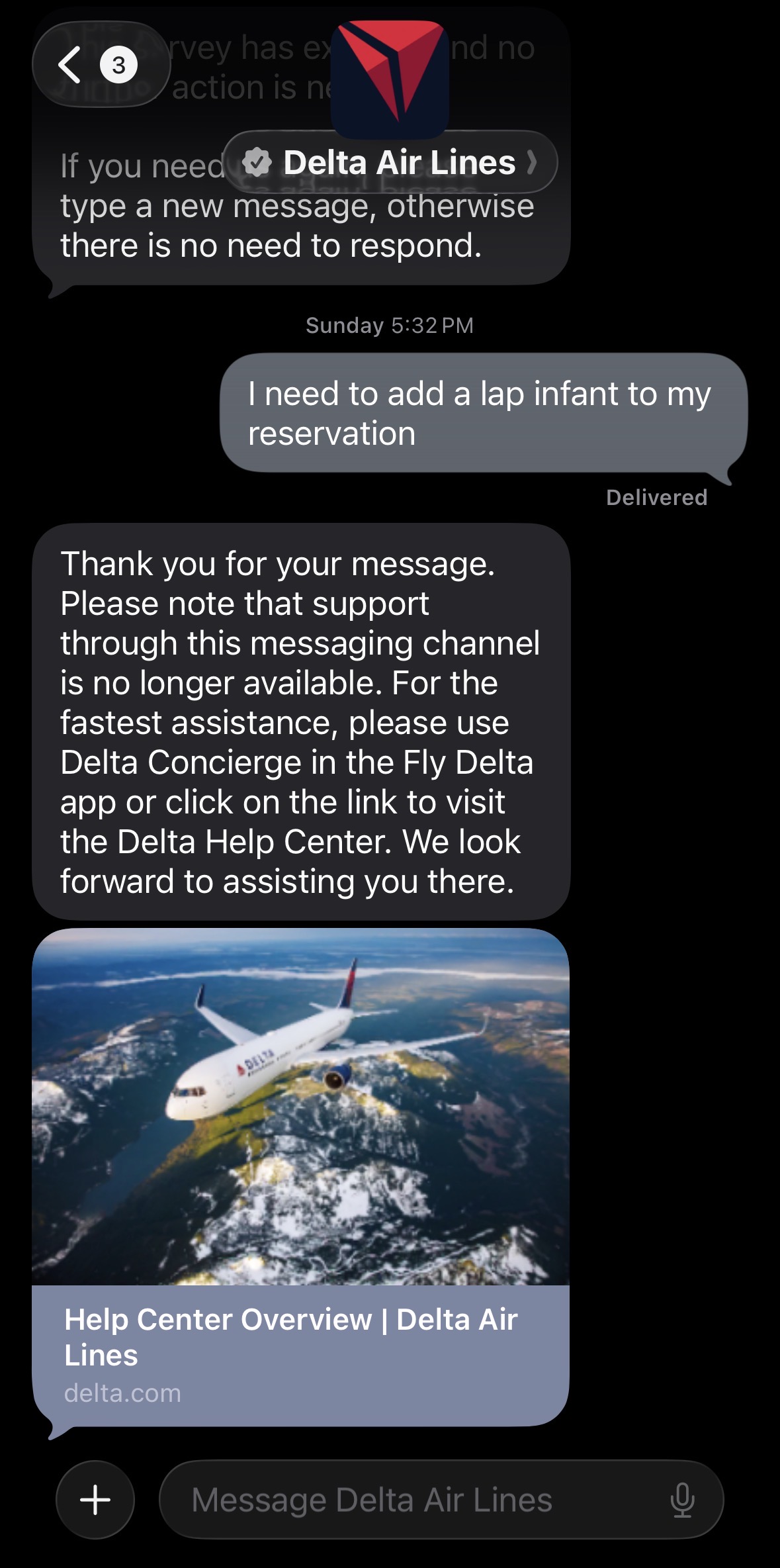
Early users have documented technical hurdles during these handoffs. In certain instances, after an agent introduces themselves in the chat window, subsequent replies from the user inadvertently trigger automated survey prompts—such as a request to rate the interaction on a one-to-five scale—effectively terminating the active support session before the issue is resolved. Consequently, passengers attempting to complete tasks outside the scope of automated systems, such as adding a lap infant after check-in, are frequently left with no alternative but to abandon the digital interface and dial Delta’s traditional customer service telephone lines, where wait times can extend to thirty minutes or longer.
Chronology of Airline Customer Service Channels
Delta’s digital customer service architecture has undergone continuous transformation over the past decade, reflecting broader shifts in consumer communication preferences and corporate cost-efficiency strategies:
- Pre-2020 Social Media Era: Airlines heavily promoted public-facing social media channels, notably Twitter (now X) and Facebook, as primary alternative support vectors. Passengers routinely used direct messaging on these platforms to bypass telephone queues.
- 2020 Social Media Phase-Out: Citing security, privacy, and the need for centralized communication infrastructure, Delta and several competitor airlines officially sunsetted their dedicated social media customer support channels, directing traffic toward proprietary mobile applications and phone lines.
- Mid-2010s to 2024 SMS Peak: The direct text messaging feature grew into a preferred method for elite and frequent flyers, offering a reliable middle ground between automated web chats and voice calls.
- Late 2024 to Present AI Integration: Delta officially phases out the external SMS support line, replacing the protocol with the AI-driven Delta Concierge chatbot housed inside the Fly Delta application.
Industry Implications and Passenger Impact
The removal of the text messaging channel highlights the ongoing tension between automation-driven cost reductions in airline operations and passenger demand for frictionless, human-centric support.
Airlines face immense pressure to manage high volumes of customer inquiries, particularly during major weather events and system outages. AI chatbots offer carriers the ability to scale support capabilities infinitely without a proportional increase in human labor costs. Proponents of automation argue that generative AI can resolve basic inquiries instantly, thereby reducing the overall burden on call centers and allowing human agents to focus on high-complexity tasks.
Conversely, consumer advocacy groups and frequent flyer communities point out that forcing passengers through experimental AI systems often degrades the travel experience. When automated systems fail to comprehend nuanced requests or experience technical glitches during agent handoffs, the resulting customer friction typically manifests as increased call volumes, longer telephone hold times, and heightened passenger frustration at airport service desks.
Furthermore, the requirement to remain inside the Fly Delta app during AI-assisted interactions represents a regression in multitasking convenience compared to the background notification capabilities of native SMS threads. As Delta continues to evaluate the performance of the Delta Concierge during its beta phase, the airline has not announced any plans to reinstate direct text messaging support, leaving travelers to navigate the evolving digital ecosystem as best they can.
Related posts: