Rome, the bustling capital of Italy, stands as one of the most historically significant and culturally dense metropolitan areas on the European continent. Welcoming more than ten million international tourists annually, the city presents a complex logistical environment characterized by high-density pedestrian traffic, complex urban transit, and layered historical infrastructure dating back nearly three millennia. While the city’s chaotic energy and immense crowds might initially deter family travelers, urban planning data and tourism analyses indicate that Rome remains an exceptionally rewarding destination for children and adolescents. By moving beyond traditional classroom methodologies, the city functions as an open-air museum where ancient history, architectural engineering, and world-class culinary traditions integrate seamlessly into an educational itinerary suitable for multigenerational groups.

The geographical layout of Rome’s historic center is predominantly pedestrian-friendly, allowing families to navigate major cultural landmarks on foot without relying heavily on underground subway systems or overcrowded municipal buses. Furthermore, municipal and national tourism boards offer subsidized family ticketing structures across major state-run museums and archaeological sites, mitigating the financial impact of extended cultural excursions. Culinary integration is similarly seamless; the foundational elements of Roman cuisine—ranging from authentic Neapolitan-style pizzas to simple pasta preparations such as spaghetti bolognese and cacio e pepe—satisfy youthful palates while simultaneously introducing travelers to authentic Mediterranean gastronomy. Travel industry analysts suggest that visiting Rome with children requires a strategic adherence to the traditional Italian concept of piano, piano—translating to "slowly, slowly"—to prevent cognitive fatigue and ensure an enriching travel experience.

Historical Chronology and Architectural Significance of Key Landmarks
A comprehensive family itinerary in Rome requires an understanding of the chronological development of the city’s primary archaeological assets. The urban timeline spans from the mythical foundation of the city in 753 BC through the Republican and Imperial eras, the medieval and Renaissance periods, and into the modern Italian republic.

The chronological exploration of Ancient Rome typically begins at the Roman Forum and Palatine Hill. Historical records indicate that Palatine Hill, the centermost of the Seven Hills of Rome, served as the opulent residential sector for emperors including Augustus, Tiberius, and Domitian. Adjacent to the hill, the Roman Forum functioned as the vibrant political, religious, and commercial heart of the Roman Empire for centuries. Tourism logistics experts recommend utilizing digital audio guides, such as the Rick Steves application, to provide children with contextual historical narratives while navigating the crumbling basilicas, triumphal arches, and ancient curia houses.

Constructed between 72 AD and 80 AD under the Flavian dynasty—initiating with Emperor Vespasian and completed under Titus—the Flavian Amphitheatre, universally known as the Colosseum, represents the pinnacle of ancient Roman engineering and architectural ambition. Capable of seating an estimated 50,000 to 80,000 spectators, the oval amphitheatre hosted elaborate public spectacles, gladiatorial contests, and theatrical productions. Modern educational initiatives near the monument, including specialized interactive programs like the Gladiator School of Rome near the archaeological zone, allow younger visitors to engage with history through safe, supervised simulations utilizing traditional tunics and padded training weapons.

Complementing the imperial ruins, the Pantheon—originally commissioned by Marcus Agrippa during the reign of Augustus around 27 BC and subsequently rebuilt by Emperor Hadrian in approximately 125 AD—demonstrates advanced mathematical and structural principles. The building features the world’s largest unreinforced concrete dome, measuring 43 meters in diameter, with a central oculus that serves as both a structural light source and an open-air atmospheric element.

Cultural Institutions and Religious Enclaves: The Vatican City Experience
Beyond the secular antiquities of the Roman Empire, the independent city-state of Vatican City provides a distinct cultural and spiritual dimension to an Italian itinerary. Enclosed entirely by the urban fabric of Rome, the sovereign city-state covers approximately 44 hectares, making it the smallest independent state in the world by both area and population.

Educational tours of Vatican City generally encompass three distinct zones: St. Peter’s Square, the Vatican Museums, and St. Peter’s Basilica. The Vatican Museums house one of the most extensive art collections globally, accumulated by the Roman Catholic Church through centuries of patronage. The designated museum route culminates in the Sistine Chapel, renowned worldwide for its high-Renaissance ceiling frescoes and The Last Judgment painted by Michelangelo Buonarroti between 1508 and 1512.

Adjacent to the museums, St. Peter’s Basilica stands as a monumental masterpiece of Renaissance architecture, designed by architects including Donato Bramante, Michelangelo, Carlo Maderno, and Gian Lorenzo Bernini. Inside the basilica, visitors encounter Michelangelo’s Pietà, sculpted when the artist was only in his early twenties. Cultural analysts emphasize that while the Vatican holds profound religious significance for millions of global faithful, it also serves as a critical repository of Western art history, offering children an opportunity to examine foundational aesthetic principles firsthand. Furthermore, families frequently utilize the autonomous postal infrastructure within the Vatican walls, dispatching postcards bearing unique Vatican postal stamps and seals to serve as tangible souvenirs of crossing an international border within the heart of Rome.

Urban Neighborhoods and Culinary Exploration
To fully comprehend contemporary Roman life, urban planners and tourism authorities recommend exploring residential neighborhoods outside the immediate tourist zones. Districts such as Trastevere, located on the west bank of the Tiber River, and Monti, situated directly behind the Roman Forum, offer genuine insights into daily domestic routines.

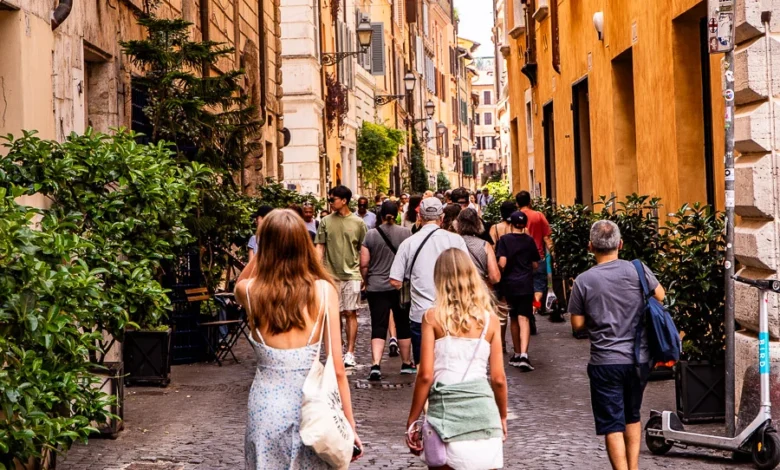
Trastevere is characterized by a labyrinth of narrow, cobblestone alleyways, medieval houses, and ivy-draped facades. Historically a working-class dockworkers’ quarter, the neighborhood has evolved into a vibrant residential and culinary hub where local families gather in neighborhood piazzas. Similarly, the Monti district—stretching between the Colosseum and Via Nazionale—retains a village-like atmosphere, anchored by the historic Piazza della Madonna dei Monti.

The culinary landscape of Rome serves as an integral educational tool for family travelers. Engaging with local food culture extends beyond traditional sit-down dining to encompass open-air markets and artisanal bakeries:

- Campo de’ Fiori Market: Operating daily except Sundays, this historic open-air market allows visitors to observe local residents purchasing fresh produce, artisanal cheeses, and cured meats from animated vendors.
- Forno Campo de Fiori: Operating for decades on the edge of the square, this historic bakery is renowned across Rome for its traditional Roman-style pizza al taglio (pizza by the slice), where focaccia and white or red pizzas are cut to order and priced by weight.
- Gelgelaterias and Sweet Treats: Artisanal establishments such as Gelateria del Teatro, operating since 2006, offer innovative flavor profiles combining traditional dairy bases with unexpected botanical ingredients, including white chocolate with basil, rosemary with honey and lemon, and raspberry with sage.
- Traditional Roman Pasta: Culinary traditions dictate specific regional dishes, notably spaghetti carbonara—traditionally prepared with guanciale, pecorino romano, fresh eggs, and black pepper—and rigatoni cacio e pepe, exemplifying the minimalist yet complex flavor profile of Roman comfort food.
Public Infrastructure, Parks, and Recreational Activities
Balancing intensive cultural tourism with physical recreation is essential for maintaining a positive travel experience for families. Urban park systems in Rome provide necessary green spaces and recreational infrastructure.

The Villa Borghese gardens, functioning as the third-largest public park in Rome, trace their history back to the 17th century when the area was developed by Cardinal Scipione Borghese. Spanning approximately 80 hectares, the landscaped gardens integrate manicured lawns, neoclassical temples, artificial lakes, and the prominent Galleria Borghese museum. Families frequently rent multi-person bicycles or surreys to navigate the extensive shaded pathways, offering a physical break from historical sightseeing.

Additional family-oriented infrastructure includes the Bioparco di Roma—the oldest zoological garden in Italy, established in 1911 within the Villa Borghese grounds—which houses over one thousand animals representing more two hundred species. For warmer weather months, water-based recreational facilities such as the Hydromania water park located on the western periphery of the city provide alternative entertainment options for younger children.

Economic Implications and Strategic Travel Recommendations
Tourism economic data underscores the vital role that family travel plays in sustaining Rome’s tertiary sector. Hospitality providers throughout the historic center, such as the Nerva Boutique Hotel near the Roman Forum and various apartment rentals in Trastevere, have increasingly adapted their service models to accommodate family-centric travelers by offering multi-room configurations and localized concierge services.

Tourism analysts and child development specialists recommend a structured approach to planning a Roman holiday:
- Duration of Stay: Travel agencies advise a minimum duration of three to five days to accommodate the slower pacing required when traveling with children.
- Pacing and Scheduling: Adopting the local piano, piano philosophy prevents physical exhaustion and cognitive overload, allowing children to retain positive memories of cultural sites.
- Advance Reservation Protocols: High-demand attractions, including the Colosseum, the Vatican Museums, and prominent dining establishments like Hosteria La Carbonara, require advance digital booking to circumvent extensive queue times.
- Interactive Engagement: Utilizing digital applications, participating in specialized workshops such as gladiator training schools, and integrating culinary tours ensure that educational milestones are met organically without creating classroom fatigue.
Ultimately, navigating Rome as a family unit provides profound educational enrichment, fostering cultural literacy and strengthening interpersonal bonds. By prioritizing quality of experience over sheer quantity of visited monuments, families can successfully decode the complex historical layers of the Eternal City, ensuring a memorable and structurally balanced international travel experience.