Climbing the Iron Paths: A Comprehensive Guide to Bosnia and Herzegovina’s Premier Via Ferrata Routes in Sarajevo and Mostar

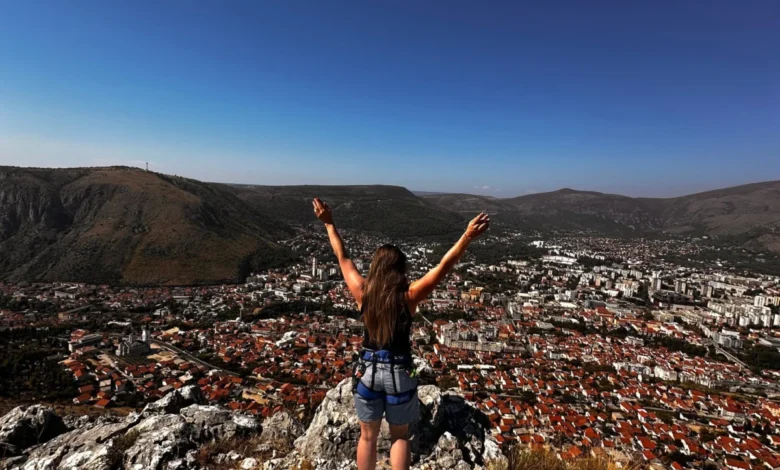
Bosnia and Herzegovina is rapidly emerging as a premier destination for adventure tourism, shifting international perceptions beyond its rich cultural heritage and war-torn history toward its rugged, mountainous terrain. Among the fastest-growing adventure sectors in the country is via ferrata climbing—a hybrid activity combining hiking and rock climbing utilizing fixed steel cables, iron rungs, and suspension bridges. Local experts and outdoor guiding companies, such as Bosnia Outdoor Adventures (BOA), report a significant annual increase in international travelers seeking these vertical routes. Spanning the limestone cliffs of Mostar and the towering ridges surrounding Sarajevo, five primary via ferrata systems offer visitors a novel perspective on the Balkan landscape, transforming how tourists interact with the country’s dramatic topography.
Historical Context and Evolution of Via Ferrata in Bosnia
The concept of the via ferrata—translating from Italian as “iron path”—originated in the Italian Dolomites during World War I, engineered to safely move troops through impassable mountainous terrain. In Bosnia and Herzegovina, the development of modern via ferratas is a contemporary phenomenon driven by local alpine clubs, tourism boards, and specialized guiding enterprises aiming to diversify the nation’s adventure sports economy.
Historically, tourism in Mostar centered strictly around the iconic 16th-century Stari Most (Old Bridge) and the Ottoman-era bazaar. Similarly, Sarajevo’s outdoor appeal was largely confined to historical walking tours, the remnants of the 1984 Winter Olympics, and cable car rides up Mount Trebević. The installation of engineered steel routes along the limestone walls of Mount Hum, Fortica, Trebević, Bukovik, and Romanija has effectively bridged the gap between technical mountaineering and mainstream tourism. These installations allow individuals with moderate physical fitness to safely navigate vertical precipices that were previously accessible only to professional rock climbers.

Detailed Breakdown of the Five Primary Routes
Bosnia’s premier via ferrata network is divided geographically between the southern hub of Mostar and the central capital region of Sarajevo. Each route varies significantly in length, elevation gain, technical grading, and environmental exposure.
Mostar Routes: Hum and Fortica
Mount Hum rises directly behind Mostar, recognizable globally for the prominent white cross situated on its summit. While the peak is a staple background feature in tourist photographs, its rock face hosts the more demanding of Mostar’s two climbing routes. Via Ferrata Hum features approximately 600 meters of steel cable and an elevation gain of roughly 350 meters. The route is segmented by three suspension bridges that span natural rock gaps, progressively increasing in height above the Neretva River valley. Climbers finish the route with sweeping aerial views of the Old Bridge, local minarets, and the southward flow of the river toward the Adriatic coast. Because Hum is an exposed, sun-drenched limestone wall, seasonal timing is critical; summer temperatures regularly necessitate early morning or late afternoon ascents.
In contrast, Via Ferrata Fortica offers a much more accessible alternative on the same hillside. Spanning roughly 200 meters of cable with an 80-meter elevation gain, this route is graded A/B and typically requires about 30 minutes to complete. Featuring a swinging bridge popular among families and novices, Fortica culminates near the Fortica Skywalk—a glass-floored viewing platform equipped with a visitor café. The proximity to urban infrastructure makes Fortica easily integrable into a standard afternoon sightseeing schedule.

Sarajevo Routes: Trebević, Bukovik, and Sokolov Put
Overlooking the capital, Mount Trebević features the Via Ferrata Trebević, which scales the white limestone cliffs locally known as Bijele Stijene. Spanning 180 meters of cable with a 90-meter vertical rise, the route carries a B/C technical grade. The climb begins with a 15-minute approach through a shaded beech forest before emerging onto open limestone. The 45-minute technical climb places the rooftops of Sarajevo directly beneath the climber. Proximity to the city center allows visitors to pair the climb with a morning excursion and return to the historic Baščaršija marketplace for lunch, often incorporating a walk along the graffiti-tagged concrete ruins of the 1984 Olympic bobsled track.
For absolute beginners, Via Ferrata Bukovik provides a sheltered introduction within the Skakavac Nature Park north of Sarajevo. Rated at a moderate B grade, it features 105 meters of cable and a 70-meter elevation gain. Set within a dense canopy, the route offers extended shade and ample space for novices to practice clipping techniques without outside pressure. It is frequently combined with a hike to the 98-meter Skakavac waterfall.
At the highest tier of difficulty in the region is Via Ferrata Sokolov Put on the Romanija mountain massif, located roughly 28 kilometers east of Sarajevo. Requiring a half-day commitment, this route features 350 meters of cable and a 160-meter elevation gain, characterized by extended suspension bridges crossing deep, dramatic ravines. Due to its remote setting, commitment level, and exposure, industry professionals strongly recommend that uninitiated climbers engage a certified guide or gain prior experience on easier routes like Bukovik or Trebević before attempting Romanija.
Safety Standards, Equipment, and Regulatory Guidelines

While via ferratas democratize vertical exploration, outdoor safety experts emphasize that these routes remain high-consequence adventure environments. Standard safety protocol dictates the use of certified equipment: a dedicated via ferrata lanyard equipped with an energy absorber (ripper or sliding friction brake), a climbing harness, and a helmet.
The mechanics of via ferrata climbing rely on a dual-lanyard system. Climbers remain permanently attached to the continuous steel cable via two carabiners. When passing an anchor bolt, climbers must unclip and re-clip one carabiner at a time, ensuring that at least one point of connection is always secured to the safety line.
Local guiding authorities and rescue services stress several non-negotiable safety rules:
- Weather Vigilance: Steel cables act as excellent lightning conductors. Climbers must monitor meteorological forecasts closely and immediately abandon routes if thunderstorms threaten. Wet limestone significantly increases slip hazards.
- Professional Guidance: While all routes are legally open to the public for self-guided ascents, first-time climbers are strongly advised to hire certified local guides or rent proper equipment from outfitters in Sarajevo or Mostar.
- Age and Fitness Parameters: Children as young as seven years old can safely participate provided they fit standard harness sizes securely and maintain a strict one-to-one adult-to-child supervision ratio. Basic cardiovascular fitness and an absence of severe vertigo are essential prerequisites.
Economic and Tourism Implications
The development and expansion of via ferrata infrastructure across Bosnia and Herzegovina have yielded notable economic benefits for regional tourism operators. By encouraging longer multi-night stays in Mostar and Sarajevo, adventure tourism initiatives help distribute traveler expenditures beyond traditional cultural sightseeing hubs. Small guiding enterprises, equipment rental agencies, and rural hospitality providers report sustained growth during the primary operating season, which runs year-round in Mostar (weather permitting) and from April to October in the higher-altitude Sarajevo sectors.

Industry analysts note that adventure sports tourism plays a vital role in modernizing Bosnia’s tourism portfolio, appealing to a demographic of active, eco-conscious travelers. As international carriers expand flight routes into Sarajevo International Airport and regional transport infrastructure improves, engineered outdoor activities like via ferratas are projected to remain a core pillar of the country’s tourism development strategy.