Unveiling the Past: How Prishtina’s New Reporting House Museum Preserves the Legacy of the 1999 Kosovo War

Nearly twenty-seven years after British journalist Christian Jennings first arrived in Kosovo amid the tumultuous events of June 1999, the landscape of Prishtina has transformed remarkably. Back then, NATO fighter jets crisscrossed the sky, tens of thousands of Kosovo Albanian refugees flooded back from exile in neighboring Albania and North Macedonia, and streets were saturated with international peacekeeping troops. Today, that turbulent chapter of modern European history is preserved and examined through a striking new cultural institution located in the heart of the capital: Reporting House.
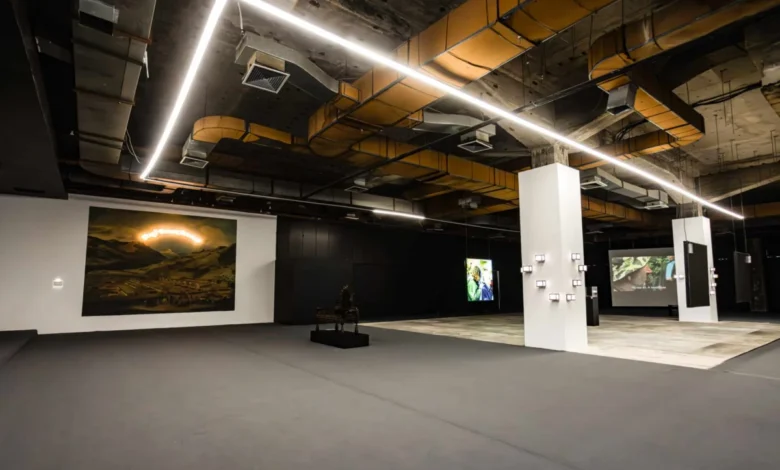
Situated on Mother Theresa Avenue, directly adjacent to the prominent equestrian statue of Albanian historical figure Skanderbeg, Reporting House occupies an unexpected architectural shell—a repurposed former Yugoslav-era department store. Stripped back to its structural, quasi-industrial basics, the imposing modern structure retains its raw aesthetic, featuring exposed ductwork, linear lighting, and open gallery spaces. Over the first two years since its grand opening, the museum has welcomed roughly 30,000 visitors, establishing itself as a vital educational and cultural hub dedicated to documenting wartime journalism, civilian displacement, and the ultimate pursuit of peace.
The Genesis of Conflict and the Power of Wartime Journalism
To fully understand the weight of the exhibits housed within Reporting House, one must examine the geopolitical backdrop of the late 1990s. The Kosovo War, which raged from February 1998 until June 1999, pitted the forces of the Federal Republic of Yugoslavia (comprising Serbia and Montenegro) against the ethnic Albanian separatist Kosovo Liberation Army (KLA). As reports of severe human rights abuses, mass displacement, and ethnic cleansing escalated, the international community faced mounting pressure to intervene.

Journalists operating on the front lines played a pivotal role in shaping global awareness and driving policy decisions. Reporting House captures this high-stakes environment through an expansive collection comprising roughly 500 photographs, 150 television reports, diverse international artworks, and deeply personal artifacts.
Among the most arresting initial exhibits is an ordinary Sony mobile phone that stopped a high-velocity rifle bullet. The shattered device belonged to a BBC television cameraman who was targeted while filming Serbian forces in 1998. The damaged phone is widely believed to have saved his life. The footage captured by him and his journalistic peers galvanized global public opinion, ultimately serving as part of the catalyst for the NATO bombing campaign launched in March 1999—a massive military and humanitarian intervention that fundamentally altered the trajectory of the region.
Personal Testimonies and Material History
Beyond the media apparatus, Reporting House emphasizes the deeply human cost of the conflict through intimate personal histories and rugged physical artifacts. Standing outside the main entrance is a striking architectural installation built from scarred timbers salvaged from houses burned during the war. Inside, visitors encounter an original, conflict-scarred Land Rover Defender vehicle used by reporters navigating the treacherous terrain of 1990s Kosovo.
The museum also chronicles individual acts of resistance and sacrifice. Displayed prominently are the preserved love letters exchanged between Fehmi and Xheve Lladrovci, a married couple and high-ranking KLA fighters. The pair lived in the rugged hills, fought side by side, and ultimately perished together in a fierce firefight against Yugoslav forces in September 1998. These documents bridge the gap between macro-level geopolitical history and micro-level human tragedy, offering visitors a profound meditation on ideology, devotion, and loss.

Curators have deliberately broadened the geographical scope of the exhibits, incorporating contemporary artworks and installations from regions as distant as Mozambique. By drawing parallels between the Balkan conflicts and global struggles involving displacement and state violence, Reporting House encourages visitors to reflect on the universal mechanics of war and peace.
Expanding the Narrative: The Launch of Exodus ’99
Recognizing that the story of 1999 cannot be told solely through the lens of combat and media reporting, the creators of Reporting House recently expanded their footprint. Across the city at the historic Prishtina Train Station, the institution inaugurated a second site: Exodus ’99.
Housed within an authentic railway wagon that was actively used to transport refugees during the height of the hostilities, Exodus ’99 provides an immersive look at the logistics of mass displacement. An adjacent gallery space exhibits personal belongings, documents, and oral histories gathered from individuals who were forced to flee their homes, capturing the terror, uncertainty, and resilience of the refugee experience.
Operational Framework and Community Impact
Operating independently of traditional state-run bureaucratic models, Reporting House has adopted an accessible public engagement strategy. Both the main venue on Mother Theresa Avenue and the Exodus ’99 site at the train station offer free admission to all visitors, ensuring that historical education remains unhindered by financial barriers. Independent exploration is encouraged, though structured guided tours are readily available for those seeking deeper contextual insights.

Visitor Information:
- Reporting House (Mother Theresa Avenue)
- Opening Hours: Tuesday to Sunday, 10:00 – 18:00 (Closed Mondays)
- Exodus ’99 (Prishtina Train Station)
- Opening Hours: Tuesday to Sunday, 12:00 – 18:00 (Closed Mondays)
- Contact & Social Media:
- Phone: +383 48 831 998
- Instagram: @reportinghouse
- Facebook: Reporting House
Broader Implications and Historical Legacy
As the Balkans continue to navigate the complex legacies of the breakup of Yugoslavia, institutions like Reporting House play an indispensable role in societal healing and historical memory. By anchoring historical narratives in tangible evidence—shattered electronics, dented vehicles, handwritten letters, and authentic railway carriages—the museum guards against historical revisionism and collective amnesia.
The implications extend far beyond regional tourism. In an era marked by misinformation, evolving media landscapes, and ongoing global conflicts involving mass displacement, Reporting House serves as an acute reminder of the immense power of documentation. It illustrates how the written word, photographic proof, and fearless broadcast journalism can break through political barriers, compel international intervention, and ultimately reshape the course of human history.