Conquering Wat Phu Tok: A Journalistic Exploration of Thailand’s Most Precarious Cliffside Temple

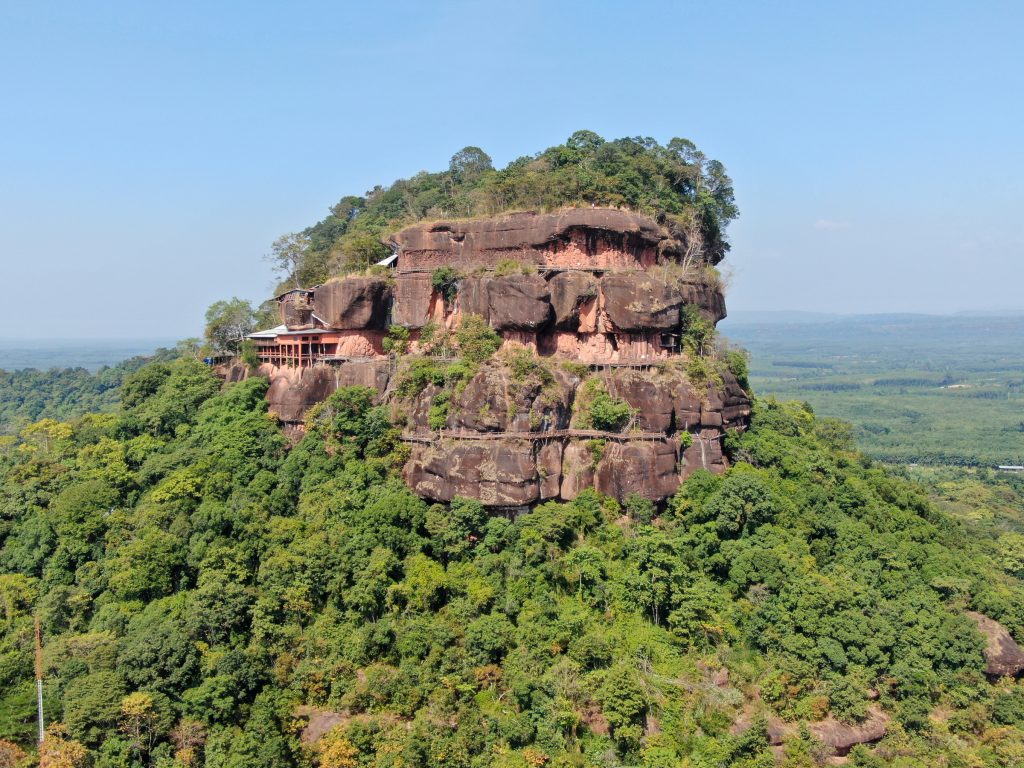
Nestled in the remote and verdant expanse of Bueng Kan province in Thailand’s northeastern Isan region, Wat Jetiyakhiri—universally known as Wat Phu Tok—stands as a remarkable testament to both architectural ambition and spiritual devotion. Rising 359 meters above the surrounding flatlands, this isolated sandstone monolith offers visitors an experience that bridges rigorous physical endurance with profound Buddhist symbolism. As tourism diversifies away from Thailand’s traditional coastal hotspots toward off-the-beaten-path destinations, Wat Phu Tok has emerged as a focal point for cultural travelers seeking both natural isolation and architectural wonder.
Geographical and Regional Context
Bueng Kan, officially recognized as Thailand’s 76th province following its establishment in 2011, has historically remained insulated from the mass tourism streams that characterize Phuket, Chiang Mai, or Bangkok. Bordering the Mekong River and the Lao People’s Democratic Republic, the province is defined by its sweeping agricultural fields, dense woodlands, and dramatic geological formations.

Among these, Wat Phu Tok—derived from the local Isan terminology translating to "lonely mountain"—commands immediate attention. Geologically, the isolated outcropping bears a striking resemblance to other dramatic inselbergs in South and Southeast Asia, most notably the Sigiriya rock fortress in Sri Lanka. Rising abruptly from the surrounding terrain, the mountain provides an unhindered panorama of the Mekong River basin and the expansive canopy of the Isan countryside, creating a natural amphitheater of profound silence and space.
Historical Foundations and Spiritual Architecture

The genesis of Wat Phu Tok is deeply intertwined with the region’s ascetic Buddhist traditions. Founded by the revered meditation master Luang Pu Juan, the site was originally chosen for its rugged, untamed environment. Historically populated by diverse wildlife, including various species of venomous snakes, the treacherous terrain offered the ideal isolation required for intensive monastic meditation.
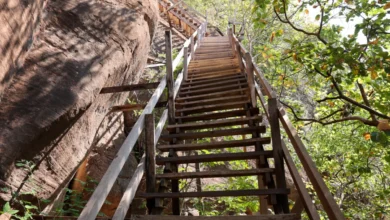
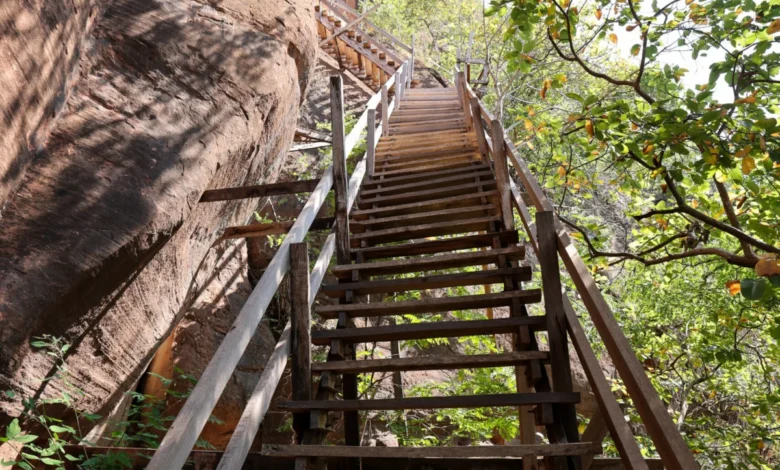
Monk Luang Pu Juan and his followers embarked on an extensive, manual construction project to make the precipitous rock face navigable. Over years of meticulous labor, they engineered a network of wooden staircases, ladders, and cantilevered walkways anchored directly into the vertical cliff faces. These wooden structures were deliberately designed to span seven distinct levels, an architectural layout that directly mirrors the seven stages of spiritual purification and enlightenment in Buddhist cosmology.

Although the founding monk tragically lost his life in a 1980 commercial aviation accident—a disaster that also claimed the lives of several other senior monks—the temple has been continuously maintained by successive generations of monastics and local devotees. Today, the infrastructure remains a functional place of worship and a monument to early regional engineering feats.
Navigating the Seven Levels: A Structural Breakdown

Accessing Wat Phu Tok begins at the base of the mountain, where a sprawling complex featuring a large lake, administrative structures, and parkland welcomes visitors. From the main entry gate, the ascent transitions rapidly from concrete pathways to the signature timber construction.
The lower tiers of the mountain provide a gradual introduction to the terrain, featuring relatively stable staircases interspersed with small shrines. As climbers progress, the angle of ascent steepens significantly, with some sections transforming into vertical wooden ladders. While the timber construction naturally flexes underfoot, structural engineering assessments and regular local maintenance have preserved its general safety.

Level 5: The Ceremonial Hub
The fifth level serves as the primary administrative and ceremonial center of the temple complex. Departing from the sheer cliff paths, this tier features ground-level trails winding through dense foliage and leading to the principal ordination hall. Several subsidiary shrines, meditation caves, and monastic living quarters are integrated into this level.

A notable architectural feature on this tier is an elevated sandstone walkway that detaches from the main circuit, leading visitors via a narrow wooden bridge to a secluded rock-cut shrine situated on an adjacent ledge. This detour highlights the site’s integration of natural rock formations into sacred architecture.
Level 6: The Architectural Masterpiece

The sixth level represents both the physical climax and the most heavily documented feature of Wat Phu Tok. Approximately half of this tier’s circumference consists of wooden plank walkways cantilevered directly into the rock face, suspended hundreds of feet above the forest floor.
While the design induces vertigo and requires intense concentration, it offers panoramic vistas extending across the entire Bueng Kan province and toward the Mekong basin. Structural integrity on this level relies on steel anchors and dense hardwood beams, though park authorities consistently advise visitors to maintain strict situational awareness due to the exposed drops.

Level 7: The Summit and Ecological Considerations
The final tier, the seventh level, marks the absolute summit of the mountain. Unlike the intricate infrastructure of the lower tiers, the seventh level features no constructed walkways or architectural shrines. Instead, it consists of the natural, uneven crown of the sandstone formation.

Historically and currently, this uppermost zone is noted for a high concentration of indigenous wildlife, particularly pit vipers and other venomous reptiles that inhabit the crevices of the rock. Consequently, local authorities and monastic caretakers permit access to the seventh level strictly at the visitor’s own risk, noting that the area holds significance primarily for advanced monastic retreat rather than general sightseeing.
Implications for Regional Tourism and Infrastructure

The growing visibility of Wat Phu Tok in international travel itineraries highlights a broader shift in Thailand’s tourism policy, which increasingly emphasizes sustainable, regional development in secondary provinces like Bueng Kan. By distributing visitor traffic away from overcrowded urban and coastal centers, destinations in the Isan region provide economic stimulus to local communities while promoting environmental conservation.
However, the increasing influx of international and domestic travelers presents logistical and preservation challenges. Managing visitor capacity on fragile wooden cliffside structures requires continuous capital investment, rigorous safety protocols, and proactive maintenance by regional authorities. Furthermore, balancing the sacred nature of an active Buddhist monastery with the demands of adventure tourism necessitates ongoing management to ensure that religious practices and environmental sanctity are preserved.

For travelers and researchers alike, Wat Phu Tok remains a compelling case study where geography, religious philosophy, and early modern engineering converge, offering an unfiltered encounter with Thailand’s remote northeastern heritage.