Uncovering the Past: Inside Reporting House, Prishtina’s Groundbreaking Museum of Conflict, Journalism, and Survival

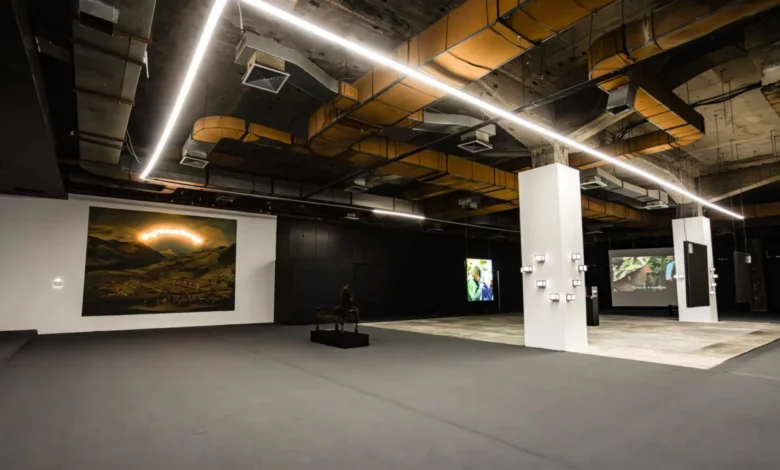
Nearly twenty-seven years after British journalist Christian Jennings first arrived in Kosovo during the height of the 1999 conflict, the landscape of Prishtina has transformed remarkably. Amid the bustling streets, modern cafés, and monuments of the capital, a vital new cultural institution has emerged to document the harrowing realities of that era. Known as Reporting House, this immersive museum has quickly become a landmark on Mother Teresa Avenue, offering visitors an unvarnished look at the intersection of international journalism, armed conflict, and human survival.
Set inside a repurposed Yugoslav-era department store, Reporting House bridges the gap between historical memory and contemporary art. In the two years since its opening, the museum has drawn over 30,000 visitors, serving as both a local educational hub and an international destination. By blending raw archival journalism with contemporary installations from global artists, the museum challenges conventional narratives of war, highlighting the indispensable role that the free press played in shaping international intervention.
The Historical Context: Kosovo in 1998 and 1999
To understand the weight of the exhibits inside Reporting House, one must examine the geopolitical crisis that engulfed the Balkans at the close of the twentieth century. The Kosovo War, which lasted from February 1998 until June 1999, was fought between the forces of the Federal Republic of Yugoslavia (comprising modern-day Serbia and Montenegro) and the ethnic Albanian Kosovo Liberation Army (KLA).
As the conflict escalated, hundreds of thousands of ethnic Albanians were displaced from their homes, triggering a massive humanitarian catastrophe. Tens of thousands poured across borders into neighboring Albania and North Macedonia, seeking refuge from systematic violence. The international community watched with mounting alarm as reports of atrocities mounted.

The turning point in the conflict came in the spring of 1999, when the North Atlantic Treaty Organization (NATO) launched Operation Allied Force—a 78-day aerial bombing campaign targeting Yugoslav military infrastructure. This military intervention ultimately forced the withdrawal of Yugoslav security forces, paved the way for the return of hundreds of thousands of refugees, and led to the establishment of the United Nations Interim Administration Mission in Kosovo (UNMIK).
A Journalistic Lifeline: Artifacts of the Frontline
Reporting House captures this turbulent epoch through an extensive collection of roughly 500 photographs, 150 television reports, and multimedia installations. The curation transcends regional boundaries, featuring works from artists as far away as Mozambique, creating a universal dialogue on the impacts of war and displacement.
Among the most arresting artifacts on display is a battered Sony mobile phone. In 1998, the device was carried in the belt-bag of a BBC television cameraman while he was filming Serbian forces. Struck by a high-velocity rifle bullet, the phone absorbed the impact, miraculously saving the cameraman’s life. The shattered device serves as a visceral metaphor for the dangers faced by international correspondents on the ground.
Journalists operating in Kosovo during the late 1990s faced constant peril. Armed with cameras, notebooks, and satellite phones, these reporters documented human rights abuses, refugee crises, and frontline battles. Their daily dispatches pierced through state-sponsored propaganda, directly influencing public opinion in Western capitals and ratcheting up political pressure on Western governments to intervene.
Other exhibits underscore the harsh realities of front-line reporting. Visitors can inspect an original, heavily dented Land Rover Defender that bore the physical scars of conflict while transporting journalists through hostile zones. Outside the museum, an imposing exterior installation is constructed from scarred timbers salvaged from houses burned during the war, grounding the museum’s modern aesthetic in physical remnants of destruction.

Personal Testimonies and the Human Cost
Beyond the lens of foreign media, Reporting House shines a light on the deeply personal stories of those who fought and suffered. The museum houses poignant mementos, including the love letters exchanged between Fehmi and Xheve Lladrovci, a prominent married couple within the KLA. The couple shared a unified fate, hiding out in the rugged hills, fighting side-by-side, and ultimately perishing together in a fierce firefight against Serbian forces in September 1998.
These personal archives humanize the statistical toll of the conflict, offering visitors a window into the ideological convictions, romantic bonds, and ultimate sacrifices made by local combatants. By placing these intimate documents alongside high-politics reporting and international art, the museum underscores that history is driven as much by individual choices as by geopolitical maneuverings.
Expanding the Narrative: The Exodus ’99 Annex
Building on the success of its flagship location on Mother Teresa Avenue, Reporting House recently expanded its footprint to the Prishtina Train Station with the opening of a second site: Exodus ’99.
Housed inside an authentic railway wagon that was actively used to transport refugees during the 1999 exodus, this annex offers a claustrophobic and deeply moving encounter with history. An adjacent gallery displays personal artifacts, oral histories, and photographs detailing the harrowing journeys endured by families forced from their homes at a moment’s notice.
Broader Impact and Implications
Cultural historians and tourism experts view institutions like Reporting House as crucial components of post-conflict reconciliation and education. In societies recovering from trauma, public memory spaces provide a structured environment for processing collective grief, preserving historical truth, and educating younger generations who did not experience the war firsthand.

Furthermore, the museum’s commitment to free admission—covering both the main facility and the Exodus ’99 annex—ensures that historical education remains accessible to all segments of society, from local school groups to international travelers.
As the world continues to grapple with contemporary conflicts and mass displacement crises, Reporting House offers a timeless lesson in the power of documentation. It stands as a testament to the idea that bearing witness is the first step toward accountability, and that the written word and captured image can indeed prove as formidable as any weapon of war.
Visitor Information
Reporting House
- Location: Mother Teresa Avenue, central Prishtina (adjacent to the Skanderbeg statue)
- Opening Hours: Tuesday to Sunday, 10:00 – 18:00 (Closed Mondays)
Exodus ’99
- Location: Prishtina Train Station
- Opening Hours: Tuesday to Sunday, 12:00 – 18:00 (Closed Mondays)
Admission is entirely free of charge.