As 80,000 trade unionists and students surged through the streets of Paris this past Tuesday, their chants echoing demands for improved educational infrastructure and better conditions for high school students, the city’s historic landscape served as the backdrop for a stark societal duality. While protestors burned effigies of authority and blockaded lycées, a parallel world of extreme wealth and influence unfolded mere miles away. Within the gilded confines of the Grand Palais, the Cour Carrée of the Louvre, and the Tuileries, the global fashion elite gathered for Paris Fashion Week’s Spring/Summer 2027 (SS27) season, marking a moment where the industry’s aesthetic buoyancy stood in vivid contrast to the geopolitical and economic anxieties of the French state.

The juxtaposition was not lost on observers. While the luxury sector navigates a complex global environment—characterized by cooling Chinese consumption, lingering inflationary pressures, and the looming specter of government deficits—the industry’s financial performance remains remarkably insulated. LVMH, the titan of luxury encompassing Dior, Louis Vuitton, and 70 other prestige marques, reported net profits of €10.9 billion for 2025 on revenues of €80.8 billion. Similarly, Chanel announced a profit of $2.9 billion on sales totaling $19 billion. These figures underscore the resilience of the high-end market, even as the broader French economy grapples with the pressures of social volatility.

The SS27 Narrative: A Season of Extreme Levity
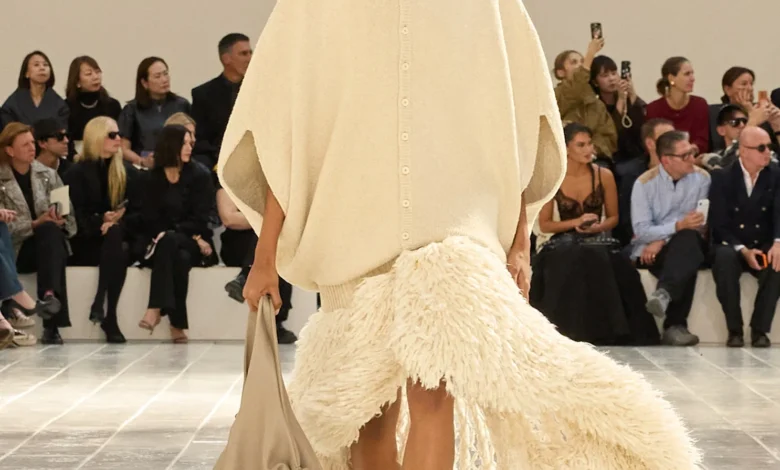
In response to a summer defined by four record-breaking heatwaves across France, designers pivoted toward an aesthetic of radical weightlessness. The SS27 season was defined by a resurgence of "pretty" styles, the fusion of luxury and high-performance sportswear, and a dedication to fabric innovation. The collections, by and large, rejected the heavy, structured silhouettes of previous years in favor of "extreme levity," a design choice that served both as a practical response to climate realities and a stylistic escape from current global tensions.

Chronology of the Spectacle
The week opened with Christian Dior’s installation in the Tuileries, where creative director Jonathan Anderson presented a fluid, aristocratic collection. Using mangrove trees and a mammoth pond as a centerpiece, Anderson introduced sheer, plissé chiffon skirts paired with metallic blazers. The invitation, featuring two ceramic walnuts, served as a metaphor for the collection’s focus on natural asymmetry.

Following the Dior opening, the industry turned its attention to the Seine esplanade for what appeared to be Anthony Vaccarello’s final act for Saint Laurent. In a departure from the brand’s traditional Left Bank sobriety, the show featured 49 looks rendered entirely in 24-karat gold, set against the backdrop of giant chandeliers. While Kering, the parent company, remains tight-lipped regarding specific brand performance, the show was a high-octane display of the house’s decade-long growth, even as critics debated whether Vaccarello’s direction had shifted from innovation to maintenance.

As the week progressed, the tension between legacy houses and modern sensibilities deepened. Tom Ford’s show, restricted to 200 guests inside but besieged by 3,000 fans outside, highlighted the growing influence of micro-influencers. These fans, dressed in self-styled outfits mimicking the label, staged an impromptu street show that mirrored the catwalk’s themes of "perverse chic." Inside, the atmosphere was minimalist, with models appearing in barely-there dresses and broad-shouldered tuxedos, emphasizing the precise, almost clinical tailoring that defined the collection.

Strategic Debuts and Institutional Shifts
The most anticipated moment of the week was the debut of South African-born Drew Henry at Courrèges. Tasked with modernizing the 1961 label without relying on the retro-futurism that has constrained previous directors, Henry delivered a provocative collection featuring ski pants for urban environments and high-collar denim shirts. His success was bolstered by the presence of François-Henri Pinault in the front row, signaling the continued importance of the brand within the Kering portfolio.

Similarly, Schiaparelli’s collection under Daniel Roseberry demonstrated the successful translation of haute couture concepts into wearable ready-to-wear. Set within the Carrousel du Louvre, the show utilized animal motifs—dolphins, horses, and pigs—to ground its surrealist aesthetic. Roseberry’s ability to maintain brand DNA while increasing commercial viability remains a blueprint for other luxury houses struggling to bridge the gap between runway fantasy and retail reality.

The Role of Sport and Performance
The "new normal" of sportswear was a pervasive theme, championed most notably by Miuccia Prada at Miu Miu. At 78, Prada continues to lead the discourse on how luxury fashion must adapt to a world where "dressing up" is increasingly reserved for the red carpet. By integrating mountaineering ropes and cords into everyday garments, the collection effectively blurred the line between the athletic and the elegant. The participation of cultural figures such as Olivia Colman and Ella Bleu Travolta further cemented the brand’s relevance in a celebrity-obsessed market.

This fusion of movement and tailoring was echoed by other designers. At Givenchy, Sarah Burton, formerly of Alexander McQueen, showcased an impeccable series of suits with inverted-V vents and biker jackets transformed into leotards. Her work represents a masterclass in the "hard and soft" juxtaposition, marking a successful tenure that has revitalized the house’s image.

Cultural Commentary and Global Context
Perhaps the most poignant moment of the week occurred at the show of Gabriela Hearst, who drew inspiration from the ethnolinguistic cultures of Afghanistan. By referencing the history of Afghan dress and the resilience of women under restrictive political regimes, Hearst’s collection provided a sharp, intellectual counterpoint to the season’s otherwise escapist trends. The show was not merely a stylistic exercise but a political statement on women’s rights, punctuated by the use of local Afghan artisans to produce the textiles.

This blend of art and fashion was also evident at Akris, where designer Albert Kriemler translated the abstract paintings of Martha Jungwirth into silk columns and laser-cut chiffon. By mimicking the texture of paper through treated leathers, the collection elevated the act of garment construction to a sophisticated artistic discipline.

Closing Acts: Chanel and Louis Vuitton
The week reached its crescendo with Chanel and Louis Vuitton, two houses that serve as the primary bellwethers for the luxury sector’s health. At the Grand Palais, Matthieu Blazy’s Chanel show was an "exuberant statement of fashion levity," featuring oversized bird wings and lingerie-jersey fishing-net looks. The collection, which saw a 16 percent rise in like-for-like revenue for the brand during the first half of the year, confirmed that Chanel’s move toward "flight" and freedom resonates with current consumer desires.

Louis Vuitton concluded the week with a spectacle in the Cour Carrée of the Louvre. Nicolas Ghesquière, marking his 13th year at the helm, presented an "ergonomic fantasia" populated by AI-generated taxi prototypes. The collection, focused on lightweight, second-skin materials, was a direct response to the warming climate and a shifting requirement for a more functional, yet aspirational, wardrobe. Ghesquière’s observation that clothes must now be "weighed on a balance" to determine their relevance speaks to a broader industry shift toward intentional, climate-conscious design.

Broader Implications and Future Outlook
The SS27 Paris Fashion Week ultimately projected an industry that is simultaneously grounded in extreme financial success and searching for new ways to remain relevant. While the streets of Paris remain the site of genuine civil friction, the luxury industry continues to operate in a sphere that demands constant reinvention. The success of houses like LVMH and Chanel, despite global economic headwinds, suggests that the luxury consumer remains largely shielded from the macroeconomic volatility affecting the broader population.

However, the trend toward extreme lightness and the integration of functional sportswear indicates a long-term adaptation to climate change and a changing social hierarchy. As designers continue to "uplift the normal," the industry is likely to face increasing pressure to balance its spectacular, high-budget presentations with the realities of a world that is becoming more politically and environmentally conscious. For now, the "Goose Moon" of the Grand Palais and the AI-taxis of the Louvre serve as the final images of a season that chose to look toward the horizon, even as the ground beneath it shifted.