Tracking the Ancient Steppe: Conservation Efforts for Kazakhstan’s Nomadic Saiga Antelope

The rugged expanses of the Central Asian steppe have long served as a crucible for resilience, hosting life-forms that predate recorded human history. Among the most iconic of these survivors is the saiga antelope (Saiga tatarica), a species that once shared an ecosystem with woolly mammoths and saber-toothed cats. Today, however, these prehistoric nomads face a modern gauntlet of industrial development, infrastructure fragmentation, and shifting climate patterns. Recent field audits conducted by conservationists in western Kazakhstan highlight both the precarious state of the species and the innovative cross-border strategies being deployed to secure their future.
The Dynamics of the Rut and the Steppe Environment
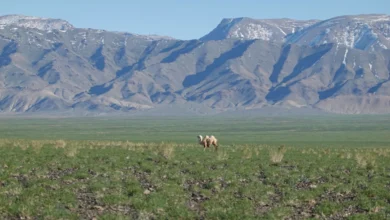
The western leg of a recent field audit by the Association for the Conservation of Biodiversity of Kazakhstan (ACBK) coincided with the saigas’ annual rutting season. During this critical biological window, vast herds converge on the treeless plains, engaging in high-stakes mating rituals. Male saigas rely on aggressive displays of dominance, including fierce headbutting and structural posturing, to attract females.
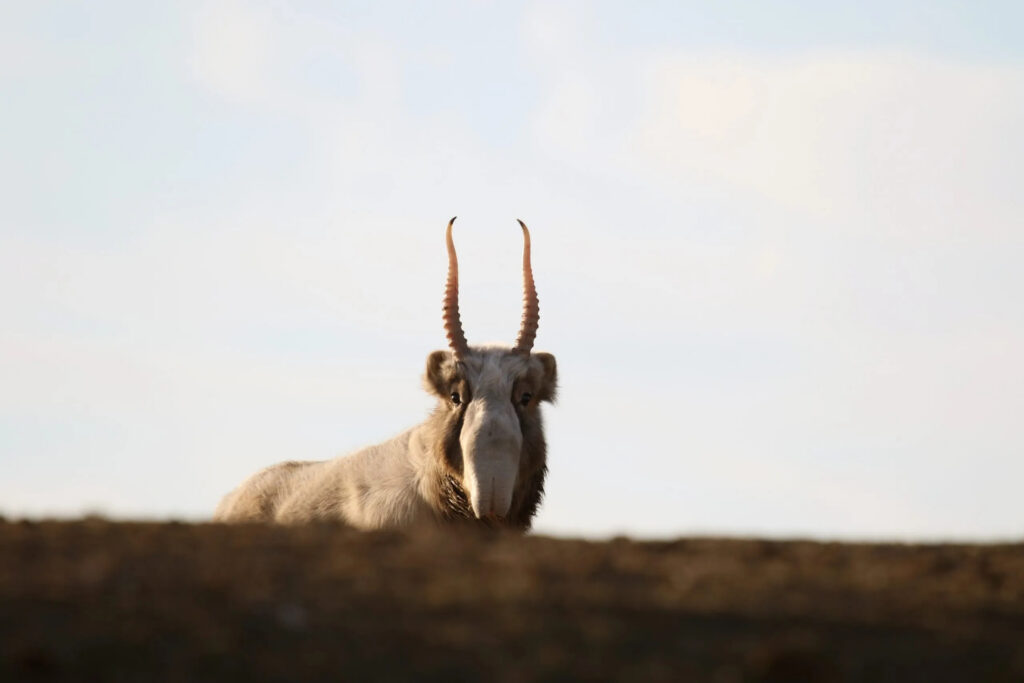
A defining physiological characteristic of the saiga is its distinctive, elongated, proboscis-like nose. Beyond serving as a visual indicator of male vigor and fitness to prospective mates, this specialized nasal cavity plays a vital thermoregulatory and filtering role. It warms frigid winter air before it enters the lungs and filters out harmful dust particles kicked up during high-speed movements across the arid semidesert plains.
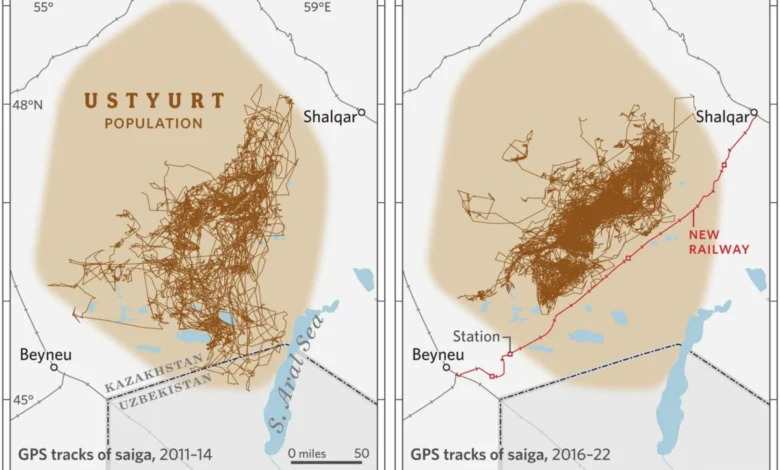
Field researchers Alexandr and Albert, veterans of the ACBK with more than 25 years of combined field experience, timed their monitoring efforts to observe these population concentrations. Navigating the western steppe during this transitional season presents severe logistical challenges. Seasonal rains frequently transform the landscape into deep sludge, while sudden Siberian storms rapidly freeze the terrain into hazardous whiteout conditions. Despite these harsh environmental variables, the ACBK team utilizes advanced tracking technologies, including GPS telemetry, to monitor herd movements across boundaries that have become increasingly constrained by human development.
Historical Context and the Echoes of Nomadism
The geography of western Kazakhstan is steeped in deep cultural and historical significance. The region’s nomadic traditions trace their roots back to the Early Iron Age. Etymological analysis suggests that the word "Kazakh" derives from the Turkic root qaz, meaning "wanderer" or "vagabond." For millennia, human societies practiced seasonal vertical migration, moving herds to higher altitudes during the summer and seeking sheltered river valleys ahead of winter storms.
These traditional transit corridors eventually paved the way for the development of the Great Silk Road. As an evolving network of pathways linking Europe and Asia, the fertile banks of the Ural River—serving as the geographical boundary between the two continents—became a vital transcontinental crossroads. Strategic settlements along this route offered resting points, public baths, and supply depots for weary caravans.
Throughout these epochs, saiga antelopes were regarded with reverence by overland voyagers. Cave paintings dating back to the seventh century BCE depict the ungulates as elusive, charismatic survivors. However, twentieth-century Soviet policies of mandatory sedentarization largely dismantled traditional human nomadic lifestyles, forcing populations into agrarian frameworks. While human societies largely transitioned to settled urban centers, saigas retained their ancient migratory imperatives, setting the stage for acute ecological conflict in the modern era.
Infrastructure Fragmentation and Ecological Implications
The post-Soviet era brought rapid industrial expansion, characterized by the construction of expansive rail networks, paved highways, and border security fencing. For a species dependent on unhindered long-distance migrations, these linear infrastructure projects have proven catastrophic.
Data compiled by ACBK researchers illustrate how modern barriers disrupt historical migration routes. For instance, tracking data from GPS-collared saigas historically demonstrated regular seasonal migrations deep into neighboring Uzbekistan. However, the construction of a major railway line in 2014 abruptly severed this migratory pathway. Post-construction data revealed that herds became trapped on the northern side of the tracks, unable to access traditional winter grazing grounds and water sources to the south.
Conservation scientists emphasize that such disruptions cause a severe loss of spatial knowledge—a generational cultural transfer comparable to the erasure of a language. Just as human communities forced into sedentarization lost connection with ancestral navigational routes, young saigas learn safe migration paths through active observation of older herd members. When these pathways are bisected, entire migratory cultures face functional extinction.
Collaborative Mitigation and Cross-Border Solutions
To counteract these fragmentation pressures, conservation organizations and governmental bodies have initiated targeted mitigation measures. The ACBK, in close partnership with the Kazakh government, has spearheaded the establishment of new wildlife sanctuaries informed directly by empirical GPS tracking data.
Furthermore, engineers and conservationists have designed innovative, saiga-friendly infrastructure modifications. Along critical rail corridors, authorities have constructed sloping dirt ramps that mirror the height of train tracks, creating the visual illusion of a natural gap in the barrier. Combined with strategically positioned cattle-guard fences placed far from these crossings, these measures allow saigas to traverse railways safely without colliding with trains.
International cooperation has also yielded results along geopolitical boundaries. ACBK has collaborated with authorities in Uzbekistan to modify traditional barbed-wire border fences into X-shaped barricades. These structures successfully deter unauthorized vehicular traffic while leaving sufficient ground clearance for saigas to migrate freely.
Future Outlook and Conservation Trajectory
The survival of the saiga antelope remains a barometer for the ecological health of the Eurasian steppe. While historical population bottlenecks—including a catastrophic mass mortality event in 2015 caused by hemorrhagic septicemia—devastated the global population, recent counts indicate a fragile recovery, with numbers rebounding into the hundreds of thousands thanks to rigorous anti-poaching enforcement and habitat protection initiatives.
As conservationists continue to audit herds against the backdrop of an increasingly industrialized landscape, the integration of empirical science with infrastructure planning offers a viable blueprint for coexistence. Protecting the saiga is not merely an effort in single-species management; it is an active preservation of an ancient ecological rhythm that defines the heritage of Central Asia.