The unveiling of the Glenmorangie 50 Years Old represents a milestone in the annals of Scotch whisky, marrying the technical prowess of long-term maturation with the avant-garde aesthetics of contemporary ceramic design. Priced at £25,800 (approximately $34,200), this release is limited to a global run of just 149 bottles. More than a mere luxury spirit, the project—titled Together in Spirit—seeks to blur the lines between liquid history and sculptural form, challenging the traditional paradigm of how aged single malts are presented and consumed.
The Genesis of a Half-Century Spirit
The story of this 50-year-old release began long before it reached the bottling line. When Dr. Bill Lumsden, the director of distilling, whisky creation, and whisky stocks at Glenmorangie, arrived at the distillery in 1995, he inherited a vast library of aging spirits. Among the 300,000 casks were precious remnants of the 1960s and 1970s. By 1999, Lumsden had curated a specific parcel of 25-year-old spirit, comprised of a blend of 75 percent first-fill bourbon and 25 percent first-fill Oloroso sherry casks.
Rather than bottling this expression, Lumsden embarked on a long-term experiment. He married the spirit into a refill bourbon hogshead—a vessel that had already been utilized twice before. To ensure the spirit would survive the decades without becoming over-oaked, he commissioned the Speyside Cooperage to recooper the cask with extreme precision, creating a "tight" seal. This strategic choice minimized the interaction between the spirit and the wood, allowing the whisky to breathe and evolve at a glacial pace.
This period of maturation, which spanned from 1999 to roughly 2023, was fraught with the inherent risks of long-term aging. As Dr. Lumsden noted during the project’s launch at the Gleneagles estate, "The risk increases exponentially with age." Evaporation, often referred to as the "angel’s share," threatens the liquid volume, while excessive tannin extraction from the oak can turn a delicate spirit into an astringent, woody extract. Lumsden’s patient monitoring in the distillery’s dunnage warehouses culminated in a spirit that retained its character without succumbing to the ravages of time.

Historical Context and Distillation Evolution
A critical factor in the unique profile of this release is the provenance of its base spirit. The whisky includes batches produced from the final runs of Glenmorangie’s traditional floor maltings, which ceased operations in 1977. This era of production utilized different techniques and equipment compared to the modern high-efficiency systems employed today.
Modern chemical analysis of the spirit reveals a "subtle smokiness," a remnant of that bygone era that is largely absent from contemporary Glenmorangie profiles. This ghost of the past is preserved in the liquid, providing a sensory bridge to the distillery’s mid-20th-century output. Tasting notes indicate a complex profile: a fragrant nose of toffee and raisin, a buttery, soft mouthfeel, and a finish characterized by notes of orange peel, cumin, and a dry, ashy resonance from the historic floor-malted barley.
The Architectural Vessel: Peter Pincus and the Art of "Together in Spirit"
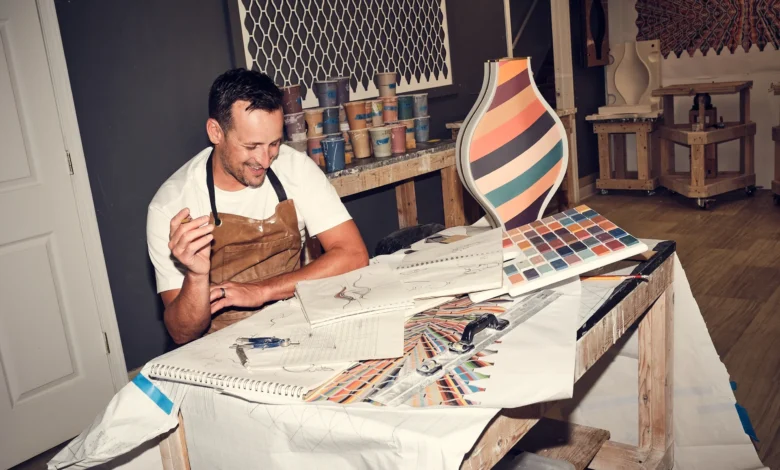
The presentation of the Glenmorangie 50 Years Old is as significant as the liquid itself. Collaborating with renowned ceramic artist Peter Pincus and his wife, Laurie Pincus, the distillery sought to create a vessel that was not merely a container, but an extension of the whisky’s narrative. Peter Pincus, an educator at the Rochester Institute of Technology, brought a deep historical understanding of ceramics to the project, drawing inspiration from neoclassical influences and the work of 18th-century innovators like Josiah Wedgwood.
The design process spanned over three years. The resulting porcelain structure is a complex, tessellated composition that wraps around the bottle. The ceramic forms are layered in hues of rust, blue, pink, ochre, and gray, meant to evoke the sensory experience of the whisky. Because each of the 149 vessels is hand-crafted and unique, the collection functions as a singular, unified installation—Together in Spirit—before the individual pieces are dispersed to collectors.
Pincus describes his work as a form of "journalism," noting that while the whisky will eventually be consumed, the ceramic vessel remains a permanent, physical archive. By integrating the bottle into the structure, the Pincuses have transformed the packaging from a utilitarian object into a sculptural "dwelling" for the spirit.

Data and Market Implications
The release of 149 bottles at a price point of £25,800 places this whisky firmly in the ultra-luxury segment of the spirits market. According to recent data from the Knight Frank Luxury Investment Index, rare whiskies have historically outperformed many traditional asset classes, driven by scarcity and the increasing demand for "liquid history."
However, the intersection of high art and high-proof spirits introduces a new variable into the market: the "artistic premium." In this instance, the value is derived not only from the rarity of the 50-year-old liquid but also from the bespoke nature of the ceramic casing. For investors and collectors, this poses a dilemma: the potential for appreciation is tied to the preservation of the object as a complete set. If the bottle is opened and the liquid consumed, the integrity of the sculptural piece is technically altered, though the artistic value remains.
Industry and Expert Response
The professional response to the project has been one of curiosity regarding the future of luxury spirit packaging. By commissioning a fine artist to develop a proprietary, non-traditional vessel, Glenmorangie has signaled a move away from the ornate, often mass-produced crystal decanters that dominate the high-end whisky sector.
Dr. Lumsden has expressed a nuanced view of the final product, noting that while he is proud of the artistic achievement, he remains a distiller at heart. "It’s a bittersweet experience for me," he remarked at the launch, "because it is such an amazing piece of art that it makes me sad to think there probably will be people who will never drink the whisky."
This sentiment captures the core tension of the project: the desire to create something that is meant to be experienced versus the desire to create something that is meant to be preserved. Both Lumsden and Pincus have stated that they ultimately hope the owners will enjoy the liquid, as the whisky and the vessel were designed to function as an interdependent experience.

Broader Implications for the Scotch Industry
The release of the Glenmorangie 50 Years Old suggests a broader trend in the Scotch whisky industry toward "experiential luxury." As the market for aged stocks becomes increasingly competitive, distillers are looking for ways to differentiate their premium offerings through storytelling and artistic collaboration.
This project also highlights the importance of archival management. By holding back stocks for decades, Glenmorangie has demonstrated the long-term value of patience in a market often characterized by the demand for rapid turnover. The use of historic, floor-malted grain also serves as a reminder that the heritage of a distillery is a finite resource. As these older spirits become increasingly scarce, the value of the remaining casks will inevitably continue to climb.
As the 149 pieces of Together in Spirit are distributed globally, the project will serve as a case study in how heritage brands can successfully pivot toward the art world to enhance the perception of their product. Whether the bottles remain sealed as art pieces or are opened to reveal the liquid history within, the collaboration between Lumsden and Pincus stands as a testament to the idea that both whisky and art, when crafted with sufficient time and intention, serve as enduring records of human creativity.