Beyond the Shores of Bali: The New Era of High-End Travel in the Indonesian Archipelago

When Christopher Wilmot-Sitwell first ventured into Indonesia in the late 1980s, the nation’s tourism footprint was defined by a shoestring culture. For the Western traveler of that era, the experience was almost exclusively synonymous with the beaches of Bali, often navigated via local transport and modest hostels. Today, as a Robb Report Travel Master and the co-owner of Cazenove & Loyd, Wilmot-Sitwell oversees a drastically different reality. He now orchestrates bespoke, three-week itineraries that delve into the furthest reaches of the 17,000-island archipelago, blending traditional cultural immersion with the kind of high-touch, seamless logistics that were non-existent four decades ago. His philosophy—to “zig when others zag”—has become the guiding principle for a new breed of affluent traveler seeking to bypass the congestion of traditional tourist hubs.

The Evolution of Indonesian Luxury Tourism
The trajectory of Indonesia’s luxury sector can be traced back to a specific period of infrastructure development at the end of the 20th century. The arrival of the Aman resort brand in 1989 and 1992 served as the catalyst for high-end hospitality in the region, proving that remote, culturally rich landscapes could support world-class service. However, unlike the Mediterranean or the Caribbean, Indonesia’s geography presents unique logistical hurdles. The nation spans a distance equivalent to that between New York and Los Angeles, spread across three time zones and thousands of islands.
For travelers arriving from the United States, where transit times can reach 30 hours, the complexity of moving between islands—ranging from the volcanic peaks of Java to the pristine marine ecosystems of Raja Ampat—is a significant barrier. Edita Sgovio, a lead strategist at Kensington Tours, characterizes the current state of Indonesian infrastructure as “not as seamless as the Greek Islands.” This friction, however, is precisely what has created a premium market for expert curation. By leveraging private aviation, yacht charters, and localized ground support, agencies are effectively neutralizing the geographic challenges that once deterred the ultra-luxury market.

A Chronology of Access: From Backpacking to Bespoke Odysseys
The shift in how Indonesia is consumed by the international elite is not merely a result of more hotels, but of better-integrated experiences. In the late 1980s, travelers were largely confined to Bali’s southern coast. By the early 2000s, the emergence of boutique luxury, such as Nihi Sumba, began to draw attention to the outer islands, offering travelers a sense of "untouched" exclusivity.
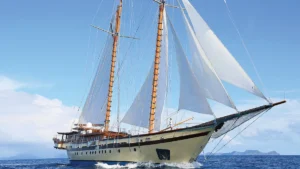
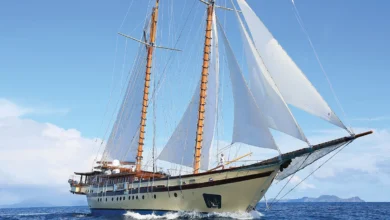
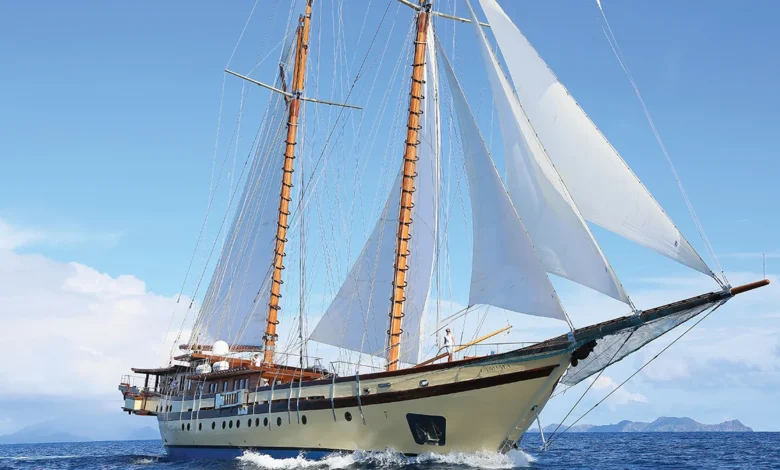
In 2026, the launch of specialized divisions, such as Kensington Tours’ "Ultraluxe," marked a maturation point in the industry. This division represents a transition from simple hotel bookings to end-to-end, "frictionless" travel management. A typical current itinerary, such as the nine-day "Indonesia Odyssey," serves as a benchmark for this new standard. Guests begin at the Mandapa, a Ritz-Carlton Reserve in Ubud, providing a sophisticated transition period to adjust to the climate and time zone. The journey then transitions to a four-day expedition aboard a traditional phinisi—a handcrafted wooden yacht—sailing the Lesser Sunda Islands. These vessels, such as the Lamima, offer a bridge between ancestral seafaring traditions and modern, high-end maritime comfort.

Data and Infrastructure: The Numbers Behind the Growth
Indonesia’s commitment to tourism as an economic pillar is reflected in recent government investment. The Ministry of Tourism and Creative Economy has prioritized the development of "Super Priority Destinations" (SPDs), which include Lake Toba, Borobudur, Mandalika, Labuan Bajo, and Likupang. These regions are receiving significant funding for airport upgrades, improved road networks, and sustainable energy projects.
According to data from the Indonesian Central Statistics Agency (BPS), the nation has seen a consistent uptick in foreign tourist arrivals following the post-pandemic recovery, with a notable shift toward longer average lengths of stay. The average stay for luxury travelers has extended from seven days to nearly 14, as itineraries now routinely include multiple provinces. Furthermore, the development of a new international airport on the northern side of Bali is expected to reduce transit times for travelers heading to the island’s more secluded northern coast, effectively decentralizing the tourism industry and alleviating the pressure on the south.

The Intersection of Craft and Commercial Luxury
The allure of Indonesia for the high-net-worth individual is not limited to natural landscapes; it is deeply rooted in a tangible craft culture that is increasingly being integrated into the travel experience. A prime example is the synergy between the island’s artisanal traditions and global luxury brands. The jewelry house John Hardy, which maintains a significant presence in Bali, has helped bridge the gap between cultural heritage and the global luxury market.
Reed Krakoff, creative chairman of John Hardy, notes that the appeal of Bali lies in the extreme contrast of environments located in close proximity. "There are the beaches and the forest. It’s really rare that you have these kinds of differentiated environments so close together," Krakoff explains. This diversity allows luxury travel providers to construct narratives that move guests from the silversmithing workshops of Ubud to the remote surfing breaks of Sumba within a matter of hours.

Implications for the Future of Remote Luxury
The rise of the "vetted" travel experience has significant implications for both the visitor and the host communities. For the traveler, the benefit is the removal of the "uncertainty factor." By avoiding the common pitfalls of navigating the archipelago—such as delayed ferries or uncoordinated transfers—the traveler preserves the sanctity of their leisure time.
However, this growth brings with it the responsibility of sustainable management. The Indonesian government, in partnership with private luxury operators, is increasingly focusing on "quality tourism" over mass-market volume. This involves strictly regulated access to sensitive sites, such as the Komodo National Park, and a move toward carbon-offsetting initiatives for yacht charters and private air travel.

The impact of this high-touch model is a more robust, resilient tourism economy. By funneling high-spending visitors into less-trafficked regions, the burden on Bali’s ecosystem is redistributed. Furthermore, the use of locally staffed vessels and locally sourced produce for high-end dining provides a more direct economic benefit to the outer islands, which were previously left out of the tourism boom.
Conclusion: The New Frontier
As the world’s luxury travel market continues to prioritize privacy, authenticity, and exclusivity, Indonesia is uniquely positioned to lead. The transition from the backpacker-centric travel of the 1980s to the meticulously curated, high-end expeditions of 2026 demonstrates a sophisticated understanding of what modern travelers require. Whether it is swimming with stingless jellyfish in the remote waters of Misool or finding silence in a private villa at the edge of the Indian Ocean, the archipelago is no longer just a destination—it is a collection of distinct, elevated experiences.

For the traveler willing to invest in expert curation, the complexities of the Indonesian landscape transform from obstacles into elements of the adventure itself. As the infrastructure continues to improve and the reach of luxury operators expands, the "hidden" corners of Indonesia will become increasingly accessible, provided one has the right guide to point the way. The future of travel in this region is not about finding the most popular spot, but about discovering the most profound connection, supported by the quiet, absolute efficiency of a modern, professional travel infrastructure.