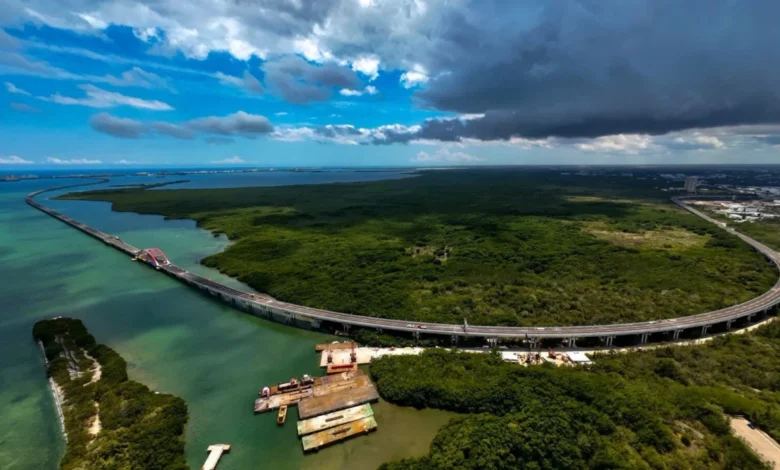
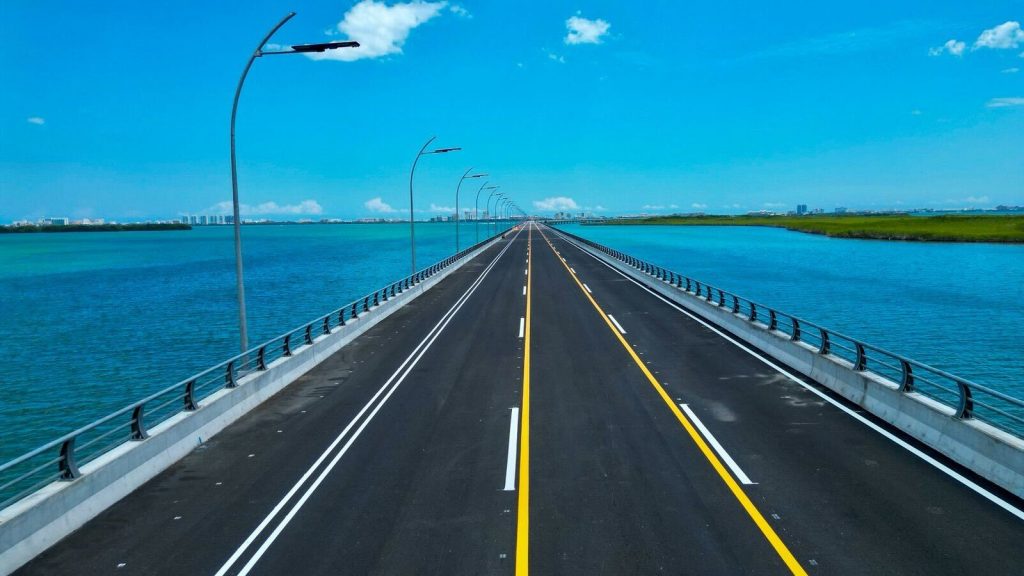
The completion of the Nichupté Bridge marks a watershed moment in the infrastructure development of Quintana Roo, fundamentally altering the logistics of travel within one of the world’s most visited tourism corridors. Spanning the Nichupté Lagoon, this engineering project provides a critical alternative route between downtown Cancún and the Hotel Zone. By alleviating the long-standing bottleneck of the Kukulcán Boulevard—the sole primary artery previously serving the area—the bridge promises to reduce transit times significantly, enhance emergency response capabilities, and facilitate a more fluid experience for the millions of travelers who pass through Cancún International Airport annually.
A Strategic Response to Infrastructure Strain
For decades, the physical geography of Cancún necessitated a reliance on a single main road to funnel traffic from the mainland to the narrow barrier island that hosts the city’s world-renowned resort district. As tourism figures surged, this configuration became a source of significant logistical friction. During peak seasons and high-traffic events, the commute from the airport or downtown to the Hotel Zone could stretch from a standard 20-minute trip to over an hour of congestion.
The Nichupté Bridge serves as a multi-modal solution designed to decouple local traffic from the tourist-heavy thoroughfares. By offering an efficient bypass, the project aims to integrate the vibrant cultural offerings of downtown Cancún—including its expanding culinary, commercial, and residential districts—with the coastal tourism assets. This connectivity is not merely a convenience for vacationers; it is an economic imperative for a region where tourism accounts for a substantial portion of the Gross Domestic Product.
Chronology of Development
The path to the bridge’s completion was a complex undertaking involving multi-year federal and state planning. Initial proposals for a crossing over the lagoon had been discussed for years as a theoretical solution to regional traffic saturation. However, the project gained significant momentum in the early 2020s as post-pandemic travel demand surged, exposing the fragility of the existing transportation network.
- 2021-2022: The Mexican federal government, in coordination with the state of Quintana Roo, formalized the architectural and environmental impact studies required for the project.
- 2023: Procurement and construction phases commenced, involving rigorous engineering standards to ensure the structure could withstand the unique environmental pressures of the lagoon ecosystem, including high humidity, saline exposure, and the risk of tropical weather events.
- 2024-2025: Throughout the construction period, stakeholders monitored the project’s impact on local logistics. The completion of the bridge was prioritized alongside other regional upgrades, such as the modernization of terminal facilities at the international airport.
- 2026: The bridge officially opened to traffic, coinciding with its formal presentation to the global tourism community during the EDGE 2026 conference in San Diego.
Data-Driven Infrastructure Needs
The necessity of the Nichupté Bridge is underscored by the sheer volume of traffic the region manages. Cancún International Airport consistently ranks as one of the busiest hubs in Latin America. According to data from the Mexican Ministry of Tourism (SECTUR), the state of Quintana Roo welcomes over 20 million visitors annually.
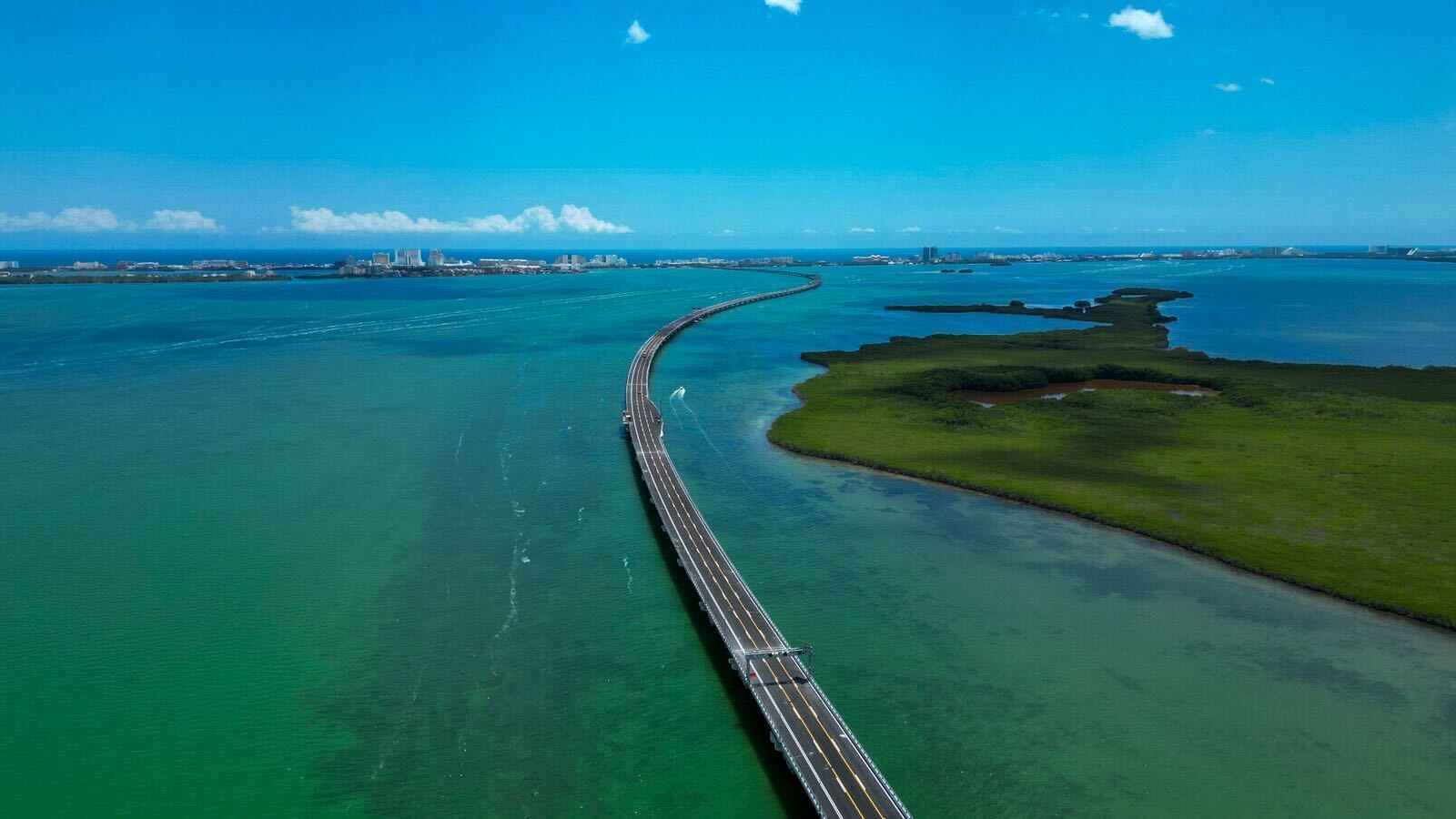
The logistical burden of moving these travelers—combined with the daily commute of over 100,000 workers employed in the hospitality sector—created a systemic strain on Kukulcán Boulevard. Traffic flow analysis conducted prior to the bridge’s design indicated that the region was nearing a "saturation point" where economic growth could be stifled by transit inefficiency. The new bridge is projected to decrease travel times for daily commuters by approximately 30 to 40 percent during peak hours, effectively returning hundreds of thousands of hours in productivity to the local economy on an annual basis.
Official Perspectives and Institutional Alignment
The unveiling of the project at the EDGE 2026 conference served as a symbolic bridge between Mexico’s current infrastructure investments and its future as a global events host. Andrés Martínez Reynoso, CEO of the Mexican Caribbean Tourism Board, noted that the bridge is an essential component of a broader "modernization mandate."
"The Nichupté Bridge is more than just a span across the water; it is a fundamental shift in how we approach the tourism experience," said Martínez Reynoso during the conference proceedings. "We are moving from a model that prioritizes the hotel room to a model that prioritizes the entire journey. By removing the friction of transit, we allow our guests to engage more deeply with the entirety of the destination, from the beaches to the heart of our city."
The official announcement that the EDGE 2027 conference will be hosted in the Cancún-Riviera Maya region further signals the government’s confidence in its improved infrastructure. The decision to host such a significant international event serves as a stress test and a showcase for the region’s newfound capacity to manage large-scale visitor influxes with modern efficiency.
Broader Implications for the Mexican Caribbean
The implications of the Nichupté Bridge extend far beyond the convenience of a shorter commute. Urban planners and regional analysts view the project as the first of many necessary steps to transform the Mexican Caribbean into a more integrated, sustainable, and diversified destination.
1. Urban Integration
By providing a direct link to the Hotel Zone, downtown Cancún is poised for a revitalization. Historically, many tourists remained isolated within the "resort bubble." With easier access to the city center, local businesses, authentic dining experiences, and cultural centers are likely to see increased patronage, leading to a more equitable distribution of tourism revenue.
2. Emergency Response and Resilience
The project also addresses critical safety concerns. Previously, the reliance on a single road created a bottleneck that could hinder emergency services during evacuations or large-scale incidents. The addition of a secondary, high-capacity route increases the resiliency of the entire region, providing redundant pathways for medical and emergency personnel.
3. Environmental Stewardship
While major infrastructure projects in protected lagoon areas often face environmental scrutiny, the Nichupté Bridge was designed with specific sustainability mandates. Modern construction techniques were employed to minimize the impact on the lagoon’s seabed and local marine life. This focus on "conscious infrastructure" is becoming a requirement for major projects in the region, as both travelers and local regulators place a higher premium on ecological preservation.
4. The "Rhythm of Travel"
The industry-wide shift toward "seamless travel" is evident in the bridge’s design. Today’s travelers—particularly those in the luxury and business segments—often judge a destination not just by its accommodations, but by the efficiency of its transit. By prioritizing the "experience between the destinations," the Mexican Caribbean is positioning itself to compete with other global hubs that offer high-speed, low-friction transit.
Conclusion: A New Standard for Tourism Logistics
The completion of the Nichupté Bridge is a testament to the evolving priorities of the Mexican Caribbean. As the region matures, it is moving away from the "isolated resort" model toward a more holistic, interconnected urban and leisure environment. For the visitor, the bridge means more time spent at the beach or exploring downtown and less time in transit. For the region, it represents a necessary investment in the longevity and quality of its most vital economic engine.
As international focus shifts toward the upcoming EDGE 2027 conference, the Nichupté Bridge will undoubtedly serve as the primary case study for how a destination can successfully scale its infrastructure to meet the demands of 21st-century global tourism. The bridge is not merely a path across a lagoon; it is a gateway to a more accessible, efficient, and integrated future for one of the world’s most iconic travel destinations.