The Rise of the Modern Bathhouse: How New York’s Wellness Scene is Redefining the Boardroom


We’re used to business meetings happening over breakfast, workouts doubling as networking opportunities, and a game of padel becoming a chance to discuss a deal. The modern professional landscape has become increasingly obsessed with the "third space"—environments that are neither home nor the office, yet facilitate the social and professional connections that drive the city. It was perhaps only a matter of time before the bathhouse, a sanctuary of ancient tradition, emerged as the latest venue for the quasi-board meeting.
Across the globe, communal bathing is far from a modern invention. From the intricate architectural marvels of Turkish hammams and the utilitarian, steam-filled sentos of Japan to the quiet, wood-paneled sanctity of Finnish saunas, the bathhouse has served as a cornerstone of public life for millennia. However, the current iteration seen in New York City represents a distinct, high-end pivot. These venues are no longer merely places for hygiene; they are meticulously curated environments that marry design, luxury service, and social cachet. By blending the aesthetic sensibilities of a boutique hotel with the restorative properties of a high-end spa, these modern bathhouses are carving out a new niche in the luxury wellness market.
A Chronology of the Bathhouse Evolution
The evolution of the bathhouse in the Western context has been marked by a transition from public utility to private luxury. In the early 20th century, bathhouses in the United States were often basic, public-health-focused facilities serving densely populated immigrant neighborhoods. As indoor plumbing became universal in the post-war era, these public bathhouses largely vanished, relegated to the margins of urban history.

The 21st-century resurgence began in the mid-2010s, driven by a growing scientific interest in contrast therapy—the practice of alternating between extreme heat and cold. Research published by the Journal of the American College of Cardiology suggests that regular sauna use may be linked to improved cardiovascular health and reduced systemic inflammation. As this data permeated mainstream wellness circles, the demand for accessible, professional-grade heat therapy spiked. By 2020, entrepreneurs began responding to this demand by infusing the concept with the design-forward ethos of the modern era, creating spaces that were not only physiologically beneficial but also architecturally significant.
The Physiology and Psychology of Disconnection
The appeal of the modern bathhouse is rooted in a physiological response, but its success in a high-pressure city like New York is largely psychological. In an era of hyper-connectivity, the bathhouse serves as one of the few remaining "analog" zones. Upon entering, the mandate is clear: surrender the device, leave the watch in the locker, and cease the constant pursuit of optimization.
This forced deceleration is a radical form of luxury. In a culture that prizes "hustle," the act of sitting quietly—or even engaging in low-stakes conversation—in a thermal pool is a disruption of the standard professional workflow. While some may find the vulnerability of sitting nearly naked alongside a venture capitalist or a corporate attorney uncomfortable, early adopters suggest it acts as a great equalizer. Stripped of suits, devices, and corporate signifiers, the social hierarchy flattens, making the bathhouse an unexpectedly effective environment for human-centric networking.
Landscape of the New York Bathhouse Scene
The current market in New York is defined by a diverse range of philosophies, from the grand to the intimate.
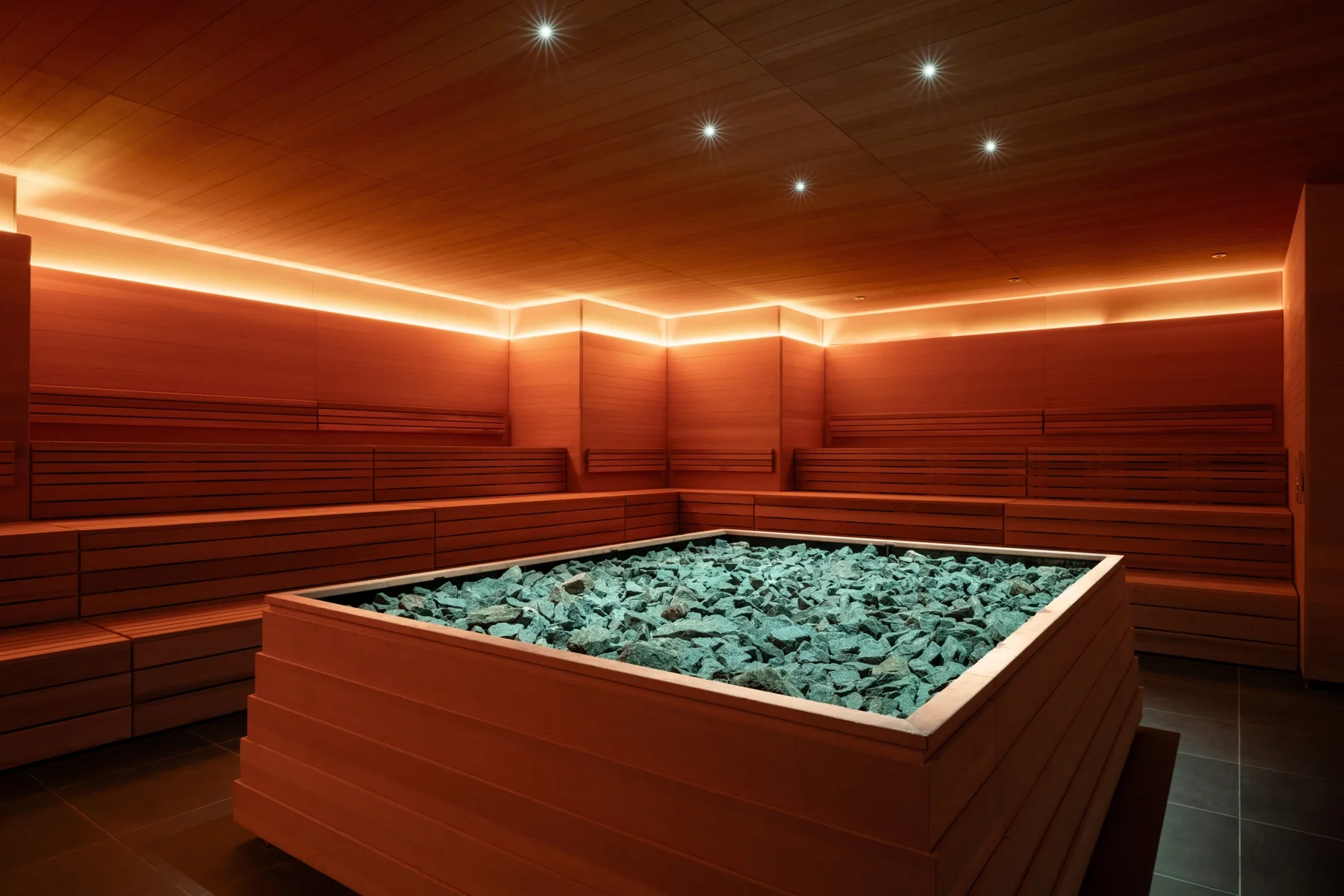
QC Spa NY, situated on Governors Island, offers a sprawling, resort-style experience. By utilizing the island’s unique position, the facility provides an outdoor hydrotherapy circuit that frames the Manhattan skyline, turning the bathhouse experience into a destination event rather than a quick stop.
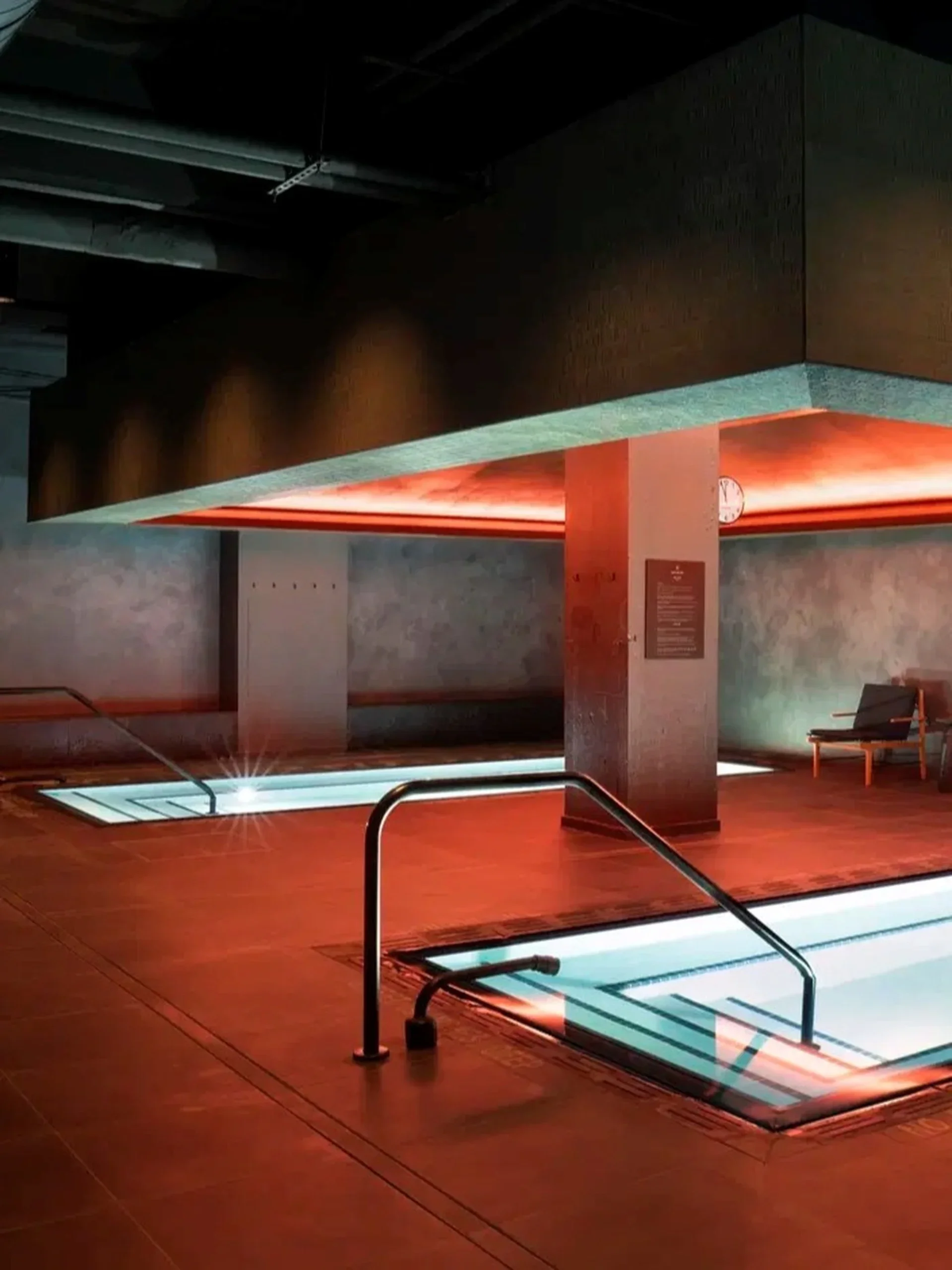
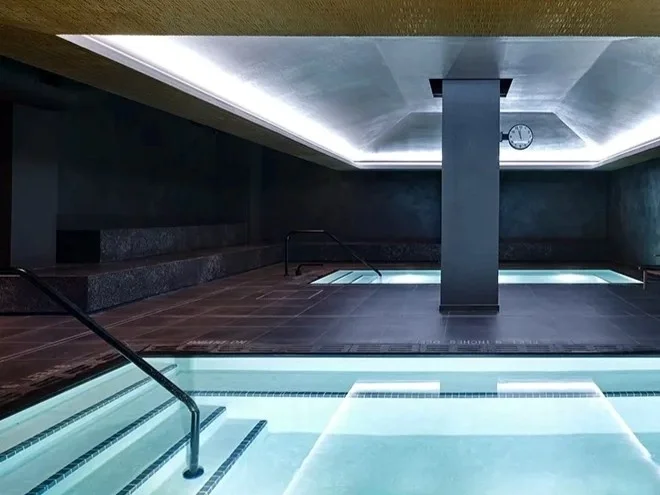
In contrast, the Bathhouse brand, with locations in Flatiron and Williamsburg, represents the design-forward evolution of the sector. Designed by the Rockwell Group, these spaces emphasize a sterile, modern aesthetic that feels more like an upscale lounge than a traditional spa. The incorporation of aufguss rituals—a theatrical process where a sauna master uses towels to circulate steam infused with essential oils—adds a layer of sensory performance that has proven highly popular among a demographic accustomed to experiential retail and high-end hospitality.
For those seeking exclusivity, the AIRE Ancient Baths on the Upper East Side offers a more subdued, atmospheric experience. Located within a former MoMA warehouse, the space limits its capacity to ensure an intimate environment, focusing on thermal pools and a signature suspended flotarium that encourages total physical and mental isolation.
Finally, Othership Flatiron represents the shift toward the "social" bathhouse. By hosting a 90-person performance sauna that utilizes guided breathwork and music, Othership has tapped into the communal aspect of wellness, proving that there is a significant market for those who wish to experience the physical benefits of heat therapy within a group setting rather than in solitude.
Navigating the Ritual: Etiquette and Protocol
As the trend gains momentum, newcomers often grapple with the unwritten rules of the space. Priit Kallas, CEO of the Estonian sauna manufacturer Iglucraft, emphasizes that while traditions vary, the core of the experience remains universal: respect.
"The sauna is not a temple of enforced silence, but it is a space of shared intent," Kallas notes. "Whether you are in a high-end Manhattan facility or a traditional Estonian cabin, the primary rule is to follow the room."
From a practical standpoint, the rules are straightforward:
- Textiles: Always use a towel to sit on for hygiene. In some spaces, swimwear is mandatory; in others, it is optional. Always verify the venue’s specific policy before arriving.
- Digital Hygiene: Phones are universally discouraged, if not strictly prohibited. The environment is intended to be a digital-free zone.
- Consumption: Alcohol and heavy meals are incompatible with the physiological stress of intense heat. Hydration is the priority.
- Pacing: There is no professional advancement in enduring the highest temperature. The practice is meant to be restorative, not a test of physical stamina.
Economic and Social Implications
The rise of the high-end bathhouse is a reflection of a broader shift in the luxury economy. Spending is moving away from the consumption of tangible luxury goods—such as watches or high-end apparel—and toward the consumption of "wellness capital." Data from the Global Wellness Institute suggests that the global wellness economy is now valued in the trillions, with "thermal and mineral springs" representing one of the fastest-growing sub-sectors.
The integration of these facilities into the urban fabric of New York indicates that wellness is no longer an occasional indulgence, but a structural component of the high-performance professional’s life. The implication for developers and urban planners is clear: as residents of dense urban centers become more health-conscious, the demand for communal, non-commercialized spaces that provide mental and physical restoration will continue to climb.
Furthermore, the bathhouse serves as a case study in how ancient cultural practices can be successfully recontextualized for a modern, globalized audience. By focusing on design, privacy, and curated experiences, these operators have managed to strip away the "old world" stigma of communal bathing and replace it with a prestige brand identity.
As we look toward the future, the integration of these spaces into the corporate wellness conversation seems inevitable. Companies looking to foster employee well-being and organic networking are already beginning to explore partnerships with these venues. While the traditional boardroom will always have its place, the shift toward "thermal networking" suggests that the most effective deals of the next decade might just be made in the quiet, steam-filled corners of a city that never stops moving.
Ultimately, the bathhouse is an invitation to pause. In a city defined by its velocity, the ability to stop—to sit with strangers, to breathe, and to exist without the need for productivity—has become the ultimate status symbol. Whether for the physiological benefits of heat and cold or the simple, rare pleasure of disconnecting, the New York bathhouse has secured its place as a permanent, and perhaps necessary, fixture of modern life.