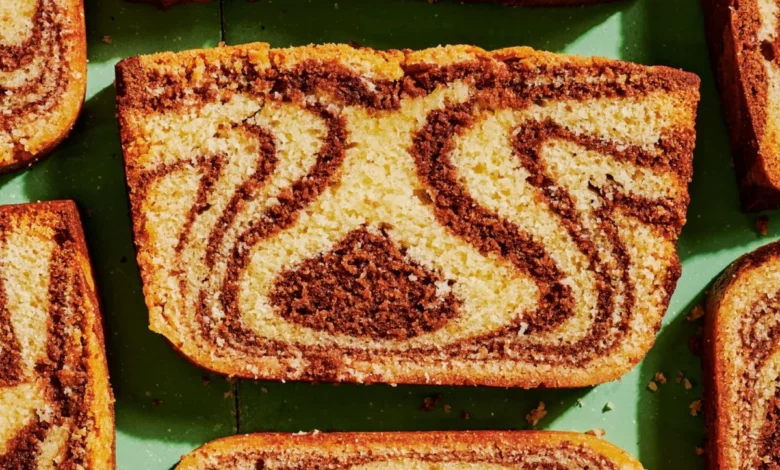
The malted milkshake, a fixture of the mid-20th-century American culinary landscape, has experienced a significant resurgence in contemporary pastry arts. Beyond its historical status as a staple of the soda fountain era, the flavor profile—defined by a distinct chemical interaction between malted barley, wheat flour, and evaporated milk—has become a subject of renewed interest for professional bakers and food scientists alike. This revival is exemplified by the development of sophisticated baked goods, such as the striped malted pound cake, which utilizes specific thermal techniques and infusion methods to elevate the traditional malted experience.
The Chemistry of the Malted Flavor Profile
The characteristic taste of malt is not a singular ingredient but the result of the Maillard reaction, a chemical process that occurs when amino acids and reducing sugars are subjected to heat. In the production of malted milk powder, the process begins with the germination of barley, which releases enzymes that convert starches into simple sugars. When this mixture is combined with wheat flour and whole milk and subsequently toasted, the sugars undergo controlled caramelization.
Food chemists note that the depth of flavor in malted products is highly dependent on the temperature at which the mixture is toasted. A precisely managed thermal environment ensures the development of nutty, toasted notes without the bitterness associated with burning. This scientific foundation explains why malted sweets possess a unique sensory profile that is neither purely saccharine nor purely savory, but rather a complex, umami-rich sweetness that lingers on the palate.
Chronology of the Malted Phenomenon
The integration of malt into the American diet can be traced back to 1887, when British chemist James Horlick patented "malted milk" in the United States. Initially marketed as a nutritional supplement for infants and the elderly, its utility expanded rapidly during the early 1900s.
- 1922: Ivar "Pop" Coulson, a Walgreens employee, is widely credited with adding malted milk powder to the standard vanilla milkshake, creating the iconic "malted."
- 1930s–1950s: The "malt shop" becomes a central social hub in American culture, cementing the flavor as a hallmark of nostalgic Americana.
- 1980s–1990s: The commercial availability of malted sweets, such as Whoppers and malted chocolate bars, maintains the flavor’s relevance, though culinary applications in high-end baking remain limited.
- 2020–Present: A shift toward "comfort baking" and a consumer preference for nostalgic, artisanal flavor profiles drive pastry chefs to experiment with malted ingredients in pound cakes, buttercreams, and syrups.
Technical Innovations in Loaf Cake Production
The contemporary approach to malted pound cake production emphasizes structural integrity and flavor layering. Unlike traditional marble cakes, where batters are often swirled, the striped malted pound cake relies on a disciplined layering technique. Culinary analysts observe that distinct layering prevents the flavors of the vanilla and chocolate batters from bleeding into one another, allowing the malted characteristics of each to remain individually perceptible.
The implementation of a "cold oven" baking method is a notable deviation from standard pastry protocols. In a traditional preheated oven, the outer edges of a cake often set and brown before the center has fully risen, leading to an uneven crumb. By initiating the bake in a cold oven, the internal temperature of the batter rises gradually. This ensures that the leavening agents react uniformly, resulting in a fine, melt-in-the-mouth crumb structure. Furthermore, the use of a malted vanilla syrup—applied via a pastry brush to the warm surface of the cake—serves as a delivery mechanism for concentrated malt flavor, as the syrup migrates into the porous structure of the cake during the cooling process.
Broader Culinary Applications and Economic Implications
The versatility of malted syrup, once confined to the soda fountain, has expanded into diverse culinary sectors. Industry data suggests that malt-based additives are increasingly being utilized in savory cooking, particularly in the reduction of glazes for root vegetables and as a flavor enhancer in proteins such as roasted poultry.
"The move toward incorporating malt into savory applications represents a maturing of the ingredient’s role in the kitchen," notes Dr. Elena Vance, a food historian focusing on 20th-century American foodways. "When used to glaze roasted sweet potatoes or carrots, the malted syrup provides a complexity that balances the natural earthiness of the vegetables, mirroring the way it balances the richness of dairy in a milkshake."
Furthermore, the integration of malt into morning routines—such as mixing the syrup into coffee, oatmeal, and yogurt—demonstrates the ingredient’s successful transition from a "dessert-only" category to a versatile pantry staple. This expansion of use-cases has prompted smaller, artisanal producers to refine their malted extract processes, moving away from mass-market powders toward more complex, liquid-based malt concentrates.
Market Impact and Future Outlook
The current trend toward artisanal malted products reflects a broader consumer interest in the origin and processing of food ingredients. As shoppers become more discerning, they are increasingly seeking out the specific, toasted flavor profile that only authentic malted barley can provide.
From an economic perspective, the rise of the "malted revival" is part of a larger trend in the baking industry known as "premiumization." By applying complex techniques—such as syrup infusions and controlled thermal baking—to humble staples like the loaf cake, bakeries are able to justify higher price points while simultaneously offering a product that triggers emotional resonance with consumers.
The implication for the baking industry is clear: success in the current market relies on balancing historical sentiment with technical precision. Whether applied to a professional kitchen or a domestic setting, the success of a malted confection depends on the baker’s ability to manipulate the fundamental chemistry of the malted grain. As the industry continues to innovate, it is likely that malt will move further away from its association with mid-century soda shops and into the realm of essential, high-quality baking ingredients, firmly established as a staple of modern professional and home kitchens alike.
This evolution is not merely a passing trend but a functional adaptation of a classic flavor. By treating malted barley as a nuanced ingredient—capable of both deep sweetness and savory complexity—culinary professionals are ensuring that the legacy of the malted flavor will persist, continuing to bridge the gap between historical nostalgia and modern gastronomic excellence.