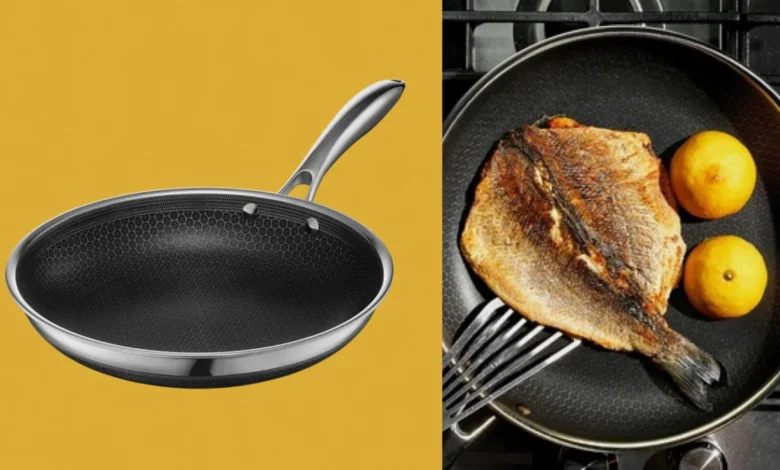
Odds are you have encountered a HexClad pan before, whether through a high-production social media advertisement, a placement on reality television, or a celebrity endorsement. Before the July 2024 announcement of a $100 million strategic investment from Studio Ramsay Global—the production company founded by celebrity chef Gordon Ramsay—the brand had already established a dominant digital presence. By leveraging aggressive influencer marketing and viral promotional partnerships, HexClad transitioned from a niche startup into a household name, prompting a surge in consumer inquiries regarding the efficacy and longevity of "hybrid" cookware.
The Rise of the Hybrid Cookware Market
HexClad belongs to a segment of the kitchenware industry known as "hybrid cookware." Unlike traditional nonstick pans, which feature a smooth surface, or classic stainless steel, which relies on temperature control and fat for release, hybrid pans utilize a textured grid pattern. This design consists of raised stainless steel "peaks" and recessed "valleys" coated in ceramic nonstick material. The manufacturer posits that this architecture creates a dual-function surface: the steel peaks provide the searing capability of a traditional pan, while the recessed ceramic protects against abrasion from metal utensils.
This design evolution comes at a time when the cookware market is undergoing a shift toward consumer convenience. Data from kitchenware industry reports indicate that nonstick pans represent the highest volume of sales in the retail cookware sector, largely driven by home cooks seeking ease of use and rapid cleanup. However, the inherent physical limitations of nonstick coatings—which are designed to be sacrificial rather than permanent—have created a consistent cycle of replacement for consumers.
Chronology and Market Positioning
The brand’s trajectory has been marked by rapid expansion and aggressive marketing. Initially launched with PTFE (polytetrafluoroethylene) coatings, the company transitioned to ceramic-based nonstick formulations as consumer demand shifted toward materials marketed as "PFAS-free."
In 2024, the $100 million infusion from Studio Ramsay Global served as a significant milestone, signaling a move toward global market consolidation. This investment followed years of building a reputation through "educational" content, where the brand claimed its pans combined the searing performance of stainless steel with the nonstick convenience of ceramic. According to the company’s own marketing literature, the products are designed to last a lifetime, a claim that has sparked debate among materials scientists and professional chefs regarding the chemical realities of ceramic coatings.
Material Science and the Limits of Longevity
To understand why consumer dissatisfaction often arises within months of purchase, one must examine the metallurgical reality of ceramic coatings. Professor Rob Macfarlane of MIT, an expert in materials science, notes that ceramic nonstick coatings are typically silica-based sol-gels. These coatings function by filling the microscopic pores of a metal pan with a smooth, slick material.
"These coatings are inherently brittle," Macfarlane explains. "When you heat and cool a pan, the metal and the ceramic coating expand and contract at different rates. Over time, this thermal cycling causes micro-fractures in the ceramic layer. As these fractures accumulate, the surface becomes more textured, which increases friction and leads to food adhesion."
The implication is clear: even with the "protective" stainless steel peaks of a hybrid pan, the ceramic in the valleys remains subject to the same physical degradation as any other nonstick pan. This explains why independent product testers often find that while these pans perform exceptionally well in "fresh out of the box" demonstrations, their nonstick properties inevitably decline within 12 to 24 months of regular, heavy use.
The Controversy of "Seasoning" Nonstick
A central point of contention in recent consumer discourse involves the brand’s maintenance recommendations. HexClad has suggested that users "season" their pans with neutral oil over low heat to improve performance. This recommendation has been met with skepticism by culinary professionals, as the process of seasoning—the polymerization of fats—requires a porous, reactive surface like that of cast iron or carbon steel.
On a stainless steel or ceramic surface, oil does not form the same long-term molecular bond. Instead, it creates a temporary layer of fat that acts as a physical barrier. While this can provide a fleeting sense of nonstick performance, it does not constitute true seasoning. Critics argue that advising consumers to treat a nonstick pan like a cast-iron skillet undermines the primary value proposition of the product: convenience. If a user must manually oil, heat, and maintain the surface, the distinction between "hybrid" cookware and traditional, more durable materials becomes functionally negligible.
Price Comparison and Value Analysis
When evaluating whether the investment in HexClad is justifiable, one must look at the competitive landscape. A 12-inch HexClad fry pan typically retails for approximately $179. In the same price bracket, consumers can purchase high-end, three-ply, bonded stainless steel cookware from established industry stalwarts like All-Clad, which are often priced around $160.
The fundamental difference lies in longevity. A quality stainless steel pan has no coating to degrade; with proper technique, it can last for generations. Conversely, the hybrid pan is a limited-lifespan tool. While brands such as Oxo, Greenpan, and Zwilling have entered the hybrid market with lower-cost alternatives, the overarching issue remains: the consumer is paying a premium for a product that is, by its very nature, temporary.
Broader Implications for the Cookware Industry
The popularity of HexClad reflects a broader trend in direct-to-consumer marketing, where the narrative of "innovation" is used to justify higher price points for goods that occupy a middle ground between convenience and durability. For the average home cook, the desire to avoid the learning curve associated with stainless steel or carbon steel is a powerful motivator. However, this convenience comes at the cost of sustainability and long-term financial efficiency.
Market analysts observe that as long as social media influencers continue to prioritize "visual performance"—such as the classic "sliding egg" test—brands will continue to see high conversion rates for nonstick products. Yet, the long-term trend suggests a potential "backlash" as consumers begin to track the actual lifespan of their equipment. Reddit forums and consumer review sites have seen an increase in threads documenting the loss of nonstick properties, suggesting that the "lifetime" marketing narrative is increasingly at odds with real-world user experience.
Conclusion: Evaluating the Alternatives
For those who insist on the utility of a hybrid or nonstick pan, the market is saturated with options that offer similar performance at a fraction of the cost. However, professional culinary advice remains consistent: the most durable path forward involves learning to manage heat in traditional, uncoated pans.
Stainless steel, cast iron, and carbon steel are the industry standards not because of marketing, but because they are chemically and physically capable of outlasting their owners. When a consumer buys a pan that requires constant "re-seasoning" and will eventually lose its primary function, they are not buying an heirloom; they are buying a consumable.
As the cookware industry continues to evolve, the focus may eventually shift back to these time-tested materials. For now, the "hybrid" trend stands as a testament to the power of branding in the modern kitchen, proving that in the digital age, a compelling narrative can sometimes outweigh the underlying physical properties of the product itself. Consumers are encouraged to weigh the cost of convenience against the reality of a product that, despite its high-tech appearance, is still subject to the inescapable laws of thermodynamics and material fatigue.