The OTUS Project: Drones Pierce the Veil of Tornado Fury for Unprecedented Scientific Insight

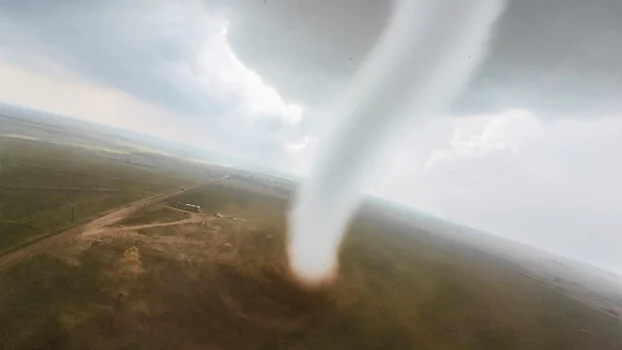
A daring endeavor, once relegated to the realm of science fiction, is now a tangible reality for a dedicated team of storm chasers. The OTUS Project, an acronym for Observations of Tornadoes by UAV Systems, is pushing the boundaries of meteorological research by deploying custom-built camera drones directly into the heart of active tornadoes. This pioneering initiative has successfully executed over a dozen intercepts, culminating in a groundbreaking achievement in June when the project live-streamed a drone’s penetration into an EF3 tornado for the very first time. The implications of this technological leap are profound, promising to revolutionize our understanding of these destructive natural phenomena and enhance public safety.
Pioneering the Skies: Inside the Tornado’s Core
The core of the OTUS Project’s mission lies in its ability to gather vital, real-time data from an environment previously inaccessible to scientific instruments. Piloting specially engineered drones into wind speeds exceeding 100 miles per hour, the team collects surface-level metrics such as temperature, moisture levels, and wind velocity. This data, nearly impossible to acquire through traditional ground-based or airborne methods, provides an unprecedented granular view of tornado dynamics. Beyond the scientific payload, these missions offer a mesmerizing, first-person perspective from within the tornado’s funnel, an experience that is as awe-inspiring as it is terrifying. A recent intercept near Arnett, Oklahoma, captured by the OTUS Project, vividly illustrates the raw power and chaotic beauty of a tornado’s interior.
The video footage, embedded within the project’s reporting, showcases a disorienting yet scientifically invaluable view. Debris churns violently, air currents swirl with immense force, and the sheer scale of the vortex is palpable. This visual testament underscores the extreme conditions these drones are designed to withstand. The challenge is not merely observation; it is survival.
Engineering Resilience: Crafting the Tornado-Proof Drone
The remarkable resilience of the OTUS Project’s drones is a testament to meticulous engineering and a refusal to rely on off-the-shelf solutions. These are not commercially available models; they are bespoke machines built from the ground up. Louis Tucker, a distinguished National Collegiate Drone Racing Champion from 2023, serves as the project’s lead builder and pilot, responsible for the intricate assembly and operation of these specialized aircraft. Complementing his expertise is engineer Tanner Beard, who utilizes a formidable array of tools in his home workshop – including a mill, a lathe, a welder, and a battery of 3D printers – to fabricate the critical components.
The airframes themselves are predominantly 3D-printed, a choice that allows for both customization and rapid iteration. Weighing a mere two pounds, these lightweight yet robust structures are engineered to achieve speeds of up to 220 miles per hour. This impressive velocity and aerodynamic design are crucial for their survival, enabling them to punch through the turbulent debris and extreme vertical wind loads characteristic of a tornado, rather than being easily deflected or destroyed.
Each drone is equipped with a high-definition GoPro camera, providing the stunning visual documentation for which the project is becoming known. Simultaneously, an array of sophisticated sensors diligently logs essential environmental data: temperature, humidity, barometric pressure, and three-dimensional wind loads. The team maintains a fleet of approximately 15 such aircraft, with individual units costing around $2,500. This investment, coupled with extensive research and development, has led to a significant personal financial commitment from the team, with Tucker estimating their out-of-pocket expenses to have exceeded $25,000 in a single year.
Innovation Driven by Necessity: The Omnidirectional Wind Sensor
The very existence of the OTUS Project’s advanced instrumentation stems from a critical gap in existing technology. There was simply no commercially available sensor capable of meeting their stringent requirements for lightness and functionality. To address this, the team collaborated with the National Institute of Standards and Technology (NIST). Nelson Tucker, a key figure in the project, spearheaded the development of an omnidirectional wind sensor. This innovative device possesses the unique capability to measure a tornado’s vertical wind component, a crucial element of tornado dynamics that remains largely unquantigated by ground-based instruments. The challenge was to create a sensor that was both highly accurate and light enough to be integrated into a drone without compromising its flight performance.
The flight protocol employed by the OTUS Project is as calculated as the drone’s construction. Before a direct penetration, the drones meticulously orbit the tornado’s outer bands at various altitudes. This phased approach allows for the collection of contextual data and a gradual acclimatization to the turbulent environment. As conditions permit, the flight path tightens, progressively drawing the drone closer to the vortex’s core until it finally crosses into the funnel itself, commencing the critical data acquisition phase.
The Dual Pillars: Spectacle and Science
While the visual spectacle of drones venturing into the heart of a tornado is undeniably captivating and serves as a powerful initial hook, the fundamental driving force behind the OTUS Project is rigorous scientific inquiry and the enhancement of public safety. The data gathered from the core of a tornado holds the potential to significantly refine meteorological models. More accurate and detailed information about wind speeds, pressure gradients, and atmospheric conditions within the vortex can lead to sharper, more precise tornado warnings. Such improvements could translate into precious extra minutes for communities to take shelter, potentially saving lives and mitigating damage.
For those involved in video production and aerial cinematography, the OTUS Project’s achievements serve as a staggering testament to the evolving capabilities of small drone technology. The imagery captured, offering an intimate, first-person perspective from within the destructive power of a tornado, represents a leap forward that would have been considered pure fantasy just a few years ago. This opens up new frontiers for documenting extreme weather events and understanding their impact.
Background and Chronology of an Ambitious Pursuit
The quest to study tornadoes up close is not new. For decades, meteorologists and storm chasers have risked their lives to gather data. Early efforts involved heavily reinforced vehicles and specialized equipment deployed near tornado paths. The advent of Doppler radar provided a significant leap in understanding tornado signatures, but it offered a macroscopic view, unable to penetrate the immediate core. The development of mobile mesonets (mobile meteorological measurement networks) allowed for the collection of localized data, but still from a safe distance.
The OTUS Project represents the next evolutionary step. The conceptualization likely began with the increasing sophistication and affordability of drone technology and miniaturized sensors. The critical breakthrough came with the development of the custom-built drones and the specialized omnidirectional wind sensor.
- Pre-2023: Early research and development into drone capabilities for atmospheric research, alongside advancements in miniaturized sensor technology. Collaboration with institutions like NIST to explore novel measurement approaches.
- 2023: Louis Tucker’s success in the National Collegiate Drone Racing Championship likely provided a significant boost in piloting expertise and demonstrated the potential of high-performance drones.
- 2024: Intensive prototyping and testing of custom-built drones and sensor packages, focusing on durability and data acquisition capabilities in simulated extreme conditions.
- June 2024 (and ongoing): The OTUS Project embarks on its operational phase, successfully conducting multiple drone intercepts into active tornadoes. The project achieves a major milestone by live-streaming a drone’s penetration into an EF3 tornado, bringing unprecedented visual and scientific data to a global audience.
Supporting Data and Scientific Implications
Tornadoes are among the most violent storms on Earth. Their formation and structure are complex, involving rapid updrafts, rotating mesocyclones, and the generation of extreme winds. Official data from the National Oceanic and Atmospheric Administration (NOAA) indicates that tornado intensity is classified using the Enhanced Fujita (EF) Scale, with EF3 tornadoes capable of causing severe damage, including stripping trees from their roots and lifting trains off their tracks. The wind speeds within an EF3 tornado can range from 136 to 165 miles per hour.
The data collected by the OTUS Project’s drones, such as precise temperature gradients, moisture saturation levels, and detailed wind vectors (including the crucial vertical component), can provide invaluable validation for numerical weather prediction (NWP) models. Current models often struggle to accurately represent the microphysics and dynamics within the tornado core. By providing direct observational data, the OTUS Project can help refine these models, leading to:
- Improved Tornado Genesis Prediction: Understanding the atmospheric conditions that lead to tornado formation.
- Enhanced Intensity Forecasting: Better prediction of how strong a tornado will become.
- More Accurate Track Prediction: Improving the accuracy of where a tornado will travel.
- Refined Warning Lead Times: The ultimate goal is to increase the time between a tornado warning and its arrival, allowing for more effective evacuations and sheltering.
Official Responses and Future Outlook
While specific official statements from meteorological agencies regarding the OTUS Project were not immediately available in the provided content, it is logical to infer that such innovative research would be met with keen interest and potential collaboration. Agencies like NOAA and the National Weather Service (NWS) are perpetually seeking advancements in tornado forecasting and warning capabilities. The data generated by the OTUS Project aligns directly with their scientific objectives.
It is plausible that meteorologists and atmospheric scientists are closely monitoring the project’s findings. The ability to collect in-situ data from within a tornado offers a unique opportunity to:
- Validate Radar and Satellite Data: Corroborate remote sensing observations with direct measurements.
- Study Tornado Debris Signatures: Analyze the composition and movement of debris within the vortex, which can inform damage assessment and safety protocols.
- Investigate Tornado-Tornado Interactions: Potentially study how multiple tornadoes might interact, a phenomenon still not fully understood.
The future of the OTUS Project holds immense promise. As drone technology continues to advance, and as the team refines its engineering and operational strategies, we can anticipate even more sophisticated missions. The potential for deploying swarms of drones to create a multi-point observational network within a tornado, or even exploring the possibility of sampling different types of tornadoes (e.g., landspouts vs. supercell tornadoes), are exciting future prospects. The ethical considerations of such flights, particularly regarding privacy and potential disruption to ground operations, will also likely be a topic of ongoing discussion and policy development.
Broader Impact and Implications
The OTUS Project transcends the immediate scientific endeavor. It serves as a powerful symbol of human ingenuity and our persistent drive to understand and mitigate the forces of nature. The successful integration of advanced robotics, cutting-edge sensor technology, and dedicated human expertise showcases the potential for innovation in addressing complex societal challenges.
For the general public, the project offers a visceral connection to the power of tornadoes, demystifying these often-feared events through compelling visual evidence. It also highlights the evolving landscape of data collection and scientific research, demonstrating how accessible technology can be harnessed for significant scientific breakthroughs. The financial commitment and personal dedication of the OTUS team underscore the passion and sacrifice that often underpin groundbreaking scientific exploration.
Ultimately, the work of the OTUS Project is not just about capturing dramatic footage; it is about building a more resilient future. By pushing the boundaries of what is possible in meteorological research, they are contributing to a world where communities are better informed, better warned, and better prepared to face the fury of nature’s most powerful storms. The drones piercing the veil of tornadoes are not just instruments of science; they are harbingers of a new era in storm research, promising clearer skies and safer horizons for all.