Piolet d’Or alpinist Hiroyoshi Manome leads successful first ascent of Kangchung Shar’s southwest pillar

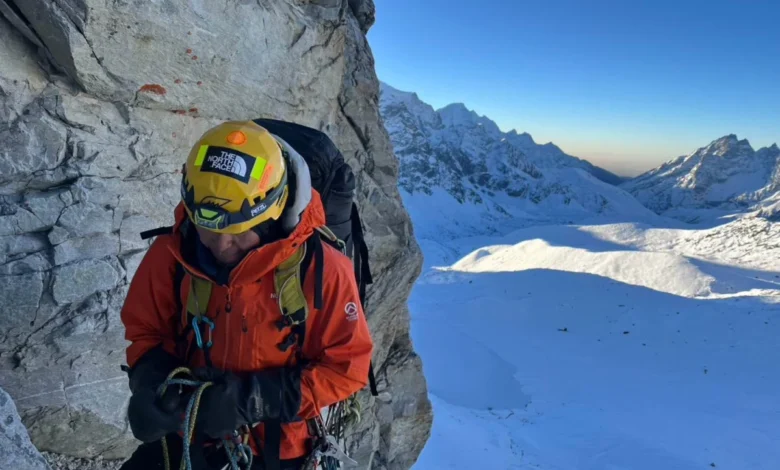
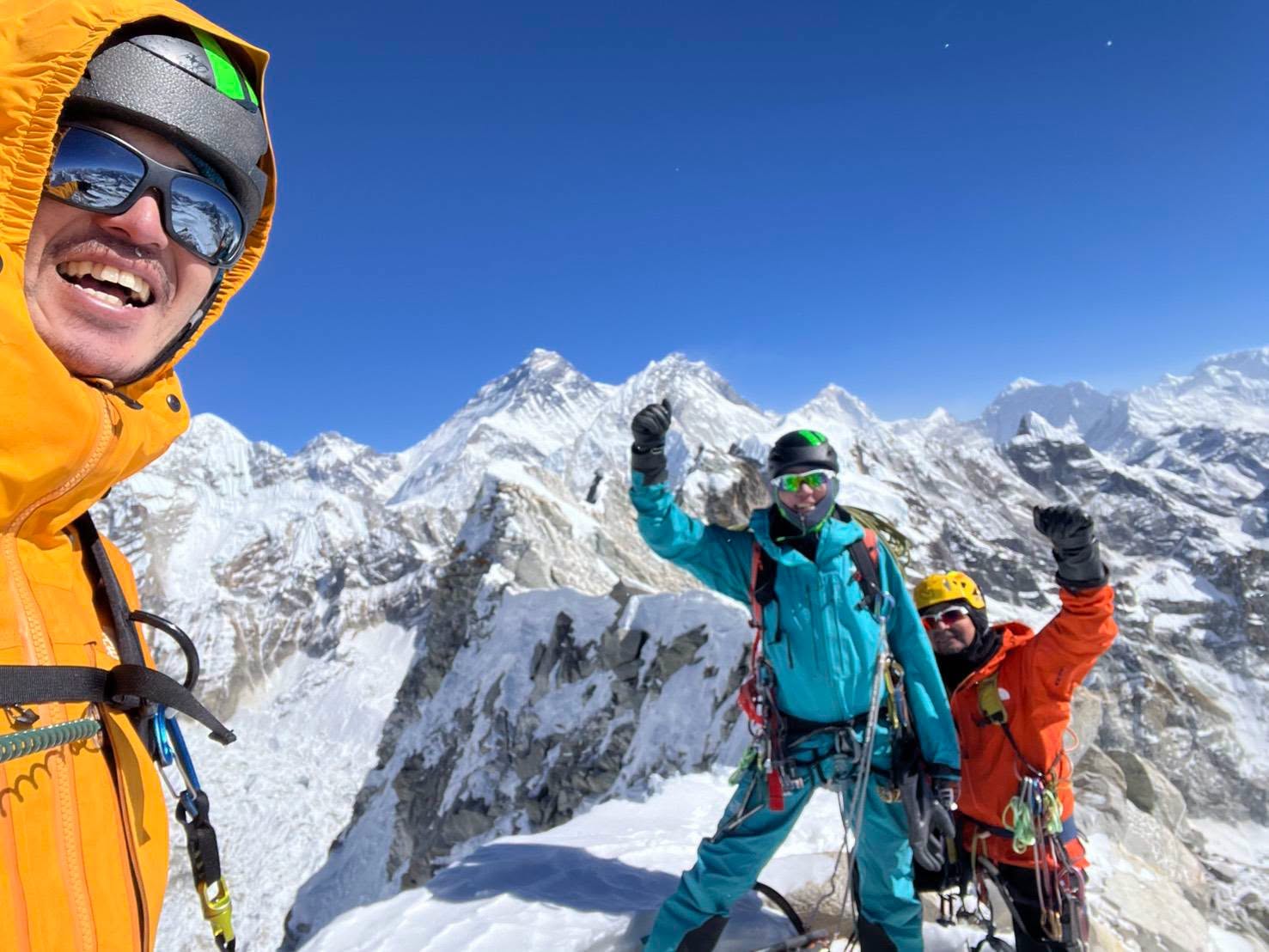
The high-altitude climbing community is reflecting on a significant achievement in the Everest region following the successful opening of a new route on Kangchung Shar. A Japanese expedition led by the veteran alpinist Hiroyoshi Manome has returned to their base in Gokyo after completing a four-day, three-night ascent via the mountain’s previously unclimbed southwest pillar. The team, which reached the summit at noon yesterday under favorable meteorological conditions, has added a technical milestone to the record of 6,000-meter peaks in the Himalayas.
Kangchung Shar, a peak with an elevation typically cited between 6,030 and 6,103 meters, sits in the shadow of more famous giants, yet it remains a focal point for elite alpinists seeking technical challenges in a compact, high-stakes environment. According to initial reports and data provided by the Himalayan Database, the southwest pillar had not been documented as previously climbed, effectively marking this effort as a first ascent of that specific line.
Chronology of the Expedition
The expedition’s tactical approach was characterized by flexibility. Before arriving in the Gokyo Valley, Manome’s team had identified the 1,000-meter north face as their primary objective. This wall, a notoriously difficult mixed-terrain feature, has seen very little traffic since its first successful ascent in 2021 by Czech climbers Zdenek Hak and Jaroslaw Bansky.
However, alpine mountaineering is often dictated by shifting conditions and on-site assessment. Upon arrival, the team determined that the environmental conditions favored an alternative path. The decision to pivot from the north face to the southwest pillar was made in the spirit of alpine-style exploration, where the "Plan B" often leads to the discovery of virgin rock and ice. The climb spanned four days, involving sustained technical rock climbing that challenged the team’s endurance and technical proficiency. By summiting at midday, the climbers avoided the typical afternoon weather deterioration common in the Everest region, allowing for a safe, albeit demanding, descent back to their base camp.
Technical Significance and Mountain Context
To understand the significance of this climb, one must look at the geography of the Kangchung massif. Often compared to the Matterhorn due to its steep, aesthetic profile, the massif comprises two primary peaks: Kangchung Shar and Kangchung Nup. The American Alpine Journal has frequently highlighted these peaks for their resemblance to the iconic Swiss mountain, albeit situated at a significantly higher altitude.
The first recorded ascent of Kangchung Shar dates back to 1984, when Slovenian climber Franci Knez successfully soloed the northwest ridge. For decades, the peak remained relatively quiet until the 2021 ascent of the north face brought it back into the spotlight of the international alpinism community. The 2022 ascent of neighboring Kangchung Nup by a separate Japanese team further solidified the area’s reputation as a playground for technical, alpine-style specialists.
The southwest pillar ascent adds a new dimension to this history. Unlike the north face, which is dominated by mixed snow and ice, the southwest pillar offered the Manome team substantial rock-climbing sections at altitude. This requirement for high-level rock skills while oxygen levels are significantly diminished is a hallmark of modern, high-end alpinism.
Profile of a Piolet d’Or Alpinist
The success of this expedition is largely credited to the experience of Hiroyoshi Manome, a fixture in the Japanese climbing scene for over three decades. Manome is perhaps best known for his receipt of the Piolet d’Or—the highest honor in mountaineering—for his role in the 2011 first ascent of the 2,200-meter south pillar of Kyashar (6,770m). That project, undertaken with Tatsuya Aoki and Yasuhiro Hanatani, was widely lauded for its commitment to light-weight, fast-moving alpine style.
Manome’s career trajectory has consistently focused on 6,000-meter peaks in Nepal, often selecting objectives that offer technical difficulty rather than sheer altitude. His recent track record underscores this: in November 2024, he successfully led a first ascent of the northeast ridge of Chhopa Bamare (6,109m). These consistent successes demonstrate a methodical approach to mountain risk management, favoring well-planned, small-team expeditions that emphasize the "fair means" of ascent—avoiding fixed ropes or excessive reliance on support teams.

Implications for Future Alpinism
The successful ascent of the southwest pillar carries several implications for the future of mountaineering in the Everest region. First, it demonstrates that even within heavily visited regions, there remains significant "blank space" on the map. As popular peaks become increasingly crowded, the shift toward lower-altitude but higher-difficulty technical objectives represents a maturation of the sport.
Second, the use of the southwest pillar as an alternative to the north face highlights the importance of adaptability. In the era of climate change, where traditional ice routes are becoming increasingly unstable due to melting permafrost and shifting patterns, the ability to read terrain and find sustainable, safe routes—such as rock-dominant pillars—is becoming a vital survival skill for high-altitude climbers.
Finally, the achievement contributes to the growing body of literature regarding the geological and technical nuances of the Kangchung massif. By documenting the route and sharing the technical findings, the Japanese team provides valuable data for future expeditions. The "sketchbook" approach—where climbers draw their proposed lines and adjust them as they encounter reality—remains the gold standard for exploratory mountaineering.
Institutional Responses and Industry Perspective
While formal statements from global mountaineering federations regarding this specific ascent are pending, the climbing community has already begun to recognize the effort. Peers and experts in the field of technical alpine climbing note that the move from the "Plan A" north face to the "Plan B" southwest pillar is a testament to the team’s professional judgment.
"The mark of an elite alpinist isn’t just the summit," noted a representative from a regional alpine club familiar with the area. "It is the ability to recognize when the conditions on a primary goal have moved from ‘adventurous’ to ‘unacceptably dangerous,’ and having the skill set to pivot to an equally challenging, yet feasible, objective."

The team’s successful return to base camp, documented by Subaru Takeda, marks the conclusion of a successful field mission. As the Himalayan Database prepares to update its records to reflect this new line, the climbing community will likely view the ascent as a benchmark for how technical, small-team expeditions can continue to push the boundaries of what is possible in the high peaks of Nepal.
For Hiroyoshi Manome and his team, the focus now shifts from the technical demands of the southwest pillar to the analysis of their findings. The data collected during this four-day window will undoubtedly influence future climbers who look to the Kangchung massif not just for the status of the summit, but for the quality of the climb itself. As the sport continues to evolve, the emphasis on creative, technical, and safe ascents remains the guiding light for those who choose to test themselves against the silent, soaring walls of the Himalayas.