The Unspoken Rules of the Skies: New Data Reveals How Frequent Flyers Navigate Cabin Friction

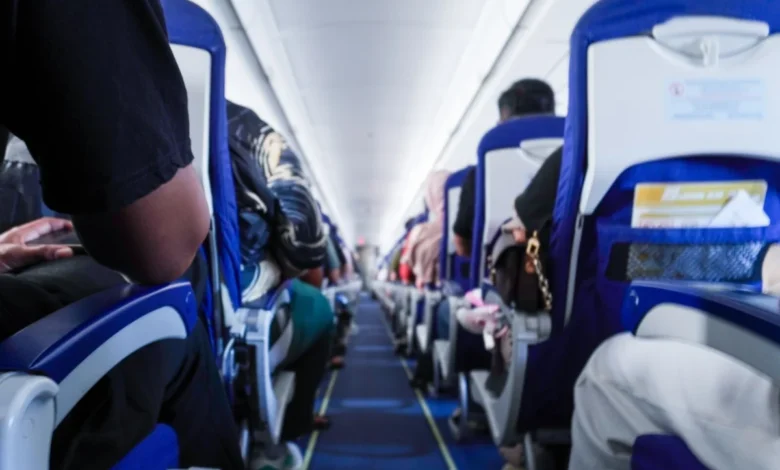
Modern air travel has evolved into a high-density experience where personal space is increasingly at a premium. As airlines continue to optimize cabin layouts—often by shrinking seat pitch and increasing capacity—the potential for interpersonal friction has risen significantly. A comprehensive new survey conducted by point.me, a prominent flight loyalty and booking platform, provides a granular look at the evolving social contract within the aircraft cabin. By polling 2,018 frequent travelers, of whom more than half fly at least five times annually, the study shifts the focus from general "annoyances" to a more tangible metric: the threshold at which passengers decide to intervene and confront their peers.
The Threshold of Intervention: When Silence Ends
Historically, aviation research has focused on what passengers find irritating, with seat-kicking consistently topping lists of grievances. However, the point.me study offers a more nuanced perspective on human behavior by examining the transition from passive annoyance to active confrontation. The data indicates that while many behaviors are universally disliked, the willingness to speak up is highly conditional.
The most notable finding regarding parental concerns is the overwhelming social leniency afforded to infants. Only 2.3 percent of respondents stated they would confront a parent regarding a crying baby. This statistic suggests a societal consensus that infant distress is largely beyond a parent’s immediate control, leading to a "pass" that is rarely granted to other sources of cabin disturbance.
Conversely, the tolerance for behavioral issues involving older children is significantly lower. Over 80 percent of surveyed passengers reported they would intervene if an older child were kicking their seat. This disparity highlights a shift in expectations: as children age, fellow passengers increasingly hold them—and their guardians—to adult standards of conduct. Other common irritants also saw high rates of confrontation: 55.5 percent of respondents would address a passenger playing audio without headphones, and 45.8 percent would speak up if a neighbor encroached upon their legroom.
Gender Dynamics and Cabin Confrontation
The survey reveals a distinct gender divide regarding the willingness to enforce cabin etiquette. Across every category measured, male respondents were statistically more likely to engage in a verbal confrontation than their female counterparts. For instance, 85.1 percent of men indicated they would address a seat-kicker, compared to 73.9 percent of women.
This trend persists in matters of cabin decorum and support for crew members. When asked about stepping in if a passenger is being rude to a flight attendant, 34.7 percent of men expressed a willingness to intervene, whereas only 26.4 percent of women reported the same. These findings align with broader sociological research on conflict resolution, suggesting that men may feel more emboldened to take on the role of "enforcer" in shared public spaces, whereas women may employ a different set of social calculations before initiating a confrontation.
The Hierarchy of Discomfort: Seat Preference and Cabin Realities
The debate over window versus aisle seating remains a staple of air travel discourse, yet the point.me data shows that preferences are not universal. While 41.8 percent of men prefer the aisle—likely due to the ease of movement and perceived autonomy—women’s preferences are more evenly split, with 35.1 percent favoring the window and 34.8 percent favoring the aisle.
Interestingly, Generation Z stands apart in this demographic analysis. As the only age group to express a clear preference for the window (45 percent), they prioritize the view and the ability to lean against the cabin wall over the accessibility provided by the aisle.
Perhaps more significant than preferences are the collective aversions. Contrary to popular belief, the dreaded middle seat is not the most despised location on an aircraft. That distinction belongs to the row adjacent to the lavatories, with 41.9 percent of travelers identifying it as their least favorite location due to high traffic, noise, and potential odors. The middle seat of a wide-body aircraft’s center row of five ranked second at 38.1 percent, highlighting that the discomfort of the middle seat is magnified when it is physically isolated from the aisle on both sides.
The Economics of Seat Swaps
As airlines increasingly move toward "basic economy" models where seat selection often carries an additional fee, the pressure on passengers to negotiate swaps at the boarding gate has intensified. The point.me study underscores that the "kindness of strangers" is a finite resource.
The primary motivator for agreeing to a seat swap is pragmatic: 57.5 percent of respondents would agree to move if the new seat offered a better location. Altruism remains a strong secondary factor, with 57.2 percent willing to swap to help a parent sit with a young child. However, the willingness to accommodate other requests drops sharply: only 33.4 percent would swap to keep a family together, and only 28.5 percent would do so for a couple. Perhaps most telling is the 12.1 percent of respondents who maintain a hard-line stance, asserting that it is never acceptable to ask a stranger to swap seats. For travelers, the implication is clear: relying on gate-side negotiations is a high-risk strategy that often fails to yield the desired outcome.
Generational Shifts in Seeking Assistance
The use of the flight attendant call button also shows a generational divide. Sixty-two percent of total respondents reported using the call button when necessary. However, younger travelers, specifically those under 40, are markedly more hesitant to request assistance, with 18.9 percent stating they would prefer to avoid asking for help entirely. This compares to just 8.5 percent of passengers over the age of 46.
This reticence among younger cohorts may be attributed to a growing culture of self-sufficiency or an awareness of the high workload already placed upon cabin crews. Women were also more likely to avoid using the call button, at 13.4 percent, compared to 8.6 percent for men. These findings suggest that the traditional service model of the airline industry may be facing a shift in how passengers engage with the staff, moving toward a more hands-off approach among younger demographics.
The Carry-on Crisis
Finally, the survey highlights the logistics of baggage as a primary source of frustration. When asked to identify the most aggravating in-flight scenario, 43.5 percent of travelers cited the need to stow carry-on luggage far behind their seat. This scenario forces passengers to walk against the flow of deplaning traffic upon arrival, creating delays and adding physical stress to the travel experience.
The secondary concern, cited by 23.3 percent, is a messy or non-functional lavatory. These results reflect a broader issue within the industry: as flight loads remain consistently high, the infrastructure of the aircraft—specifically overhead bin space and sanitation maintenance—is struggling to keep pace with passenger volume. The prevalence of these issues suggests that the "soft product" experience (how the passenger feels during the flight) is being compromised by the efficiency-focused "hard product" decisions made by airlines.
Implications for the Future of Air Travel
The data provided by point.me serves as a diagnostic tool for both passengers and airlines. For the traveler, the survey acts as a guide to the unwritten social contract of the cabin, clarifying that while certain behaviors are universally frowned upon, the likelihood of a confrontation depends heavily on the context and the participants.
For airlines, the survey points toward a growing need for better cabin management. As passengers express increasing frustration with baggage logistics and seat proximity to high-traffic areas like lavatories, carriers may need to rethink boarding procedures and cabin configurations to mitigate these pain points. The clear divide between generational and gender-based responses also suggests that a one-size-fits-all approach to passenger communication may no longer be effective.
Ultimately, as air travel continues to grow, the ability to manage cabin dynamics will become as critical to the flying experience as the flight itself. Whether it is through clearer communication regarding seat-swapping policies, better management of overhead storage, or simply acknowledging the varying comfort levels of different passenger demographics, the industry must evolve to address the friction points that define the modern flying experience. The days of assuming a universal etiquette are over; in their place is a complex, data-driven reality that demands a higher level of awareness from all who step on board.
Related posts: