Navigating Berlin’s Festive Season: A Comprehensive Guide to the German Capital’s Diverse Christmas Markets


As the winter solstice approaches and daylight diminishes across Northern Europe, the German capital undergoes a seasonal transformation defined by the establishment of dozens of traditional and contemporary holiday bazaars. Unlike other major German destinations such as Munich, Nuremberg, or Stuttgart—which typically concentrate their festive activities around a single municipal town square—Berlin defies centralized urban planning by hosting upwards of 70 distinct Christmas markets (Weihnachtsmärkte and Adventsmärkte) simultaneously. This decentralized network reflects the city’s polycentric layout, offering residents and international travelers a vast array of thematic options ranging from medieval historic reenactments to Scandinavian-inspired village squares.
Historical Evolution and Cultural Context
The tradition of the German Christmas market traces its roots back to the Late Middle Ages, initially serving as localized trading events where citizens could purchase meat and winter supplies ahead of the colder months. Over subsequent centuries, these gatherings evolved into community anchors deeply embedded in German cultural life. While Berlin’s historical relationship with the Christmas market tradition differs from regions boasting centuries-old continuous celebrations, the capital has successfully adapted the concept to fit its modern, multicultural identity.

In recent decades, Berlin’s municipal tourism sector has recorded a steady expansion in the number of operational markets, growing from roughly 50 locations to approximately 70 venues distributed across the city’s diverse boroughs. This proliferation caters to a wide spectrum of visitor demographics, balancing commercialized tourist attractions with highly localized, neighborhood-driven events managed by community associations, schools, and charitable organizations.
Chronology and Operating Schedules

The Berlin Christmas market season generally commences in late November, aligning with the beginning of the Christian liturgical season of Advent. For the current winter cycle, the vast majority of municipal and independent markets open their gates on November 25, continuing operations through the end of December, with select locations extending their schedules into the first week of January.
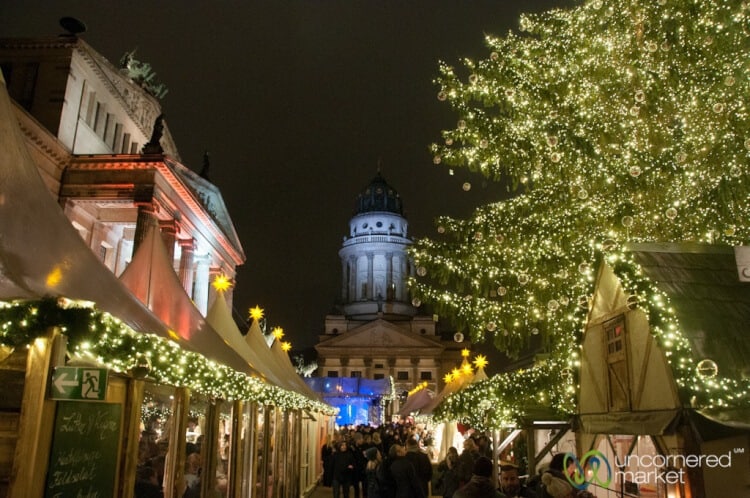
Because Berlin experiences a pronounced early winter sunset—often occurring well before 4:00 PM throughout December—the markets experience peak visitor volume during the late afternoon and evening hours. Local municipal authorities and tourism boards emphasize that the atmospheric quality of the markets is significantly heightened after dark, when architectural facades, historic monuments, and thousands of decorative fairy lights are illuminated.

Prominent Berlin Markets: Traditional and Thematic Highlights
Visitors navigating Berlin’s extensive holiday landscape are typically advised to select destinations based on specific architectural settings, culinary specialties, or cultural themes.

The WeihnachtsZauber at Gendarmenmarkt represents one of the city’s most visually striking traditional markets. Set against the architectural backdrop of the neoclassical Konzerthaus and the twin French and German cathedrals, this market places a strong emphasis on high-end handicrafts, fine arts, and upscale culinary offerings. Visitors frequenting the Gendarmenmarkt can sample feuerzangenbowle—a traditional alcoholic beverage consisting of red wine spiked with rum, set on fire over a sugarloaf—alongside regional street foods. To manage crowd flow and maintain the quality of the artisan stalls, organizers implement a nominal admission fee.
For travelers seeking royal architecture, the Schloss Charlottenburg Christmas Market places dozens of festive stalls in the immediate shadow of Berlin’s largest surviving Hohenzollern palace. Dating back over 300 years, the Baroque backdrop is complemented by large, rotating wooden Christmas pyramids (Weihnachtspyramiden) and extensive illumination displays, blending historical grandeur with family-oriented entertainment.
Nordic and Alternative Offerings
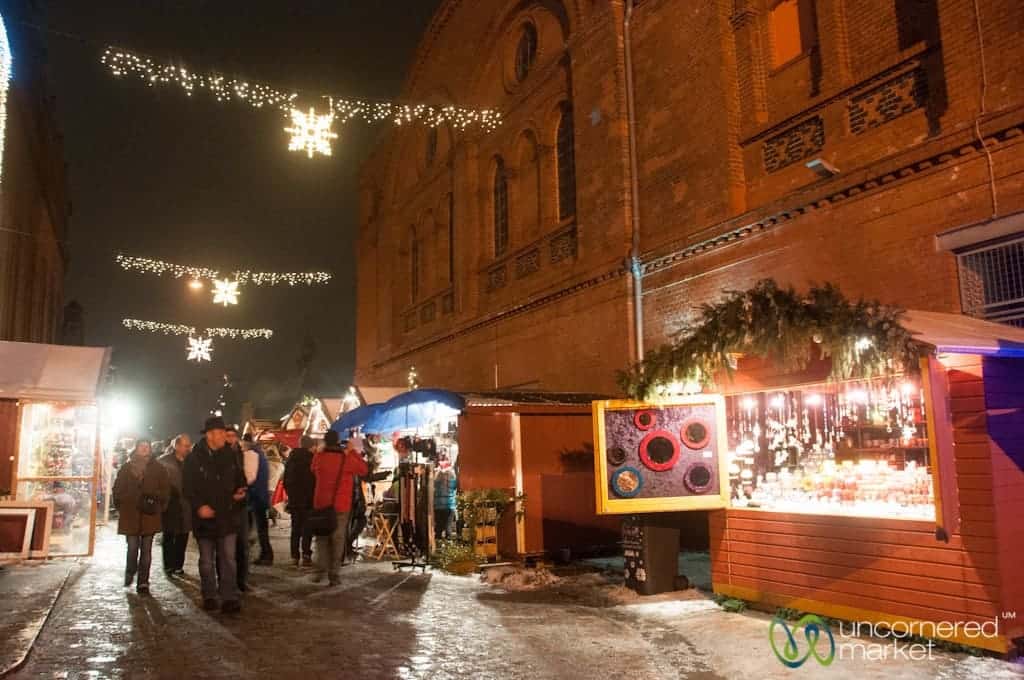
Berlin’s multicultural fabric is prominently displayed at specialized international markets. The Lucia Christmas Market, situated within the historic 19th-century industrial brick courtyards of the Kulturbrauerei in Prenzlauer Berg, focuses exclusively on Nordic and Scandinavian traditions. Named after the Swedish festival of lights, the market offers visitors the opportunity to compare regional variations of mulled wine, such as Swedish, Norwegian, and Danish glögg, alongside traditional Nordic delicacies like reindeer sausage.

In the Friedrichshain borough, the Medieval Historical Christmas Market at the RAW Cultural Center transports visitors to a simulated medieval village. Operating on the grounds of a former industrial railway repair yard, this venue features hand-operated wooden carousels, open fire pits, traditional blacksmiths, and artisanal craftspeople. Rather than standard modern pop music, the auditory landscape is shaped by live acoustic performances, while food vendors serve hearty, period-inspired dishes accompanied by hot mead and spiced wines served in heavy ceramic mugs.
Neighborhood and Community-Driven Markets

Beyond the major tourist hubs, peripheral and district-specific markets highlight Berlin’s strong neighborhood cohesion. The Alt-Rixdorfer Christmas Market, held annually in the historic heart of the Neukölln district around Richardplatz, serves as a prominent example of community-led philanthropy. Operating primarily over a single Advent weekend, the market features stalls managed entirely by local charities, schools, and community groups, raising funds for social projects while preserving the village-like character of the old Bohemian settlement.
Similarly, the Heissa Holzmarkt winter festival utilizes an established cultural and creative workspace along the Spree River. By combining traditional bonfires, local artisan goods, and modern urban art installations, the venue captures the city’s contemporary cultural identity. Other notable district markets include the Schloss Britz Medieval Christmas Fair, known for its intimate courtyard setting and focus on traditional craftsmanship, and the market at Domäne Dahlem, which operates on a historic agricultural estate with an emphasis on organic regional produce and small-scale farming producers.

Economic Implications and Tourism Impact
The winter holiday season serves as a critical economic driver for Berlin’s hospitality, retail, and gastronomy sectors. Millions of domestic and international tourists visit the German capital specifically to tour its network of markets, generating substantial revenue for local hoteliers, transport networks, and independent artisans.

Economic analysts note that while large-scale central markets contribute significantly to municipal tourism metrics, neighborhood-level markets play an equally vital role in supporting micro-economies, local small businesses, and charitable fundraising efforts. Despite inflationary pressures affecting food, energy, and supply chains across Europe, municipal organizers have collaborated with vendors to maintain accessible pricing structures for core seasonal staples, ensuring that the markets remain affordable public gathering spaces for local residents.
Logistical Recommendations for Visitors

Navigating Berlin during the peak holiday season requires advance planning, particularly regarding accommodation and transportation. Visitors are encouraged to utilize Berlin’s efficient public transit network (BVG), as parking availability near major market sites such as Gendarmenmarkt and Schloss Charlottenburg is severely restricted.
Furthermore, international travelers should note that while electronic payment methods are increasingly accepted across Germany, many traditional food and handicraft stalls continue to operate on a cash-only basis. Visitors are advised to carry adequate Euro currency, particularly when purchasing traditional beverages where a cash deposit (Pfand) is required for ceramic mugs and glassware.