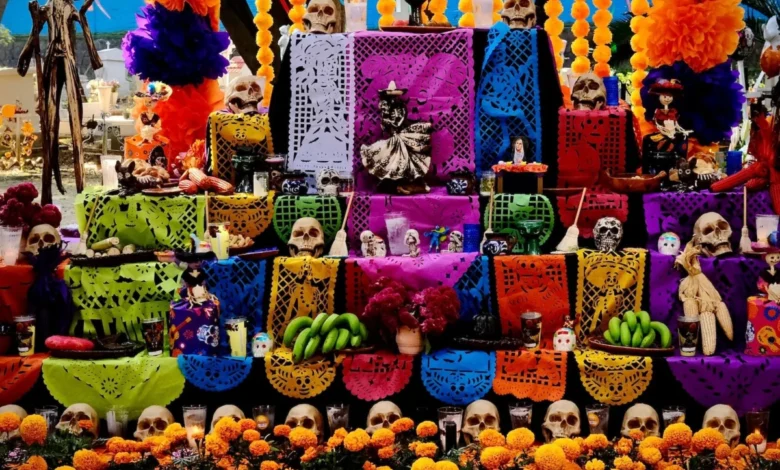
The evolution of La Calavera Catrina from a biting piece of early 20th-century political satire to the undisputed global icon of Día de los Muertos offers a compelling study in how artistic legacy intersects with national identity. Initially conceived by Mexican lithographer José Guadalupe Posada around 1910, the skeletal figure was a deliberate social critique aimed at those Posada termed "garbanceros"—individuals of Indigenous heritage who attempted to mask their roots by adopting European fashions and behaviors.
The Satirical Genesis of a National Icon
Posada’s original print, La Calavera Garbancera, depicted a woman wearing an elaborate, feathered French-style hat. It was not intended as a glorification of death, but rather as a stark, egalitarian reminder of human vanity. By stripping away the skin of his subjects, Posada sought to highlight a universal truth: under the finery of the social elite and the rags of the impoverished, all human beings share the same skeletal foundation.
Dr. Helia Bonilla, founder of the Posada Art Foundation, emphasizes that the figure remains a profound memento mori. "La Calavera Catrina is a modern satirical image and symbol reminding us that no matter how much money we might have or our station in life, it is vanity to believe that we are somehow immune to death," Bonilla notes. This philosophy, rooted in the idea that mortality is the great equalizer, encourages a perspective on life characterized by humility and kindness.
Historical Context and Mesoamerican Roots
While Posada provided the aesthetic template, the cultural weight of Día de los Muertos is tethered to a much deeper temporal landscape. Dr. Andrés Medina Hernández, an anthropologist at the National Autonomous University of Mexico (UNAM), suggests that the holiday is a synthesis of pre-Hispanic agricultural rituals and subsequent syncretism.
The ancient festivals of Miccailhuitontli (the feast of the little dead) and Huey Miccailhuitl (the feast of the great dead) were intrinsically linked to the harvest cycles of the milpa. These rituals were not merely commemorative; they were functional mechanisms for social cohesion. "Indeed, the Festival of the Dead is a celebration of the harvest, but it is also an occasion for bringing the family together, both through the ritual of welcoming the deceased and through the sharing and eating of the offering prepared," explains Dr. Medina Hernández. In this worldview, the bones of the deceased are viewed as "seeds" for future life, mirroring the way maize is planted to ensure survival, which explains the ubiquity of bone-shaped breads and skull-themed confectionery in modern observances.
The Rivera Transformation: 1947
The transition of the Catrina from a local satirical print to a monumental cultural symbol was catalyzed by Diego Rivera. In his 1947 mural, Sueño de una Tarde Dominical en la Alameda Central (Dream of a Sunday Afternoon in Alameda Central Park), Rivera elevated the skeleton to a central, dignified position.
In this masterpiece, Rivera depicted himself as a child holding hands with a refined, full-bodied Catrina, with Posada standing nearby. This version introduced complex, indigenous-inspired iconography. Dr. Bonilla points out that Rivera’s Catrina wears a feather boa that terminates in the head of a rattlesnake, a deliberate nod to the Mesoamerican deity Quetzalcóatl, the Feathered Serpent. By infusing the image with fangs and blood, Rivera anchored the Catrina to the ancient Mexican understanding of the duality between life and death.
Chronology of a Cultural Symbol
- 1910–1913: José Guadalupe Posada creates La Calavera Garbancera, critiquing the social mimicry of the Mexican elite during the Porfiriato era.
- 1947: Diego Rivera completes his mural at the Hotel del Prado, cementing the visual identity of "La Catrina" as a sophisticated, culturally potent figure.
- 2003: UNESCO recognizes the Indigenous festivity dedicated to the dead as a Masterpiece of the Oral and Intangible Heritage of Humanity, significantly elevating the global visibility of Catrina-themed imagery.
- Present Day: The figure has evolved into a global brand, appearing in cinema, high fashion, and digital media, while maintaining strong roots in regional artisan communities like Capula.
Economic and Social Implications
The "Catrina effect" has generated a significant niche in the Mexican tourism economy. In San Miguel de Allende, the annual La Calaca festival and the Desfile de Muertos y Catrinas attract thousands of international visitors, providing a substantial revenue stream for local artisans, makeup artists, and hospitality providers. This commercialization, while providing economic benefits, has prompted academic discussions regarding the preservation of the original political intent of Posada’s work.
In the village of Capula, Michoacán, the economic impact is particularly visible. Local ceramicists, following the tradition pioneered by Juan Torres Calderón, produce thousands of handcrafted Catrina sculptures annually. The town has institutionalized this craft through the Feria de la Catrina, transforming the figure into a sustainable livelihood for hundreds of families.
Institutional Preservation and Education
Efforts to contextualize this imagery are led by several key institutions:
- Museo Mural Diego Rivera (Mexico City): Houses the definitive Rivera mural. It serves as the primary educational hub for understanding the historical transition of the Catrina from satire to high art.
- Museo Nacional de la Muerte (Aguascalientes): Offers a comprehensive exploration of death in the Mexican consciousness, providing a necessary counterpoint to the more superficial portrayals of the holiday.
- Museo José Guadalupe Posada (Aguascalientes): Preserves the original printing plates and broadsheets, ensuring that the political urgency of the original Garbancera is not lost in the aesthetic evolution of the figure.
Analysis: The Resilience of the Image
The longevity of the Catrina can be attributed to its malleability. Unlike many static symbols of national identity, the Catrina is a vessel that each generation fills with new meaning. For contemporary Mexican youth, the Catrina is often a medium for artistic self-expression and a reclamation of heritage. For the international community, she serves as an entry point into the complex, non-linear Mexican relationship with mortality.
Dr. Medina Hernández notes that the elements accompanying the modern Catrina—the marigolds, the offerings, and the specific attire—act as a "thousand-year-old history that is reactivated and enriched" annually. This suggests that the figure is not a relic, but a living tradition. The implications are clear: as long as the underlying cultural practices of the milpa and the communal welcoming of the deceased persist, the Catrina will remain a vital, evolving protagonist in Mexico’s cultural narrative.
Conclusion: A Legacy of Reflection
The journey of the Catrina reflects the broader trajectory of Mexican identity: from the trauma of colonization and the desire to mimic European standards, to the revolutionary act of celebrating one’s own indigenous roots. Whether viewed as a satirical jab at the wealthy or a dignified icon of ancestral continuity, the Catrina continues to force an encounter with the inevitable. In a modern world often obsessed with the concealment of death, the skeletal face of the Catrina serves as a permanent, public reminder of the democratic nature of mortality. As society continues to navigate the balance between tradition and commercialization, the Catrina stands as a testament to the power of art to unify, challenge, and define a nation’s soul across generations.