From Sushi Delivery to Global Empire: Nobu Hospitality Announces Ambitious Triple-Site Expansion into Egypt

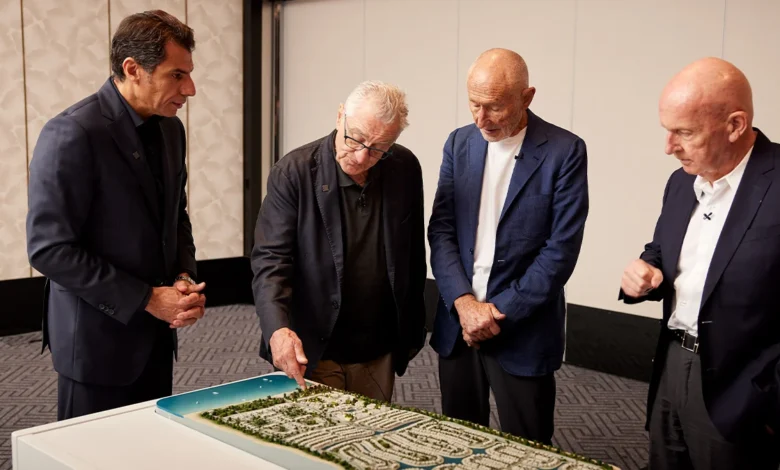
The genesis of one of the world’s most recognizable luxury lifestyle brands did not begin in a corporate boardroom, but rather in a residential elevator on La Cienega Boulevard in Los Angeles. During the late 1980s, a young Robert De Niro lived in a tenth-floor apartment directly across the street from Matsuhisa, the fledgling restaurant of Japanese chef Nobu Matsuhisa. The Hollywood icon grew accustomed to a peculiar but convenient ritual: a waiter would cross the bustling street, enter the building, and deposit his order into the elevator to be whisked up to his floor. That daily exchange, born of simple hunger, eventually sparked a creative partnership that would redefine global hospitality. Today, three decades after the launch of their first collaborative restaurant in 1994, De Niro, alongside cofounder Meir Teper and CEO Trevor Horwell, stands at the precipice of a new frontier: a massive, multi-site development project in Egypt that signifies the next evolutionary phase of the Nobu empire.
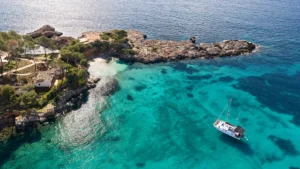
The Egyptian expansion, announced in partnership with the leading real estate developer SODIC, represents more than just a new market entry. It is a strategic pivot toward large-scale, mixed-use community development. The plan encompasses three distinct destinations: the Eastown District in New Cairo, a sprawling coastal development in the Ras El Hekma bay known as Ogami, and a future project in New Zayed, located in proximity to the historic Giza plateau and the newly opened Grand Egyptian Museum.
A Chronology of Growth: From Culinary Fusion to Lifestyle Brand
The trajectory of Nobu Hospitality has been defined by a measured, organic progression. Following the 1994 opening of the flagship Nobu restaurant in New York—the result of De Niro’s persistence in convincing the chef to move from his base in Peru to the United States—the brand spent the late 1990s and early 2000s solidifying its reputation as the pinnacle of Japanese-Peruvian fusion.
However, the shift from a restaurant group to a full-service hospitality firm did not occur until the leadership began to analyze the inherent value of the Nobu name. By the 2010s, developers worldwide were vying for the prestige associated with the brand. De Niro recalls a pivotal moment of realization during this period: "When we were repeatedly being asked to be in places, hotels, buildings, shopping centers, I’d always ask myself: ‘Why are we being asked to be in all these places?’ And the answer is, because it adds a kudos, a certain credibility, to these places. It’s like someone asking me as an actor to be in a movie—’We’ll pay you because you’re bankable.’"
This realization transformed their business model. Rather than simply leasing their name to third-party hotel operators, Nobu began to demand equity and operational control. The strategy was clear: if the Nobu brand was the "bankable" asset driving the value of a development, the company should participate as a partner. This led to the launch of their first hotel properties, which quickly expanded into the luxury residential sector as developers requested the Nobu brand for high-end apartment towers.
Data and Market Context: Why Egypt?
The choice of Egypt as a major growth vector is supported by significant macroeconomic shifts in the region. According to recent investment data, Egypt has become a focal point for foreign direct investment (FDI) from Gulf Cooperation Council (GCC) nations. The North Coast of Egypt, once a seasonal destination for domestic vacationers, has undergone a radical transformation in infrastructure and accessibility.

Ayman Amer, general manager of SODIC, notes that the region’s hospitality sector has experienced a dramatic surge in pricing and demand. "Room rates have jumped from $200, $300 to $1,000 a night over the last two years," Amer states. This trend is bolstered by the Egyptian government’s massive investment in road networks, airport upgrades, and the development of new urban centers. The connectivity between Cairo and the Mediterranean coast has been streamlined, effectively shortening travel times and making the North Coast accessible to both regional and international tourists.
The Nobu-SODIC partnership is designed to capitalize on this year-round potential. By anchoring their projects in both the bustling metropolitan environment of New Cairo and the high-end resort atmosphere of the North Coast, Nobu is attempting to shift the perception of the coast from a summer-only escape to a perennial luxury destination.
The Strategic Partnership: Nobu and SODIC
The collaboration between Nobu and SODIC was facilitated by Aldar Properties, the Abu Dhabi-based real estate powerhouse that holds a significant stake in the Egyptian developer. For Nobu CEO Trevor Horwell, the partnership is a template for how the brand enters new markets: by aligning with local expertise that understands the cultural and regulatory landscape.
"You’ve got to embrace the local culture and blend into that," Horwell explains. "You have to adapt to the local customs. Nobu is doing that everywhere. But in Egypt, we think that, especially on the North Coast, it’s very, very special. The location is very untouched, and we’re going to be the first. I expect many others will come after us."
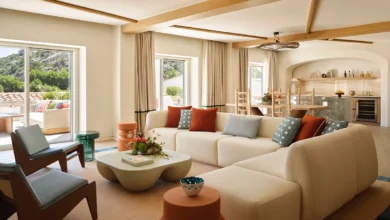
The architecture of the Egyptian projects reflects this philosophy. While the brand maintains a signature "Nobu aesthetic"—characterized by minimalist Japanese design principles and high-end materials—the projects will incorporate local materials to ensure they feel grounded in the Egyptian landscape. This architectural synergy is being managed by a New York-based firm that has worked on multiple Nobu locations globally, ensuring that the "global brand" feel is tempered by "local context."
Broader Implications for the Hospitality Industry
The expansion into Egypt highlights a broader trend in the global hospitality industry: the rise of the "lifestyle neighborhood." Investors are increasingly moving away from standalone hotels toward integrated developments that combine dining, retail, wellness, and residential real estate. This model provides multiple revenue streams and creates a "captive" ecosystem for the luxury consumer.
For the Nobu group, the implications of this expansion are significant. With nearly 60 restaurants and a rapidly expanding portfolio of hotels, the group is now competing directly with established luxury giants like Four Seasons and Aman. By securing massive, multi-acre sites in Egypt, they are demonstrating that the brand has matured beyond the "celebrity-backed restaurant" phase and has become a serious player in the real estate development arena.

The timing is equally critical. With the Grand Egyptian Museum nearing full operational capacity and international interest in Egypt’s historical and coastal assets at a multi-decade high, Nobu’s entry is timed to coincide with a peak in market interest. The project in New Zayed, situated just 20 minutes from the Giza pyramids, positions the brand at the heart of one of the most significant cultural tourism corridors in the world.
A Legacy of Organic Evolution
When reflecting on the journey from a ten-floor walk-up in Los Angeles to a multinational development firm, the founders remain remarkably grounded. Meir Teper emphasizes that there was no master plan to conquer the hospitality world. Instead, the expansion was a result of recognizing opportunities and following the natural momentum of their successes.
"Sometimes it just happens without planning," Teper notes. "Bob’s vision becomes: ‘Why don’t we do our own hotels rather than go to other brands’ hotels?’ Then we do a hotel in Toronto, and the developers say, ‘Can you do also a residence?’ When things happen and are successful, it makes more things happen."
This "success-begets-success" approach has allowed Nobu to maintain a level of brand consistency that is rare in the hospitality industry. By refusing to rush into markets and instead waiting for the right partners—like SODIC—and the right locations, they have preserved the "pizazz" and "sexiness" that De Niro first recognized in Chef Nobu’s food nearly 40 years ago.
As the company prepares to break ground on its latest projects in the sands of the North Coast and the suburbs of Cairo, the narrative of Nobu Hospitality serves as a testament to the power of a simple, high-quality idea. What started with a waiter and a service elevator has evolved into a global blueprint for how luxury, lifestyle, and real estate can converge. For the residents who will eventually call the Nobu Villas home, and the guests who will dine in the shadow of the pyramids, the brand’s promise remains the same as it was in the 1980s: an experience that is as reliable as it is elevated.