Finding the Voice of Seville: A Transformation in Language Acquisition and Cultural Integration

Returning to a city after years of absence inevitably forces a reconciliation between the preservation of memory and the reality of urban evolution. Seville, the capital of Andalusia, has undergone significant structural and social shifts in recent years, mirroring broader trends in European urban tourism and cultural adaptation. For many travelers, this evolution is not merely a matter of geography or architecture but a profound internal shift in how they engage with the local culture—specifically through the mastery of the Spanish language.

The experience of returning to Seville highlights a pivotal transition from the scripted, anxiety-induced attempts at communication common among novice travelers to the fluid, spontaneous engagement of a more proficient speaker. This shift underscores the psychological and practical barriers that define language learning in real-world environments.
The Evolution of Seville as a Global Destination
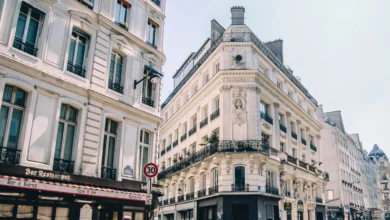
Seville’s urban landscape has changed considerably over the last decade. Data from local municipal planning offices indicates a sustained rise in gentrification within the historic center, particularly around Plaza Nueva. The transformation of formerly traditional residential sectors into hubs for boutique hotels, upscale gastronomy, and tourism-oriented commerce has altered the city’s character.

Historical records and local tourism reports from the past fifteen years show that the city has transitioned from a regional cultural center to one of Spain’s premier international tourist destinations. This shift has necessitated a higher degree of multilingualism among local service workers, often creating a "safety net" of English for tourists. While this provides convenience, it simultaneously serves as a barrier for those attempting to integrate or practice Spanish, as the default interaction in service settings frequently defaults to English, thereby stifling the learner’s opportunity to practice.
The Psychology of Language Acquisition and the Fear of Failure
Linguistic experts suggest that the "fear of speaking" is a primary obstacle for adult language learners. This phenomenon is often rooted in the discrepancy between one’s cognitive maturity and their limited linguistic proficiency in a new tongue. When an adult, who is typically eloquent in their native language, encounters a communication failure, the resulting frustration often leads to "avoidance behavior"—a pattern where the learner retreats to their native language to regain a sense of competence and control.

Years ago, the typical visitor experience in Seville often involved a reliance on phrasebooks. This methodology, while providing basic utility, frequently failed in dynamic social settings. When a native speaker responds with a complex or rapid reply, the learner’s "rehearsed" script collapses. This failure, often met with patience or, conversely, a switch to English by the native speaker, can inadvertently discourage the learner from further attempts.
The Shift: From Classroom Theory to Field Application
The pedagogical approach to language acquisition has moved increasingly toward one-to-one, immersive, or semi-immersive models, such as those provided by online platforms like Preply. These services focus on the "conversational loop," which involves listening, reacting, and improvising—the three components that traditional apps often fail to simulate.

Data from educational researchers indicates that learners who engage in real-time, unstructured conversations with native tutors show a significantly higher rate of retention and, more importantly, a faster reduction in "speaking anxiety." By practicing with a tutor who provides a controlled, supportive environment, the learner builds the cognitive infrastructure necessary to navigate spontaneous, unpredictable dialogues in the real world.
Field Report: The Plaza del Museo Interaction
The transition from a controlled learning environment to the "wild" of a public space—such as the art market at Plaza del Museo—represents a milestone in language acquisition. During the weekend market, where local artists display their work, the setting provides a low-pressure but authentic environment for interaction.

When a learner moves beyond the mechanical act of asking for prices to engaging in a dialogue about the artist’s technique, the language ceases to be a subject of study and becomes a functional tool. This transition is marked by the moment of "cognitive transparency," where the learner stops consciously translating phrases and begins processing ideas in the target language. For many, this is the first time the language becomes invisible—a bridge between two people rather than a wall of complex grammar.
Broader Implications for Travelers and Educators
The experience in Seville provides a clear lesson for both the travel industry and language educators: the most effective way to learn a language is to integrate it into the traveler’s lifestyle.

- The Necessity of Error: Language learning requires a high tolerance for error. Data shows that learners who view mistakes as part of the data-collection process for their brain make faster progress than those who prioritize perfection.
- The Role of Context: Learning in a vacuum, such as through static apps, is rarely sufficient for functional fluency. Contextual learning—ordering food, asking for directions, or discussing art—provides the emotional weight that helps vocabulary stick.
- The "Safety Net" Paradox: The prevalence of English in major tourist hubs acts as a disincentive. Travelers who genuinely wish to learn are encouraged to seek out interactions in neighborhoods like Triana, where the rhythm of life is more local and the reliance on English is lower.
Future Perspectives on Cultural Immersion
The case of Seville serves as a microcosm for the global traveler’s journey. As cities continue to adapt to global tourism, the burden of communication is shifting. However, the value of the attempt remains unchanged. Whether in a crowded tapas bar like Las Teresas or an open-air gallery in Plaza del Museo, the ability to communicate, however imperfectly, creates a deeper connection to the destination.
The ultimate goal for the language learner is not necessarily native-level fluency, but rather the elimination of the fear that prevents interaction. By shifting the focus from "practicing Spanish" to "living in Spanish," the traveler moves from being an observer of the city to a participant in its vibrant, daily life. As Seville continues to evolve, the opportunity for this transformation remains available to any visitor willing to put down the phrasebook and start an unscripted conversation.