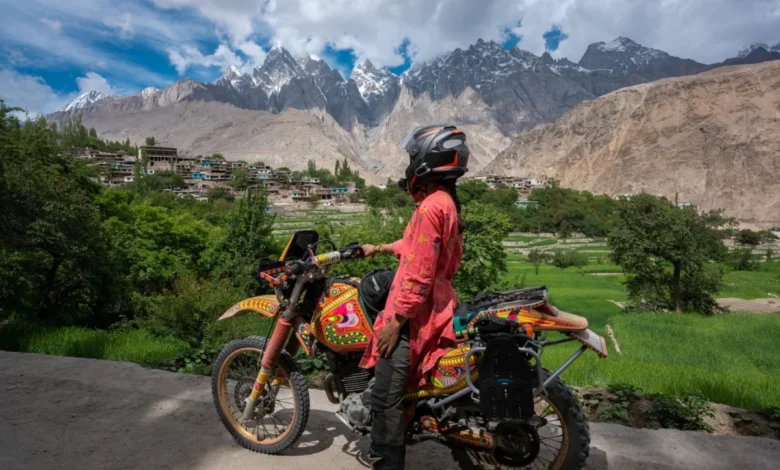
The intersection of traditional Pakistani craftsmanship and adventure tourism has reached a new milestone in Islamabad, where travelers can now rent motorcycles uniquely adorned with the nation’s iconic "truck art." This initiative, a collaboration between the local tour operator Coyote Trail and international motorcycle enthusiasts, aims to provide tourists with a culturally immersive way to traverse the diverse topography of Pakistan. By blending local aesthetics with reliable mechanical support, this rental service offers a novel approach to exploring one of the world’s most dramatic motorcycling destinations.
The cultural phenomenon of Pakistani truck art, or "phool patti," dates back to the mid-20th century. Originally a means for truck drivers to customize their vehicles to signify their home region or personal style, it has evolved into a globally recognized art form characterized by intricate floral patterns, geometric motifs, and vibrant, neon-saturated color palettes. Integrating this tradition into the realm of adventure travel creates a visual bridge between the visitor and the local culture, turning a standard motorcycle into a rolling canvas that reflects the country’s artistic heritage.
Fleet Specifications and Technical Logistics
The rental fleet currently features two primary categories of motorcycles, chosen for their reliability and suitability for the varied road conditions found across the Karakoram Highway and the mountainous regions of Gilgit-Baltistan.
The first category consists of the Suzuki GS 150 SE. This model is a staple of the Pakistani motorcycle market, favored for its local production, fuel efficiency, and the ubiquity of spare parts. These motorcycles are particularly well-suited for travelers navigating urban centers and paved arterial roads. Despite their smaller displacement, these machines have demonstrated high durability, with operators frequently testing them at altitudes exceeding 4,800 meters. The daily rental rate for the Suzuki GS 150 SE is set at 6,000 PKR.
For more rugged, high-altitude expeditions, the fleet includes the Yamaha TT-R 250 Raid. This model serves as the primary choice for off-road enthusiasts targeting the challenging terrains of the northern mountain ranges. Equipped with high ground clearance, specialized suspension, and knobby tires, the bike is engineered for the demanding topography of regions like Chitral and Baltistan. The rental rate for the Yamaha TT-R 250 is priced at 35 USD per day, reflecting the higher maintenance costs associated with imported, performance-oriented motorcycles.
Operational Framework and Safety Standards
To ensure a structured experience, all rentals are processed through the Coyote Trail headquarters located in the E-11/4 sector of Islamabad. The management stresses the importance of pre-booking, as the fleet serves a dual purpose: supporting the company’s curated adventure tours and facilitating independent travel.
Safety and legal compliance remain core components of the rental program. While a general driving license is sufficient for the 150cc models, the company mandates a specific motorcycle license for the 250cc machines. This policy is a response to the increased technical complexity and higher repair costs associated with larger, imported engines. Furthermore, all motorcycles undergo rigorous maintenance cycles, including fluid changes and mechanical inspections, prior to each rental period to mitigate the risk of breakdowns in remote areas.
Regarding accidental damage, the company employs a transparent deposit system. Renters are required to provide a security deposit—capped at 200 USD—to cover potential repairs. The organization provides a standardized list of common wear-and-tear parts, such as levers and mirrors, to ensure that in the event of a minor collision, the financial expectations are clear and manageable for the traveler.
Strategic Routes and Geographic Reach
The accessibility of Pakistan’s northern territories via motorcycle has significantly increased over the past decade. The rental service provides suggested itineraries that cater to varying time constraints and experience levels.
- The Karakoram Highway (KKH) Corridor: This 10-day route is ideal for those with limited time. It focuses on the primary artery connecting Islamabad to the Khunjerab Pass. The route is primarily paved, making it the most accessible itinerary for riders who prioritize scenery over technical off-road riding.
- The Hunza-Skardu Loop: Requiring at least 14 days, this route introduces more technical complexity. It encompasses the transit through the Deosai Plains and the rugged landscapes of Astore, providing a mix of high-altitude mountain passes and varied road surfaces.
- The Trans-Regional Expedition: This comprehensive route traverses the Karakoram Highway before heading west through the Gilgit-Baltistan and Khyber Pakhtunkhwa provinces. It includes the transit through Shandur Pass and Chitral, offering the most extensive exposure to the cultural diversity of northern Pakistan.
Economic and Cultural Implications
The decision to incorporate truck art into the rental fleet is not merely aesthetic; it serves as a form of cultural advocacy. The application of these designs, often performed in local workshops in Rawalpindi, provides direct economic support to traditional artisans who have practiced the craft for generations.
From an economic perspective, the pricing model for these rentals is designed to remain competitive with international standards while accounting for the unique logistics of the Pakistani market. Imported motorcycles face high taxation and import duties, which inflates their acquisition and maintenance costs. By maintaining a fleet that includes locally produced machines alongside imported ones, the operators provide a scalable solution that balances cost-effectiveness with performance requirements.
Furthermore, the "sticker art" used on the newer fleet serves a secondary function as a passive safety feature. The materials used in these designs are often highly reflective, increasing the visibility of the motorcycles to other motorists during night driving—a common challenge in the mountainous regions where lighting can be sparse.
Future Outlook for Adventure Tourism in Pakistan
The professionalization of motorcycle rentals in Pakistan signals a broader maturation of the local tourism sector. As Pakistan continues to gain recognition as a premier destination for adventure sports and overland travel, the demand for reliable, specialized equipment has grown. By bridging the gap between foreign travel needs and local mechanical expertise, operators are helping to formalize a market that was previously fragmented.
The collaboration between local experts and international partners, such as the partnership between Coyote Trail and their associates, illustrates a model for sustainable tourism development. It emphasizes local empowerment, ensures the preservation of traditional crafts, and provides international travelers with the confidence to explore the region’s vast, often isolated landscapes.
For those planning to undertake such a journey, the operators emphasize that preparation is key. Regardless of the motorcycle chosen, the mountainous terrain requires a high level of physical fitness and riding competence. Travelers are encouraged to review the official Pakistan travel guides and ensure their insurance coverage explicitly includes motorcycle operation abroad. As the infrastructure in the north continues to develop, the availability of these custom-designed machines ensures that the experience of exploring the "Roof of the World" remains as vibrant and unique as the art that decorates the bikes themselves.
Related posts: