Beyond the Riva: The Cultural and Economic Evolution of Split’s Neighborhood Street Food

The Mediterranean coastal city of Split is globally renowned for its Roman architecture, UNESCO-listed Diocletian’s Palace, and traditional Dalmatian gastronomy centered around coastal konobas. Yet, away from the scenic promenades and tourist-heavy stone-walled alleys lies a parallel, fiercely defended culinary landscape: the neighborhood bakeries, walk-up window snack bars, and midnight grill stands that sustain everyday urban life. This working-class and student-driven street food culture, characterized by items like greasy-paper burek, late-night krafne, customized toasted sandwiches, and Balkan ćevapi, represents a vital social fabric. However, the rise of global fast-food franchises, the proliferation of delivery apps, and shifting consumer habits are steadily transforming how Split eats, threatening an informal culinary heritage that has defined the city for decades.
Origins and Neighborhood Roots of Split Street Food
Unlike the sit-down tavern culture designed to showcase slow-cooked seafood, pašticada, and black risotto to visitors, Split’s fast-food and bakery network developed out of necessity for the local workforce, students, and night owls. Spanning residential neighborhoods rather than central plazas, these establishments operate out of compact footprints—often measuring no more than a few square meters—featuring a service window, a grill, a toaster, and occasionally a pizza oven.

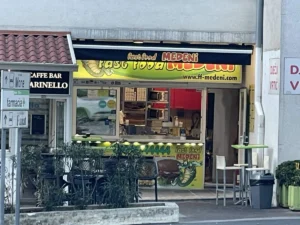
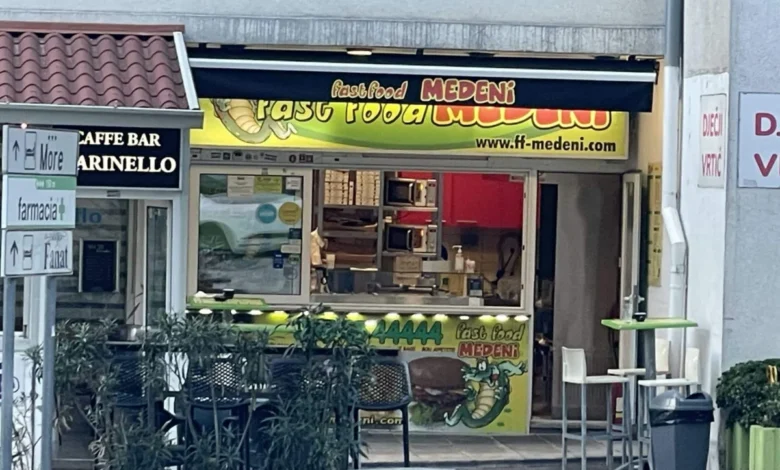
The taxonomy of this food culture divides broadly into two formats: the pekara (bakery), featuring glass display cases stacked with savory and sweet trays, and the neighborhood fast-food kiosk. Operating on minimal margins, these counters have historically provided affordable, high-calorie sustenance for mere euros. Students between lectures, industrial and service-sector workers lacking time for formal mid-day meals, and football fans heading home after a match at the Poljud Stadium rely on these efficient purveyors. Long-standing neighborhood institutions have anchored this ecosystem for generations. Venues such as Popaj, established in 1989, and Medeni, which opened its first location in 2001, became woven into the cultural lexicon, earning mentions in contemporary local music and poetry as undisputed markers of urban identity.
The Chronology of Iconic Local Staples
The evolution of Split’s street food is punctuated by specific culinary items tied to distinct hours of the day and night.
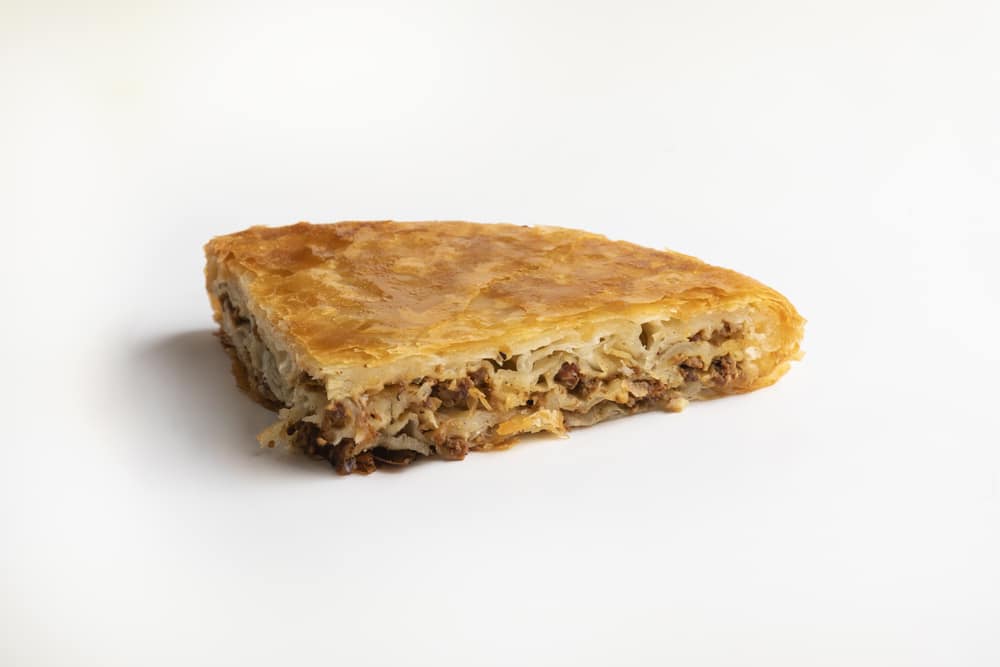
The quintessential late-night ritual revolves around burek—a flaky, layered pastry filled with spiced minced meat or cheese. Historically consumed in the small hours of the morning following weekend outings, locations like the all-night Bobis Bakery near the Pazar green market have long served as egalitarian mixing bowls where taxi drivers, police officers, and students stand shoulder-to-shoulder in unhurried queues. The tradition is sustained by the folk belief that the rich oil of the pastry serves as an effective countermeasure to alcohol consumption.

Similarly, krafne—the Croatian jam, chocolate, or custard-filled doughnut—defies standard continental European consumption patterns in Split. While standard practice across Croatia reserves krafne for the February carnival (maškare) season or daytime bakery visits, Split maintains a distinct tradition of securing warm, fresh krafne late into the evening. Specialty vendors like Krafne kod Mate operate around the clock, supplying paper bags of powdered pastries to patrons well past 9:00 PM on ordinary weekdays—a phenomenon largely absent in other urban centers like Zagreb, where specialty doughnut shops shutter by early afternoon.
Customization and the Rise of Specialized Street Offerings
Beyond baked goods, the neighborhood kiosk model relies heavily on customizable hot items. The topli sandvič (toasted sandwich), available in sizes ranging up to a foot long, offers a base of ham and cheese pressed in a commercial toaster before patrons dictate a barrage of supplementary toppings, including mayonnaise, ketchup, corn, pickles, tomatoes, boiled eggs, and onions.
A heartier variation, piletina u tijestu (chicken in pizza dough), embeds grilled poultry pieces inside fresh dough before baking in a pizza oven, mirroring the customizable topping system of the toasted sandwich. The coastal suburb of Podstrana hosts Bili Pivac, an institution famed for this specific regional favorite.
Meanwhile, ćevapi—cylindrical spiced minced meat grilled and served inside a flatbread (somun or lepinja) with raw onions, ajvar, or kajmak—have deep historical roots in the region. Establishments like Kantun Paulina, operating since 1967, built their reputation on serving these grilled items directly to patrons standing on the pavement.
The Shift Toward Franchises and Delivery Dominance
In recent years, the operational landscape of fast dining in Split has experienced measurable disruption. The post-pandemic expansion of digital delivery platforms such as Wolt and Glovo has decoupled street food consumption from physical presence. While delivery services offer convenience, sociologists and local culinary historians note that they erode the public street life that once defined these neighborhoods.
Concurrently, multinational fast-food franchises including McDonald’s, KFC, and Burger King have established a firm foothold, predominantly within suburban shopping malls. These corporate operations provide climate-controlled seating, predictable standardization, and ample parking, drawing consumers away from traditional, independent neighborhood kiosks.

Economic Pressures and Upscaling
Compounding the challenge from global franchises is the domestic transformation of informal street foods into formal dining experiences. Traditional street items like ćevapi, once exclusively purchased at walk-up windows for immediate, standing consumption, are increasingly migrating indoors. Newly opened eateries across Split now serve these grilled meats in sit-down restaurant environments, accompanied by significant price markups that distance the food from its working-class origins.
This migration from sidewalk to restaurant, paired with the gradual thinning of queues at independent late-night bakeries, points to a broader structural shift. While the demand for affordable, quick meals remains high among locals, the venues supplying them are under pressure from rising commercial rents, tourism-driven real estate inflation, and the convenience economy.
Implications for Local Identity

The transformation of Split’s street food culture underscores a broader tension facing Mediterranean urban centers navigating rapid modernization and tourism growth. The potential loss of independent neighborhood kiosks and round-the-clock bakeries represents more than a shift in dining habits; it signifies the erosion of communal public spaces.
If traditional walk-up windows and midnight bakeries are entirely replaced by app-based delivery networks and suburban drive-thrus, the city risks losing a vital layer of its spontaneous urban culture. While the food itself may persist in modified formats, the nocturnal camaraderie of the street corner queue, the neon glow of decades-old kiosk signs, and the shared rituals of neighborhood life face an uncertain future in a rapidly corporatized culinary economy.
Related posts: