Beyond Good Intentions: Examining the Complex Realities and Ethical Dimensions of International Volunteering


The global phenomenon of international volunteering has long been marketed as a transformative dual-benefit experience: travelers gain profound cultural immersion while host communities receive much-needed labor, education, and infrastructure development. However, a critical re-examination of these programs reveals a more complicated landscape marked by hidden power dynamics, unvetted participants, and unintended consequences. A month-long placement in Selong, East Lombok, arranged through the international volunteering platform Worldpackers, highlights the systemic challenges inherent in cross-border community engagement and forces a rigorous inquiry into what genuine assistance truly demands.
Background and Context of International Voluntourism
The contemporary voluntourism industry is a multi-billion-dollar global enterprise that bridges tourism and international development. Millions of individuals, predominantly from affluent Western nations, travel to the Global South annually to engage in short-term projects ranging from English instruction and wildlife conservation to building homes and supporting local healthcare initiatives. While these programs are often driven by altruistic motivations, academics and aid workers have increasingly raised concerns regarding their efficacy and ethics.
Critics argue that short-term volunteers frequently lack the specialized skills required to address complex socioeconomic challenges, occasionally displacing local labor and disrupting community routines. Platforms like Worldpackers, Workaway, and others have democratized access to these opportunities, connecting travelers directly with host families, schools, and grassroots organizations. Yet, this decentralized model can sometimes bypass institutional oversight, leaving both vulnerable populations and well-meaning travelers to navigate profound cultural and economic disparities without adequate preparation.
Chronology and Placement Overview
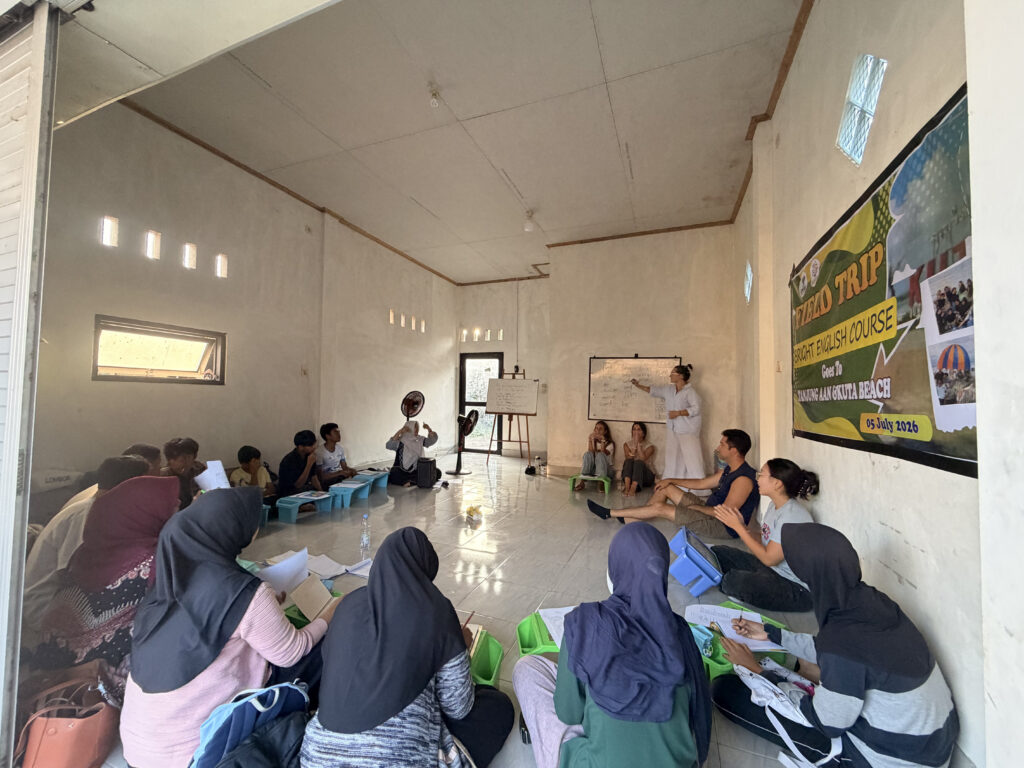
The deployment in Selong, East Lombok, centered on a month-long commitment to support a free extracurricular English literacy program. Run independently by a local educator, the initiative catered to children and young adults ranging from six to 21 years of age.
Week One: Integration and Cultural Adjustment
Upon arrival, the volunteer integrated directly into the daily life of a local host family. Cultural adaptation involved shifting to communal meals eaten on the floor, utilizing local transit via scooter, and navigating language barriers through a mix of basic Indonesian, English, gestures, and non-verbal communication. Early interactions underscored the palpable enthusiasm of local students toward foreign visitors—frequently referred to by the regional term bule—while simultaneously exposing the stark economic divide separating the travelers from their host community.
Week Two: Confronting Economic Disparities and Privilege
The stark realities of global economic inequality surfaced during routine interactions outside the classroom. In separate instances, a local host inquired whether the volunteer employed domestic servants at home, while a local transport driver casually labeled the visiting cohort using currency-based monikers, referring to the author as "dollar" and Spanish peers as "euro." Although initially provoking discomfort, these designations forced a necessary confrontation with systemic privilege. Regardless of an individual volunteer’s domestic financial standing, the ability to travel internationally and enter a developing region inherently places them within a framework of unequal economic power.
Week Three: Resource Allocation and Program Development
Moving beyond daily classroom instruction, the placement involved evaluating the actual needs of the educational program rather than imposing external assumptions. Consultations with the lead teacher identified a concrete technological deficit: the absence of a digital projector. Rather than implementing unrequested foreign solutions, funds were directed toward procuring the specific hardware requested by local leadership. Simultaneously, leverage from a professional background in social work facilitated broader strategic discussions regarding the program’s long-term sustainability, volunteer coordination, and future expansion pathways.
Week Four: Conclusion and Community Integration
The final week culminated in a community-wide gathering beneath the slopes of Mount Rinjani, featuring camping, traditional music, and collaborative reflection. The placement concluded with formal exchanges of handmade crafts and reflective correspondence from students, signaling the conclusion of a deeply interpersonal, albeit structurally complex, engagement.
Data and Industry Metrics on Voluntourism
To understand the scale and implications of such placements, industry analysts point to several broader trends within international travel and non-governmental aid:
- Market Valuation: The global voluntourism market has historically been estimated in the billions of dollars, with youth and student demographics driving high participation rates in South-East Asia, Latin America, and Sub-Saharan Africa.
- Duration Discrepancies: Data from major placement platforms indicate that the vast majority of volunteer stints last between one to four weeks. Development economists note that short-term placements (under one month) often yield minimal sustained educational or developmental outcomes for host communities, frequently requiring more supervisory labor from locals than the value provided by the transient volunteer.
- Safeguarding Gaps: Independent studies on informal volunteering networks reveal that up to 40% of grassroots placements in developing regions operate without formal background check requirements or standardized child-safeguarding policies, exposing vulnerable minors to unvetted foreign adults.
Statements and Reactions from Stakeholders
While formal public relations statements from major voluntourism agencies typically emphasize cultural exchange, empowerment, and mutual benefit, grassroots organizers and local hosts express a more nuanced perspective regarding international participation.
Interviews and daily interactions with host families in East Lombok reveal a pragmatic view of foreign volunteers. When asked what local communities truly require from incoming travelers, host feedback frequently prioritizes operational reliability over grand developmental ambitions. Issues such as unannounced absences, late arrivals due to personal tourism excursions, and a lack of basic lesson preparation were cited as common frustrations. For children and educators who structure daily routines around scheduled classes, a volunteer’s absence disrupts continuity and underscores a transactional approach to community service.
Conversely, volunteers often report a psychological tension between their desire to be genuinely helpful and the risk of perpetuating a "white savior" complex. The realization that students’ career aspirations—frequently limited to visible local roles such as teaching or small-scale commerce—were reflections of immediate environmental exposure rather than a lack of potential, challenged initial Western biases regarding what constitutes success and ambition.
Fact-Based Analysis of Implications
The implications of informal international volunteering extend across ethical, operational, and psychological dimensions.
First, the operational impact on host organizations can be double-edged. While volunteers provide enthusiastic supplemental labor and occasional material resources, the burden of managing, housing, and supervising shifting cohorts of untrained individuals can drain local administrative capacity. Experts suggest that financial donations directly to community-led initiatives often yield a higher return on investment than funding the travel and accommodation expenses of foreign volunteers.
Second, safeguarding protocols remain a critical vulnerability. The absence of mandatory criminal history checks—such as the Working with Children Checks standard in jurisdictions like Australia—poses inherent risks to child protection. Furthermore, the pervasive habit of photographing minors for social media content raises severe privacy concerns, frequently transforming vulnerable children into tools for personal virtue-signalling rather than respecting their individual dignity and right to privacy.
Finally, the psychological impact on the traveler often leads to a deeper critical awareness of global inequality. However, analysts caution that personal introspection should not be the primary metric of a program’s success. The ultimate benchmark of ethical volunteering must remain the measurable, self-determined benefit to the host community.
Toward a Responsible Framework for International Engagement
The empirical evidence and lived experiences surrounding programs like those facilitated through Worldpackers suggest that international volunteering is neither inherently harmful nor automatically benevolent. Its impact is determined entirely by the intentionality, humility, and structural accountability brought by the participant and the facilitating platform.
To mitigate negative externalities, industry reformers advocate for a rigorous pre-departure checklist for prospective travelers:
- Needs Assessment: Does the community actually request this specific form of labor, or is the project designed primarily to satisfy the traveler’s desire for an authentic experience?
- Skill Alignment: Do the volunteer’s professional qualifications match the genuine operational needs of the host organization?
- Accountability and Reliability: Is the traveler prepared to treat the placement with the same professional rigor as paid employment, subordinating personal tourism desires to community commitments?
- Ethical Media Practices: Are clear protocols established regarding informed consent, data privacy, and the respectful handling of imagery involving vulnerable populations?
Ultimately, international volunteering must transition away from transient, ego-driven models toward sustained, locally led partnerships. By prioritizing structural accountability, rigorous safeguarding, and the explicit directives of host communities, the sector can move closer to achieving genuine cross-border solidarity rather than perpetuating global imbalances under the guise of philanthropy.
Related posts: