Accor CEO Sébastien Bazin on Balancing Data-Driven Strategy with the Human Essence of Global Hospitality

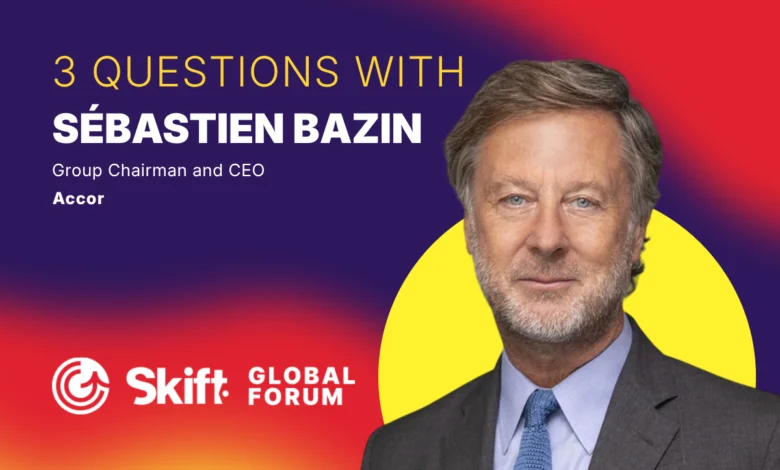
Since assuming the role of Chairman and CEO of Accor in 2013, Sébastien Bazin has steered one of the world’s most expansive hospitality empires through a decade of unprecedented digital disruption and shifting global travel paradigms. Today, the group encompasses a massive portfolio of over 5,800 hotels and resorts spanning 45-plus brands, ranging from budget-friendly economy staples to ultra-luxury icons. As Bazin prepares to take the stage at the upcoming Skift Global Forum in New York, scheduled for September 22–24, 2026, industry analysts are focusing on his unique decision-making philosophy: a triad of intuition, empathy, and analytical rigor.
The Evolution of Leadership at Accor
Bazin’s tenure has been defined by a fundamental restructuring of how Accor engages with both the real estate market and the guest experience. When he joined the company, the hospitality sector was just beginning to grapple with the rise of online travel agencies (OTAs) and the burgeoning home-sharing economy. Over the last thirteen years, Bazin has overseen the transformation of Accor from a traditional hotel owner-operator into a diversified asset-light hospitality giant.
This transition involved the strategic divestment of hotel real estate, allowing the company to pivot toward franchise and management agreements, while simultaneously aggressively expanding its lifestyle and luxury divisions through acquisitions like Fairmont, Raffles, and Swissôtel, as well as the creation of the Ennismore joint venture. These moves reflect a deliberate strategy to capture a broader share of the "lifestyle" traveler demographic—a segment that prioritizes unique, local experiences over standardized corporate lodging.
The Triad Rule: Instinct, Heart, and Data
Central to Bazin’s leadership style is his specific approach to executive decision-making. In an era where "big data" is often touted as the final arbiter of business success, Bazin maintains a more nuanced perspective. He posits that data should serve as a sharpening tool rather than a replacement for human judgment.
"I start with my gut, then my heart, then my brain," Bazin explained in preparation for his upcoming keynote. "My instinct tells me what feels right, my heart tells me how the decision will affect people, and my brain tells me the timing. Data is essential, but it should nourish your instinct, not replace it."
This hierarchy of decision-making addresses a common pitfall in modern corporate management: the "analysis paralysis" caused by an obsession with perfect information. Bazin argues that in a high-velocity market, waiting for a perfect data set often results in a missed window of opportunity. By prioritizing intuition and empathy first, he asserts that leaders can act with the necessary speed while maintaining the cultural integrity of their organizations.
The Role of Artificial Intelligence in the Guest Journey
The hospitality industry is currently undergoing a radical transformation as AI-driven personalization becomes the industry standard. For Accor, the challenge lies in leveraging these technologies to refine the guest experience without stripping away the "human touch" that defines luxury and service excellence.
Bazin views AI as a powerful instrument for discovery and planning. In the coming years, he anticipates that travelers will demand hyper-individualized itineraries. However, he warns against an over-reliance on algorithms. As technology becomes more sophisticated, the value of genuine human connection—a smile, a personalized recommendation from a concierge, or the warmth of local service—is expected to appreciate.
"As technology becomes more powerful, I believe the human touch becomes even more valuable," Bazin noted. This sentiment is echoed by many in the industry who fear that extreme automation may lead to a homogenization of travel experiences. By doubling down on the human element, Bazin aims to differentiate Accor’s vast array of brands from the increasingly sterile, tech-only interfaces provided by automated booking platforms.
Hospitality as a Social Elevator
Beyond the balance sheets and brand portfolios, Bazin has been a vocal advocate for the socio-economic impact of the hotel industry. He frequently describes hospitality as a "social elevator," an industry capable of providing professional pathways to individuals from diverse economic and educational backgrounds.
This focus on human capital is particularly relevant as the travel industry faces chronic labor shortages and a need for professional upskilling. By fostering a company culture that emphasizes human connection, Accor attempts to position itself not just as a provider of beds, but as an engine for community development. This perspective serves as a counter-narrative to the prevailing discourse that focuses solely on the technological disruption of the labor market.
Industry Context and the Skift Global Forum
The upcoming Skift Global Forum in New York serves as a barometer for the travel industry’s health and future direction. Bazin will be joined by other heavyweights in the sector, including Ariane Gorin of Expedia Group, Geoff Ballotti of Wyndham, and Hamad Al-Khater of Qatar Airways. These conversations are critical, as the industry continues to navigate a complex macroeconomic environment characterized by fluctuating interest rates, geopolitical instability, and evolving consumer spending habits.
The inclusion of these leaders suggests a broader theme for the 2026 Forum: the reconciliation of scale and agility. With Accor managing thousands of properties, the ability to maintain consistent service standards while empowering local managers to make brand-specific decisions is a constant tension. Bazin’s participation is expected to offer a deep dive into how a global entity can maintain a boutique feel, a challenge that remains the "holy grail" of the hospitality sector.
Implications for the Future of Global Travel
The implications of Bazin’s philosophy are significant for investors and industry observers alike. If the "human-first" approach proves effective at scale, it could force a re-evaluation of how hotel groups allocate their capital—shifting funds from purely digital infrastructure to the training and empowerment of front-line staff.
Furthermore, as the lines between work and leisure blur, the demand for properties that facilitate both productivity and cultural immersion will only increase. Accor’s current strategy, which emphasizes the "lifestyle" sector, aligns with this shift, suggesting that the company is betting on the long-term viability of the human-centered, experience-based travel model.
Analytical Summary
While data analytics have undoubtedly optimized yield management, distribution channels, and operational efficiencies, the long-term success of global hotel brands hinges on their ability to cultivate loyalty in an increasingly fragmented market. Bazin’s insistence on the "heart" of the decision suggests that he views the hotel as a social space rather than a commodity.
As the industry moves toward 2027 and beyond, the competition between tech-forward platforms and experience-forward hospitality providers will intensify. Accor’s strategy of using technology as a background support to enhance—rather than replace—human interaction represents a distinct strategic choice. By maintaining this balance, the company seeks to insulate itself against the potential pitfalls of total automation, banking on the idea that in a digital world, the most luxurious and sought-after commodity will remain the human connection.
In the lead-up to the Skift Global Forum, industry leaders are expected to scrutinize these claims. The challenge remains for Bazin to prove that this philosophy can be scaled across 5,800 properties without dilution, ensuring that every guest—regardless of the brand tier—feels the same level of intuitive, human-centered service. The upcoming forum will provide the platform for this critical debate, setting the tone for the next cycle of growth in the international travel sector.