The Ultimate Five-Day Madrid Itinerary: Exploring Spain’s Cultural and Historic Capital

Madrid, the sprawling capital of Spain, serves as the political, economic, and cultural heart of a nation boasting a population of approximately 3.5 million residents within the city proper and over 10 million annual visitors. Renowned for its architectural grandeur, globally influential culinary ecosystem, and a vibrant nocturnal culture that regularly extends until dawn, the metropolis stands as one of Western Europe’s premier urban destinations. Operating on a distinctive Mediterranean schedule characterized by late evening meals and extended social gatherings well into the early morning hours, Madrid combines historical gravitas with contemporary dynamism. To navigate this expansive urban center efficiently, tourism authorities and seasoned analysts recommend a structured, multi-day itinerary that balances world-famous institutional landmarks with lesser-known architectural and gastronomic treasures.
Day One: Immersion in the UNESCO-Designated Art Walk
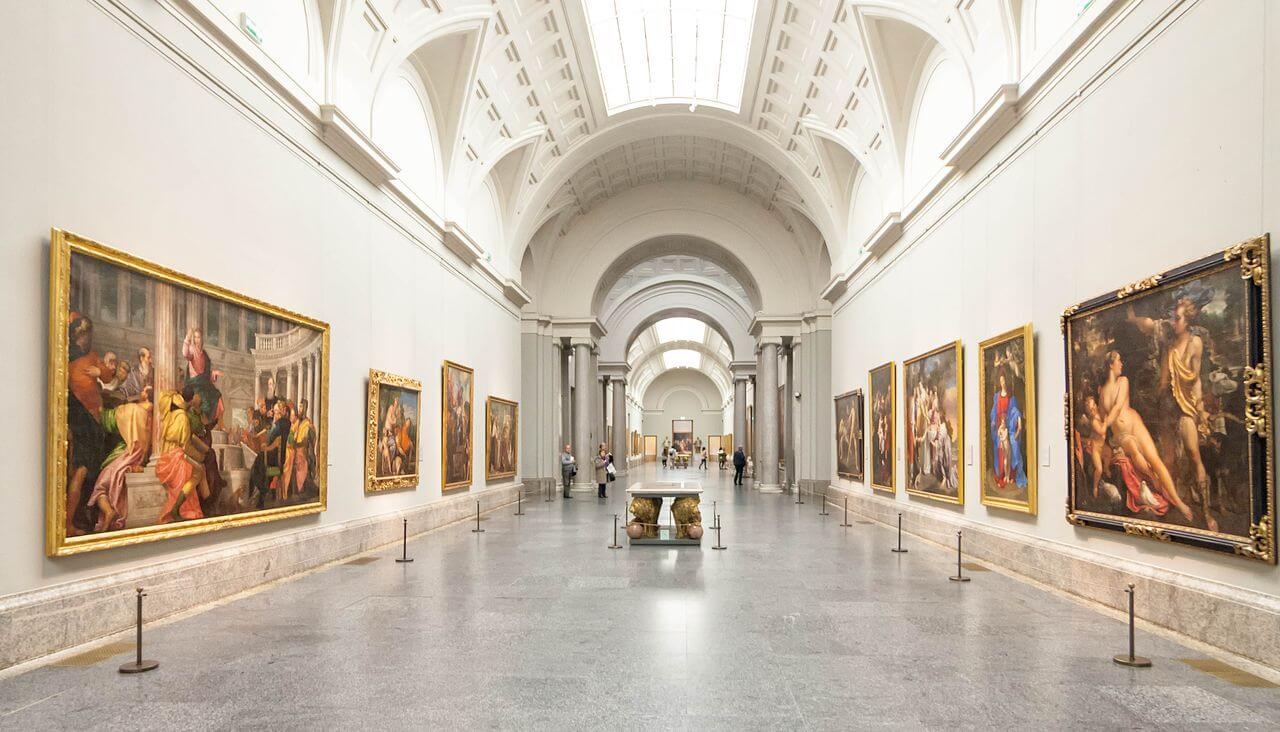
The inaugural day of exploration centers on the Paseo del Prado and BuenRetiro landscape, a prestigious urban corridor designated as a UNESCO World Heritage site in 2021. Encompassing more than 40 historical monuments and architectural structures, this cultural district anchors the city’s artistic identity.
The itinerary initiates at the Museo del Prado, widely regarded as one of the preeminent art galleries globally. Established in the early 19th century, the institution houses extensive collections of masterworks by Spanish, Flemish, and Italian masters, including Francisco Goya, Diego Velázquez, El Greco, Peter Paul Rubens, and Caravaggio. Cultural historians advise allocating a minimum of three to four hours to navigate the vast permanent collection adequately.
A ten-minute stroll along the Paseo del Prado leads visitors to the Thyssen-Bornemisza Museum, which bridges historical gaps with a private collection spanning from the early Renaissance to Pop Art. The day’s formal gallery circuit culminates at the Reina Sofía National Art Center. Dedicated primarily to 20th-century contemporary art, the museum features iconic works by Pablo Picasso, Joan Miró, Salvador Dalí, and Wassily Kandinsky. Its central attraction remains Picasso’s 1937 anti-war masterpiece, Guernica, a monumental canvas commissioned by the Spanish Republican government to symbolize the tragedies of the Spanish Civil War.
Following the morning gallery visits, travelers can engage with Madrid’s culinary traditions through historic venues such as Taberna La Fragua de Vulcano for regional comfort food, Arzábal near the Reina Sofía for contemporary tapas, or Bodega de los Secretos, where dining takes place inside restored 17th-century wine caves. The afternoon introduces visitors to Madrid’s unique "House Museums"—former aristocratic residences preserved in their original states. Among these, the Sorolla Museum, dedicated to the Impressionist painter Joaquín Sorolla, provides insight into late 19th-century domestic life alongside Mediterranean canvases, complementing alternative options such as the Museum of Romanticism and the Lázaro Galdiano Museum.
Day Two: Architectural Grandeur in the Historic Center
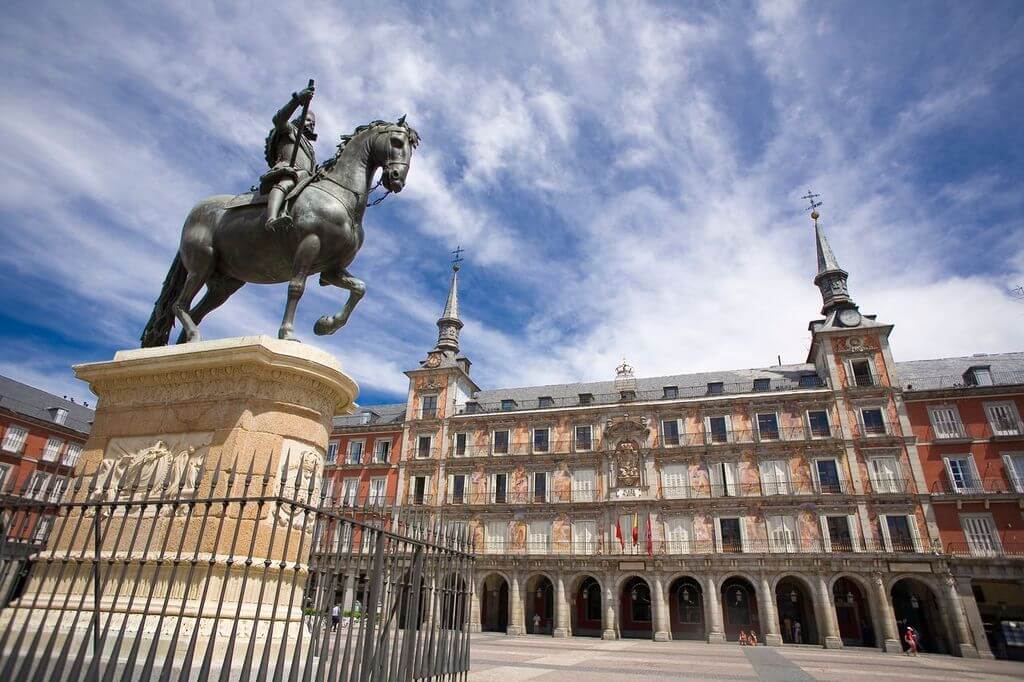
The second day investigates the medieval and Renaissance foundations of the city, historically designated as Habsburg Madrid or Madrid de los Austrias. The geographical and symbolic center of the nation begins at Puerta del Sol, home to Kilometer Zero—the official origin point for Spain’s radial highway network—and the iconic bronze statue of the Bear and the Strawberry Tree (El Oso y el Madroño), which derives from the municipal coat of arms.
Progressing westward, visitors arrive at the Plaza Mayor. Constructed during the reign of Philip III in the early 17th century, the grand, porticoed square has historically functioned as a public theater for royal ceremonies, bullfights, markets, and public executions. Today, the plaza serves as a primary civic gathering space surrounded by traditional establishments, most notably known for local vendors serving traditional calamari sandwiches (bocadillo de calamares).
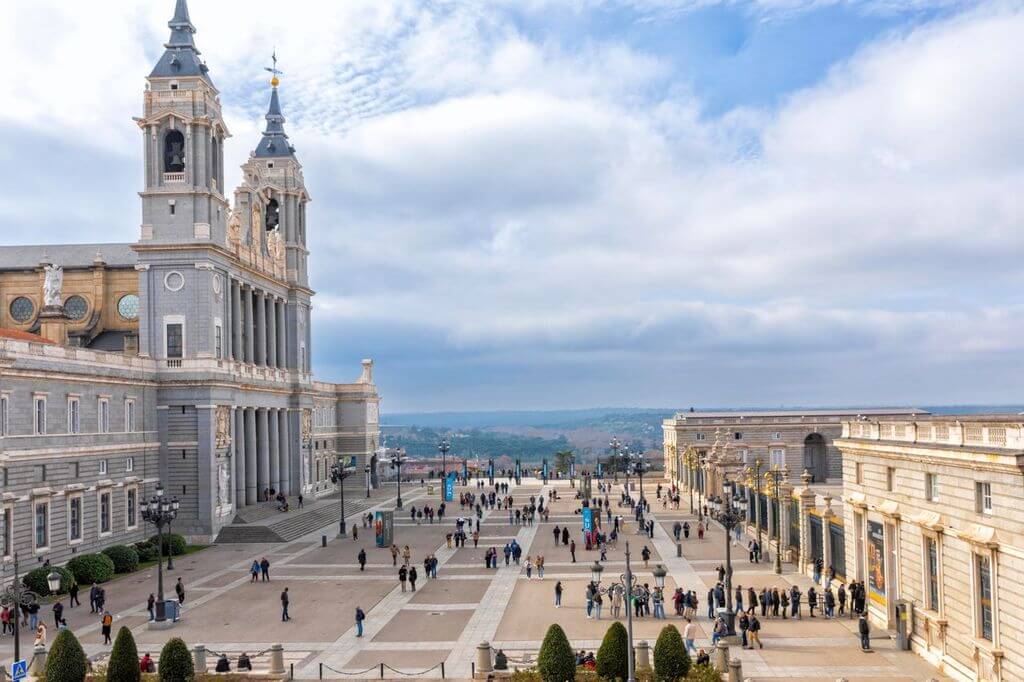
The afternoon features a comprehensive tour of the Royal Palace of Madrid (Palacio Real). Constructed in the 18th century on the site of a former 9th-century Moorish alcazar destroyed by fire in 1734, the Baroque structure functions as the official residence of the Spanish royal family, though reigning monarchs primarily utilize it for state ceremonies. Spanning over 3,400 rooms, the interior showcases frescoed ceilings, royal pharmacies, the Stradivarius string instrument collection, and the Royal Armory. Adjacent to the palace stands the Almudena Cathedral. Consecrated by Pope John Paul II in 1993 following over a century of sporadic construction, the structure merges neoclassical exterior symmetry with a neo-Romanesque crypt supported by more than 400 uniquely carved columns.
Day Three: Gastronomic Evolution and Rooftop Culture
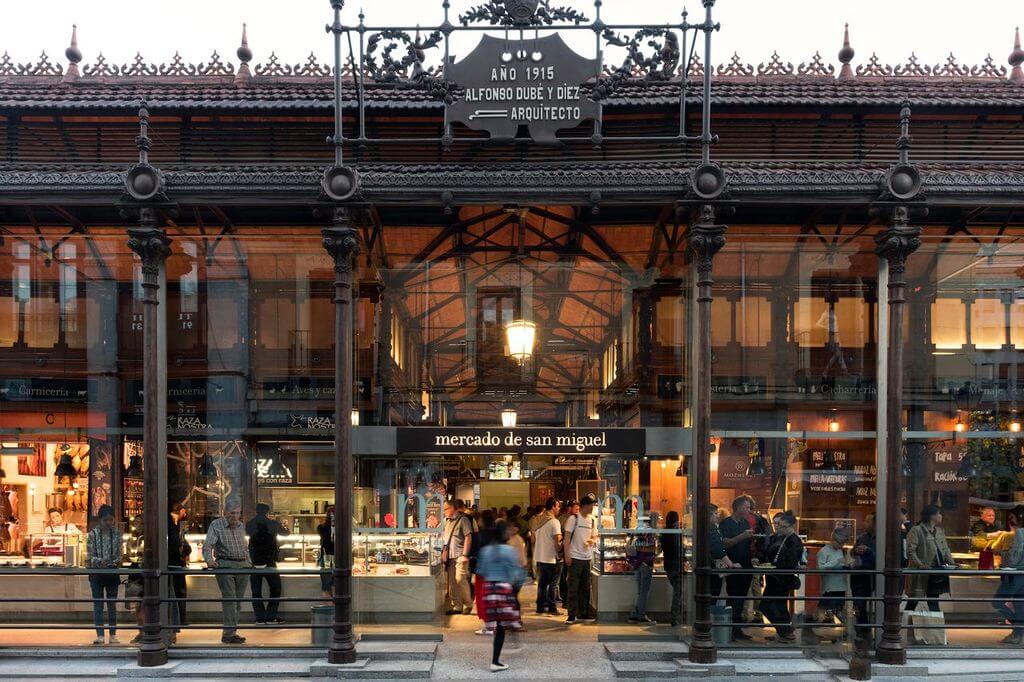
Madrid’s culinary landscape reflects a blend of traditional Castilian recipes and modern international gastronomy. Day three emphasizes regional food markets and urban culinary development. The iron-and-glass Mercado de San Miguel, situated near Plaza Mayor, serves as an upscale epicurean hub showcasing gourmet tapas, fresh seafood, and regional wines. Alternative neighborhood markets, including the Mercado de San Antón in Chueca and the Mercado de Vallehermoso in Chamberí, offer deeper immersion into local provisioning and artisanal production.
For dinner, culinary historians frequently recommend Sobrino de Botín, officially recognized by Guinness World Records as the oldest continuously operating restaurant in the world, having opened its doors in 1725 and famously patronized by author Ernest Hemingway. Alternatively, travelers can participate in traditional tapas crawls through the historic neighborhoods of La Latina or Barrio de las Letras.
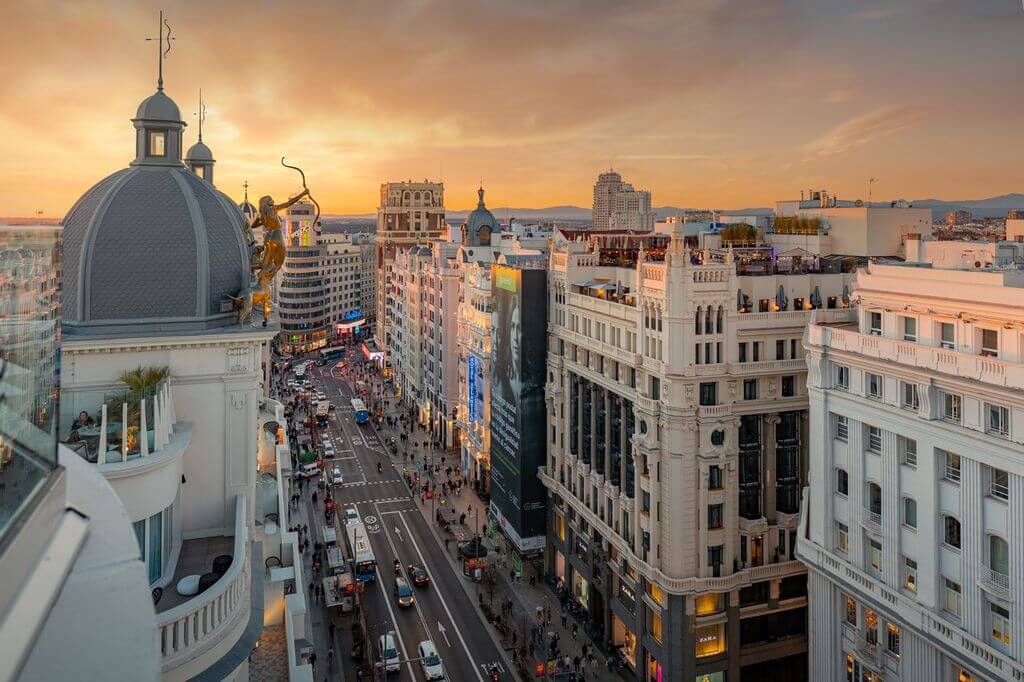
As evening approaches, the city’s architectural elevation becomes accessible via the Gran Vía, where contemporary rooftop establishments—such as those atop the Hotel Riu Plaza España or Picalagartos—provide panoramic 360-degree views of the metropolitan skyline. Additionally, urban planners note Madrid’s evolution into a prominent European hub for plant-based dining, with districts like Malasaña hosting numerous innovative vegetarian and vegan establishments that reinterpret classic Iberian cuisine.
Day Four: Monumental Day Trips and UNESCO Heritage
While Madrid proper contains extensive cultural assets, its surrounding region houses several UNESCO World Heritage sites accessible within a one-hour transit window. Day four encourages excursions beyond the municipal boundaries to examine the broader historical footprint of the Spanish Empire.
Located approximately 50 kilometers northwest of the capital lies the Monastery of San Lorenzo de El Escorial. Commissioned by King Philip II in 1563 and designed by architects Juan Bautista de Toledo and Juan de Herrera, the massive granite complex served as the political center of the Spanish Empire during the late 16th century. The austere Herrerian style reflects the Counter-Reformation ideals of the era, housing a royal basilica, a monumental pantheon containing the tombs of most Spanish monarchs since Charles V, a vast historical library, and a royal palace.
An alternative excursion leads south to the Royal Palace and Gardens of Aranjuez. Originally established as a royal hunting lodge and later expanded under Philip II, the site exhibits a synthesis of Renaissance and Baroque architecture alongside extensive formal gardens irrigated by the Tagus River. Alternatively, Alcalá de Henares, located 35 kilometers northeast of Madrid, offers a preserved Renaissance urban layout and serves as the birthplace of Miguel de Cervantes, author of Don Quixote.
Day Five: Off-the-Beaten-Path Monasteries and Urban Green Spaces
The concluding day directs attention to lesser-known monastic foundations and expansive municipal green spaces that define daily life for local residents. The itinerary begins with the Monastery of Las Descalzas Reales, a cloistered convent founded in 1559 by Joanna of Austria. Built within a 16th-century Renaissance palace, the institution functioned as a refuge for aristocratic women who donated substantial artistic dowries, resulting in a preserved collection of Flemish tapestries, religious paintings, and Renaissance sculpture. Nearby, the Royal Monastery of La Encarnación, founded in 1611 by Queen Margaret of Austria, continues this tradition of baroque religious architecture and historical relics.
To conclude the five-day exploration, visitors can access Casa de Campo, the largest public park in Madrid. Covering an area of approximately 17 square kilometers—roughly five times the size of New York City’s Central Park—the historic park was opened to the public in 1931 following centuries as a royal hunting estate. Featuring an artificial lake, extensive trail networks, and recreational facilities, the park offers unobstructed views of the Royal Palace and the Almudena Cathedral across the Manzanares River valley, providing a quiet conclusion to an intensive urban itinerary.