Unveiling Kuala Lumpur’s Culinary Heritage: A Comprehensive Look at Fish Head Curry and the Rise of Nasi Campur Culture

Malaysia continues to hold a premier position on the global culinary map, widely celebrated for its rich tapestry of flavors rooted in centuries of multicultural exchange. The nation’s gastronomy is a living testament to the historical convergence of Malay, Chinese, and Indian culinary traditions, further enriched by Southeast Asia’s extraordinary biodiversity and native flora and fauna. Among the myriad dishes that define this culinary landscape, Fish Head Curry stands out as an exceptional embodiment of Malaysia’s diverse food heritage. Culinary expeditions into the heart of Kuala Lumpur frequently spotlight local establishments that elevate this dish from a regional specialty to a cultural phenomenon.
The Cultural Significance of Nasi Campur
At the center of everyday dining in Malaysia is nasi campur, a traditional meal format that translates literally to "mixed rice." Highly regarded as a staple of the Malaysian workforce and a favorite among lunchtime diners, nasi campur operates on a buffet-style model. Patrons select from an expansive array of components, including slow-cooked curries, braised meats, whole fresh fish, and an assortment of locally harvested vegetables, all served atop a generous mound of steaming white rice.
Food historians note that the evolution of nasi campur reflects the country’s demographic integration. By allowing diners to customize their plates with a multitude of protein and plant-based options, the meal structure caters to the dietary preferences of a multi-ethnic society. Culinary practices associated with the dish often encourage communal dining and a tactile engagement with food, underscoring the informal yet deeply communal nature of Malaysian culinary culture.
Tugu View Cafe: A Culinary Landmark in Kuala Lumpur

Situated near the historic Tugu Negara (National Monument) and the sprawling Perdana Botanical Garden, the Tugu View Cafe has emerged as a notable destination for both domestic and international food enthusiasts. Operating daily from 7:00 AM to 6:00 PM (excluding Sundays), the establishment functions primarily as a specialized nasi campur venue, distinguishing itself through its commitment to traditional preparation methods and high-volume daily service.
The restaurant derives its name from its geographic proximity to the Tugu Monument, a significant historical landmark erected to commemorate the fallen soldiers who fought for Malaysia’s independence. This location places the cafe within a zone of historical and civic importance, drawing visitors who combine morning strolls through the adjacent Lake Gardens with traditional midday dining experiences. Navigating to the establishment requires traversing pathways near the botanical reserve, leading patrons to an entrance flanked by local vendors. Despite its unassuming exterior, the cafe routinely processes substantial numbers of patrons, including organized tour groups and local professionals.
The Anatomy of an Iconic Dish: Fish Head Curry

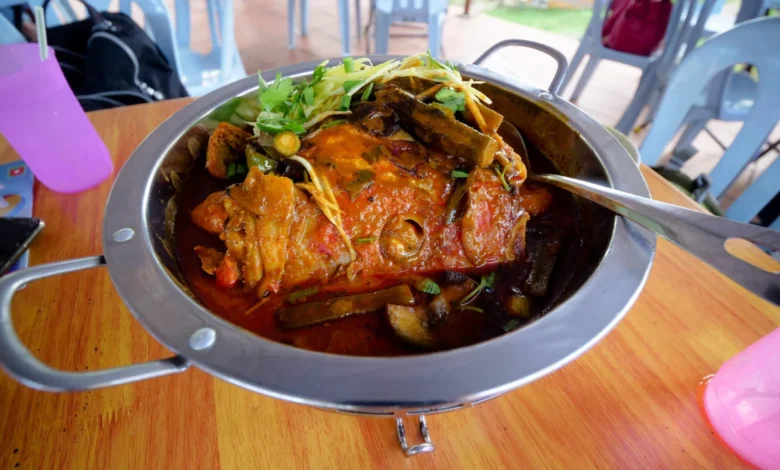
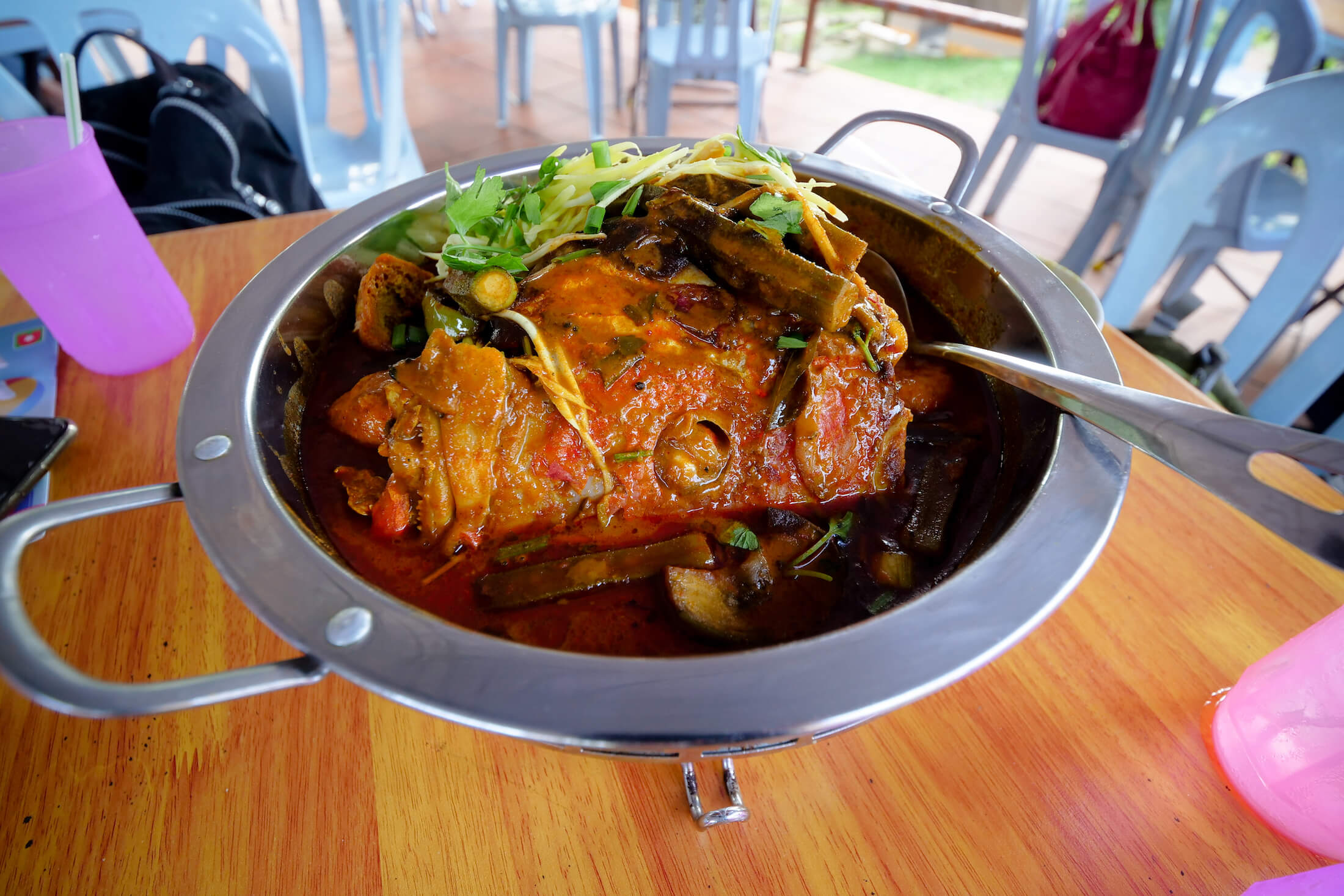
The defining offering at Tugu View Cafe is its signature Fish Head Curry, prepared using the head of the red snapper, locally known as ikan merah. Culinary analysts emphasize that the choice of red snapper is critical to the dish’s success, as the fish possesses a dense skeletal structure and substantial muscle mass around the cheeks, eyes, and cranium.
The preparation process involves simmering the fish head in a robust, heavily spiced coconut and tamarind-based curry broth infused with traditional aromatics such as lemongrass, galangal, curry leaves, and chili paste. Additional ingredients, including firm squares of fried tofu (taupok) and whole okra, absorb the complex flavors of the broth during the slow-cooking process.
Gastronomic assessments of fish head curry frequently highlight the structural distribution of the meat. Unlike fillets, which offer uniform textures, the head provides varied textural elements—ranging from gelatinous collagen around the eyes to tender, flaky muscle along the bone structure. This complexity requires an experiential eating style that appeals to connoisseurs of traditional Southeast Asian cuisine.

Economic and Logistical Dimensions of Local Food Tourism
The operational model of eateries like Tugu View Cafe underscores the economic viability of traditional food tourism in urban centers like Kuala Lumpur. Dining expenses at such establishments remain accessible; recorded transactions indicate that a comprehensive meal featuring a large specialty fish head, accompanied by side dishes and multiple servings of rice and curry sauces, totals approximately 144 Malaysian Ringgit (USD $35). Scaled options, such as half-portions, are priced to accommodate smaller dining parties, ensuring broad consumer access.
Tourism boards in Malaysia have long recognized gastronomy as a primary driver of visitor acquisition and retention. The integration of food culture with historical landmarks—such as the pairing of the Tugu Monument area with adjacent culinary hubs—forms a cornerstone of urban tourism strategies. These initiatives encourage visitors to explore beyond commercial shopping districts and engage with localized micro-economies centered around traditional food preparation.

Implications for the Future of Malaysian Gastronomy
As urban centers across Southeast Asia undergo rapid modernization and gentrification, traditional food establishments face both opportunities and operational challenges. The preservation of labor-intensive dishes like Fish Head Curry relies heavily on the intergenerational transfer of culinary knowledge and the sustained availability of local ingredients.
Observers in the hospitality sector suggest that maintaining the authenticity of dishes such as nasi campur and specialized curries is vital for safeguarding Malaysia’s intangible cultural heritage. Establishments that successfully balance high-volume service with adherence to traditional recipes play a critical role in educating the public about the historical roots of the nation’s cuisine. Through continued documentation by culinary researchers and heightened international exposure via digital media platforms, traditional Malaysian dining formats are increasingly recognized as sophisticated components of the global culinary dialogue.