Losing the Fear of Speaking Spanish: A Reflective Journey Through Seville and the Science of Language Acquisition

Returning to a destination after a long hiatus inevitably forces a confrontation between the static nature of memory and the fluid reality of urban evolution. For the long-term traveler, Seville—the sun-drenched capital of Andalusia—serves as a poignant case study in this phenomenon. On a recent return visit to the city, the juxtaposition of personal growth against the backdrop of a changing urban landscape highlighted a significant shift in the traveler’s experience: the transition from performative, rehearsed language use to authentic, functional communication.

The Urban Evolution of Seville
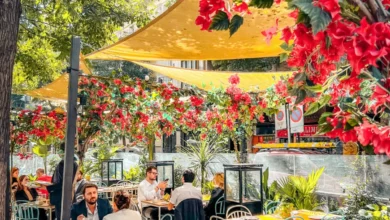
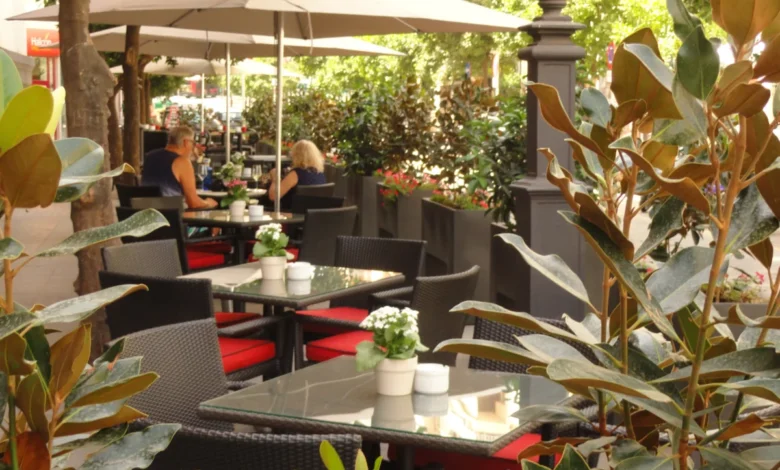
Seville, like many historic European centers, has undergone significant structural and social transformations over the past decade. Data from regional tourism boards indicates a sustained increase in foreign investment within the city’s hospitality sector, leading to the modernization of historic neighborhoods. The guesthouse infrastructure, once dominated by small, family-run establishments, has seen a shift toward boutique, digitized hotel models. Plaza Nueva, once a bustling local thoroughfare, has been polished and gentrified, reflecting broader trends of urban renewal designed to cater to a globalized tourism market.
For the returning visitor, these changes present a psychological challenge. The disappearance of familiar haunts, such as long-standing local bars, creates a sense of dislocation. However, the sensory markers of the city—the scent of orange blossoms, the architectural grandeur of the Museo de Bellas Artes, and the social ritual of sobremesa—remain constants. These elements serve as the anchor for travelers seeking to reconcile their past memories with the present-day reality of the city.

A Chronology of Linguistic Development
The evolution of a traveler’s linguistic capability often follows a predictable trajectory. In the initial phase, years prior, the traveler relied on rudimentary phrasebooks—a method that linguists frequently criticize for lacking contextual adaptability. The common outcome for the "overconfident beginner" is a breakdown in communication, where the complexity of native speech patterns far outstrips the limited, scripted vocabulary of the learner.
This experience of "maternal pity"—a common reaction from native speakers when faced with a foreigner’s broken attempts at their language—often creates a psychological barrier. Research in psycholinguistics suggests that this fear of negative evaluation is the primary inhibitor to language fluency in adults. For years, the traveler in question retreated into the "safety" of English, a global lingua franca that allows for easy, albeit shallow, interaction.

The turning point occurred through the adoption of one-to-one, tutor-led instruction. Unlike static language apps, which often focus on repetitive, gamified learning, professional tutoring requires real-time adaptation. The necessity of responding to unexpected questions forces the brain to move beyond memorization and into active synthesis. This transition from "rehearsing" to "processing" is the fundamental prerequisite for conversational fluency.
Supporting Data on Language Acquisition
Language learning experts emphasize that the "confidence gap" is the most significant hurdle for adult learners. According to studies conducted by organizations like the British Council and various language acquisition institutes, adults require approximately 600 to 800 hours of directed, immersive practice to achieve professional working proficiency in a Category I language like Spanish.

However, the "communicative approach"—the method of focusing on meaning over grammatical perfection—has been shown to accelerate this process. When the traveler reached the crowded, chaotic environment of a local establishment like Las Teresas, the shift from a controlled classroom setting to a "wild" environment provided the necessary pressure to test these skills. The success of ordering a meal and responding to an impromptu query from a waiter represents a milestone in "functional communication."
The Psychological Shift: Beyond the Classroom
The incident at the art market outside the Museo de Bellas Artes provides a further example of this progress. Standing amidst the local artists, the traveler engaged in a dialogue that was not pre-scripted. This moment is critical because it represents the transition to "automaticity." In cognitive psychology, automaticity is the ability to perform a task—in this case, speaking a foreign language—without conscious effort.

The fact that the traveler was more interested in the painter’s description of his work than in the mechanics of the language itself is a key indicator of psychological comfort. The fear of making errors—stumbling over verbs or failing to grasp a specific adjective—was superseded by the goal of understanding the subject matter.
Broader Implications for Global Travelers
The implication for the modern traveler is clear: language is not merely a tool for utility, but a bridge to cultural integration. While English may be sufficient for navigating hotels and tourist sites, the ability to engage in even basic local language interactions shifts the traveler from a passive observer to an active participant.

Public policy analysts in the tourism sector have noted that travelers who engage with local languages report higher levels of satisfaction and deeper cultural connection. This is largely because language acts as a signal of respect. When a visitor attempts to communicate in the local tongue, it fundamentally changes the dynamic of the encounter, often resulting in more genuine, patient, and meaningful interactions with residents.
Analysis of the "Language Gap"
It is essential to acknowledge that the traveler in this narrative is far from fluent. The realization that "I am still a long way from that" is a sign of objective self-assessment. The reality of language learning is that it is non-linear. One will always encounter moments of frustration, misinterpretation, and linguistic exhaustion.

However, the broader impact of this experience is the removal of the fear of failure. By engaging with the local population in Seville, the traveler has demonstrated that the "language barrier" is often a self-imposed psychological construct. When the fear of being misunderstood is replaced by a willingness to participate in the conversation—gaps and all—the process of learning becomes self-sustaining.
Conclusion
The journey through Seville serves as a microcosm for the adult learner’s experience. The transition from the rigid, insecure reliance on phrasebooks to the fluid, albeit imperfect, interaction with a local artist demonstrates that fluency is not the primary objective of travel—connection is.

As urban landscapes continue to evolve and the world becomes more interconnected, the value of learning a local language remains undiminished. It is not about achieving perfection, but about the willingness to step out of the comfort zone of one’s native tongue and into the vulnerability of human connection. For the traveler, the return to Seville was not just a trip back to a city they once knew; it was a return to a version of themselves that was finally ready to listen, speak, and truly understand.