The Ultimate Hanukkah Salad Featuring Crispy Potato Croutons Is Redefining Holiday Side Dishes

The integration of traditional holiday staples into modern, high-efficiency culinary formats has reached a new milestone this season with the popularization of potato-based salad toppings. As families prepare for Hanukkah—a festival historically centered on the consumption of foods fried in oil to commemorate the miracle of the menorah—the culinary landscape has shifted toward inventive, time-saving techniques that maintain cultural significance while meeting the demands of contemporary home cooks. Central to this trend is the emergence of the "potato crouton," a clever culinary adaptation that serves as a bridge between classic latke preparation and the modern requirement for lighter, vegetable-forward holiday side dishes.
The Evolution of Hanukkah Gastronomy
Hanukkah, the eight-day Jewish Festival of Lights, has long been defined by its specific dietary traditions. Because the holiday celebrates the rededication of the Second Temple in Jerusalem and the miracle of the oil—where a small amount of oil meant for one day lasted for eight—fried foods occupy a place of honor at the celebratory table. Traditionally, this has meant latkes (potato pancakes) and sufganiyot (jelly-filled doughnuts).
However, in recent years, the culinary narrative has begun to diversify. While the latke remains the undisputed centerpiece of the Hanukkah menu, there is a growing movement to balance the heavy, starch-and-oil-dense main courses with acidic, fresh, and textured salads. This shift reflects a broader consumer trend toward "balanced indulgence," where traditional recipes are preserved but framed within modern dietary preferences for fresh produce and varied textures.
Chronology of the Potato Crouton Trend
The concept of utilizing potatoes as a salad topping is not entirely new, but its recent surge in popularity can be traced through several key developments in the culinary industry:
- 2018–2020: High-end culinary institutions, such as the restaurant Made Nice, introduced refined versions of potato-topped salads, including the salmon rösti salad. These dishes demonstrated that crispy potato elements could provide an essential textural contrast to soft greens, elevating a simple salad to a formal course.
- 2023: Independent culinary creators and digital influencers began experimenting with "smashed" frozen potato products. By utilizing store-bought tater tots and pressing them into thin, crispy disks, home cooks found they could replicate the flavor profile of a latke with a fraction of the labor and time, effectively democratizing the "potato crouton."
- 2025: The commercial sector officially acknowledged the trend when major food manufacturer Ore-Ida introduced "CrouTots," a product specifically engineered to serve as a crispy, potato-based salad topper. This marked the transition of the technique from a viral social media trend to a standardized pantry staple, indicating a significant market shift toward hybridizing frozen convenience foods with fresh ingredients.
Analysis of the "Smashed Tot" Technique
From a culinary science perspective, the "smashed tot" technique is a study in heat transfer and moisture reduction. Traditional latke preparation requires the grating, salting, and draining of raw potatoes, followed by careful frying to ensure the interior remains cooked while the exterior achieves a golden-brown crunch.
By contrast, frozen tater tots are pre-processed to have a low moisture content and a uniform starch density. When smashed and baked or pan-fried, the increased surface area allows for faster, more consistent crisping. This method mimics the Maillard reaction—the chemical reaction between amino acids and reducing sugars that gives browned food its distinctive flavor—more efficiently than traditional shallow-frying, which can often result in uneven textures if the oil temperature is not strictly monitored.
Ingredients and Nutritional Profile
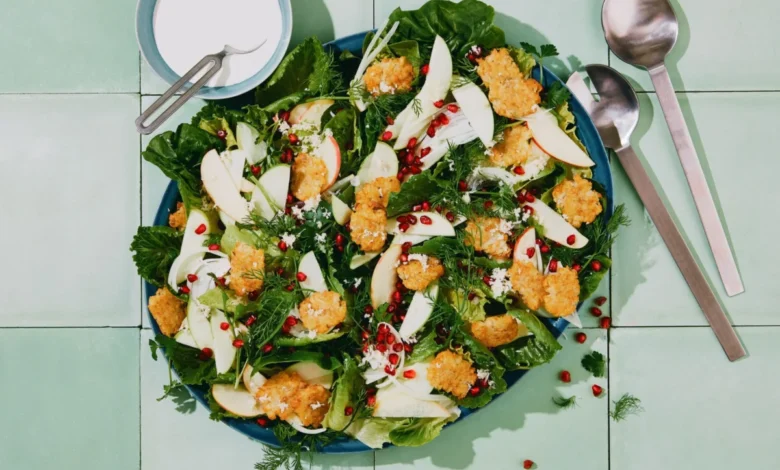
The modern Hanukkah salad, as currently formulated by culinary experts, relies on a specific combination of ingredients designed to cut through the richness of the potato topping. A typical assembly includes:
- The Base: A combination of romaine or Little Gem lettuce, which provides a sturdy, crunchy backbone capable of supporting heavier toppings.
- The Dressing: A base of sour cream, prepared horseradish, and distilled white vinegar. This combination provides a sharp, acidic counterpoint to the saltiness of the potatoes.
- The Aromatics: Thinly sliced white or yellow onion, fresh dill, and parsley, which provide essential herbaceous notes.
- The Fruit: Apples (such as Honeycrisp or Fuji) are added for sweetness and further crunch, balancing the earthy profile of the root vegetables.
- The Garnish: Pomegranate seeds provide a burst of acidity and color, while fresh, grated horseradish adds a pungent, sinus-clearing finish that is highly characteristic of Ashkenazi-inspired festive cuisine.
The Role of Convenience in Holiday Preparation
For the modern home host, the adoption of frozen, pre-processed potatoes is a response to the logistical pressures of holiday meal preparation. Statistics from the food and beverage industry indicate that during the winter holiday season, there is a 30% increase in the purchase of "time-saving" frozen sides.
The integration of these products into a "from scratch" salad represents a pragmatic approach to cooking. By delegating the labor-intensive portion of the dish—the potato processing—to a pre-manufactured product, the cook can focus on the freshness of the greens and the complexity of the dressing. This does not represent a loss of culinary authenticity, but rather an evolution of the holiday kitchen, where the focus is on the communal experience of the meal rather than the individual labor behind each component.
Broader Implications for Culinary Tradition
The rise of the potato-topped salad carries significant implications for the future of holiday traditions. Critics of processed food might argue that convenience compromises the integrity of traditional recipes. However, proponents, including many in the professional culinary space, argue that these adaptations allow traditions to remain relevant for younger generations who may have limited time or equipment.
Moreover, the versatility of this salad structure—which can be adapted to pair with roast chicken, salmon, or even vegetarian main courses—suggests that it may become a permanent fixture in the holiday repertoire. The inclusion of ingredients like pomegranate and horseradish maintains a tether to the historical and symbolic nature of Hanukkah, ensuring that while the method of delivery evolves, the cultural significance remains intact.
Conclusion: A Synthesis of Old and New
As the 2025 holiday season concludes, the "Hanukkah-inspired salad" stands as a testament to the agility of home cooking. By combining the ancient tradition of oil-based fried foods with the modern convenience of the potato crouton, the culinary community has demonstrated that tradition is not a static concept. It is a living, breathing framework that expands to accommodate new techniques, market innovations, and changing lifestyles. Whether served as a side to a main roast or as a standalone dish, this salad exemplifies the balance between cultural homage and practical, high-quality home cooking, setting a high standard for future holiday menus.