Diriyah Company Cancels Major SAR 717 Million Hotel Contract Amidst Saudi Giga-Project Realignment

The Diriyah Company, the state-backed developer spearheading one of Saudi Arabia’s most ambitious giga-projects, has officially terminated a SAR 717 million ($191 million) contract for the construction of a 325-room hotel. The decision, which comes only nine months after the agreement was finalized, marks a notable pivot in the development strategy for the historic site located on the outskirts of Riyadh. The project, intended to serve as a cornerstone of the luxury hospitality offering within the Diriyah development, was to be executed by a joint venture consisting of BEC Arabia Contracting and the Saudi subsidiary of the Indian engineering firm Ashoka Buildcon.
The cancellation was formally disclosed on November 19, when Ashoka Buildcon submitted a regulatory filing to the Bombay Stock Exchange. According to the filing, the Diriyah Company communicated that the project was being scrapped due to “internal reasons attributable to the employer.” The brevity of this explanation has prompted industry observers to analyze the move within the broader context of Saudi Arabia’s Vision 2030, a sweeping national transformation plan that relies heavily on the timely execution of multi-billion-dollar tourism and infrastructure projects.
Chronology of the Project and Cancellation
The trajectory of the contract began in February 2024, a period marked by aggressive expansion and contract awards across the Saudi construction sector. At that time, the joint venture between BEC Arabia and Ashoka Buildcon was positioned as a key partner for the Diriyah Company, tasked with delivering a high-end hotel that would cater to the growing influx of international tourists and domestic luxury travelers visiting the UNESCO World Heritage site of At-Turaif.
For months, the partnership was viewed as a testament to the strengthening economic ties between Saudi Arabia and India, with both entities signaling readiness to meet the project’s demanding specifications. However, the unexpected termination in November highlights the volatile nature of large-scale infrastructure developments, where shifting timelines, fiscal priorities, and design re-evaluations can lead to sudden contract dissolutions.
While the Diriyah Company has remained tight-lipped regarding the specific nature of the “internal reasons” cited, analysts suggest that such moves are rarely isolated. They often reflect broader strategic reviews of project portfolios, particularly as the Saudi government and its sovereign wealth fund, the Public Investment Fund (PIF), transition from the conceptual and announcement phase of Vision 2030 into a more rigorous phase of fiscal management and operational execution.
The Significance of the Diriyah Giga-Project
To understand the weight of this cancellation, one must look at the scope of the Diriyah project itself. Diriyah is not merely a hotel development; it is a $63 billion master-planned district designed to become the cultural and historical heart of the Kingdom. The development encompasses a vast array of assets, including luxury hotels, world-class museums, high-end retail spaces, and residential communities, all centered around the restored At-Turaif district, the birthplace of the first Saudi state.
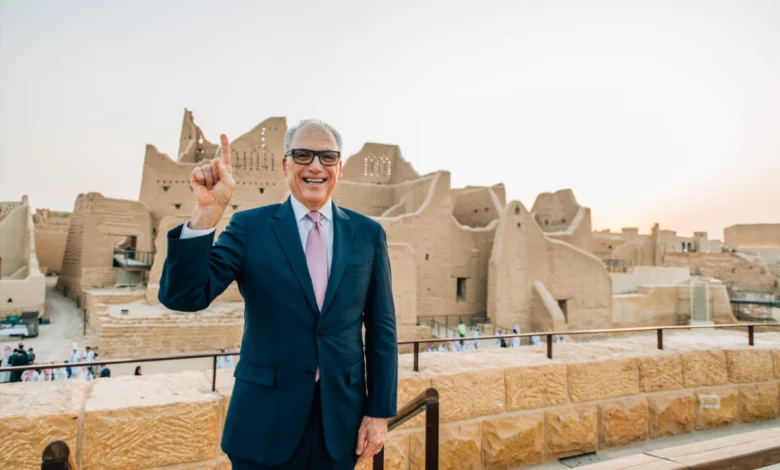
Jerry Inzerillo, the CEO of the Diriyah Gate Development Authority, has long emphasized that the project is designed to honor Saudi heritage while setting a new global standard for hospitality. The goal is to transform the site into a tourism destination capable of hosting millions of visitors annually. Given this objective, the cancellation of a single 325-room hotel contract, while significant in monetary terms, represents a localized adjustment within a much larger, multi-decade endeavor.
The site is intended to play a critical role in the broader Riyadh tourism strategy, complementing other major developments such as the King Salman Park and the Qiddiya entertainment district. Any deviation from the planned timeline for these developments is closely watched by global investors who are gauging the long-term feasibility and pacing of Saudi Arabia’s economic diversification program.
Data and Economic Implications
The contract value of $191 million provides a snapshot of the intense activity within the Saudi construction sector, which has been the primary engine for non-oil GDP growth in recent years. In 2023 and early 2024, Saudi Arabia saw a record volume of project awards, driven by the need to meet 2030 deadlines. However, the market is currently entering a phase where the focus is shifting toward "fiscal discipline."
Recent reports from financial institutions and industry trackers suggest that the Saudi government is increasingly scrutinizing the returns on investment for its giga-projects. This does not imply a withdrawal from the goals of Vision 2030, but rather a recalibration. By cancelling projects or re-tendering them, the Diriyah Company may be seeking to optimize costs, integrate more sustainable building practices, or align the hotel’s design more closely with updated market forecasts that reflect a maturing tourism industry in the region.
From an investor perspective, the transparency of the Bombay Stock Exchange filing provides a rare, albeit limited, window into the internal workings of Saudi giga-projects. While the suddenness of the cancellation might be viewed as a risk, it also reflects a governance structure that is willing to halt or re-evaluate contracts rather than continue with plans that no longer serve the project’s overarching strategic vision.
Industry Reaction and Contextual Analysis
While no official statement has been released by the Saudi Ministry of Tourism or the Public Investment Fund regarding this specific incident, industry experts suggest that such terminations are part of the "learning curve" of executing projects of this magnitude. Construction in the desert environment, combined with the logistical complexity of the Riyadh urban sprawl, creates unique challenges for contractors and developers alike.
The involvement of international firms like Ashoka Buildcon highlights the global supply chain that Saudi Arabia has tapped into to achieve its goals. The impact on the joint venture is likely to be significant, as they had likely mobilized resources, equipment, and supply chains in anticipation of the multi-year construction schedule. However, the contractual frameworks for such large-scale developments typically include provisions for termination, ensuring that both parties have a legal pathway for resolution when expectations or project parameters diverge.
Furthermore, the cancellation may be viewed as an indication of the shifting hospitality landscape in Riyadh. With the city preparing for major global events, including the 2030 World Expo, the demand for specific types of luxury accommodation is fluid. The Diriyah Company may be re-assessing whether the proposed 325-room hotel is the optimal use of that specific plot of land, or if a different configuration—perhaps one offering a mix of branded residences or a different brand partner—would better serve the long-term goals of the district.
The Future of Diriyah and Potential Next Steps
Looking ahead, the Diriyah Company is unlikely to leave the project site dormant for long. Given the site’s prime location, it is probable that the development will be re-tendered under new terms, or that the scope of the project will be integrated into a larger, more comprehensive development plan for the surrounding precinct.
For the Saudi construction market, the incident serves as a reminder that the "giga-project era" is becoming increasingly complex. As the initial excitement of the early announcement years gives way to the hard work of construction, the market will likely see more instances of project optimization. This is a common phenomenon in the lifecycle of any nation-building project of this scale, such as the development of Dubai’s Downtown or the expansion of major world capitals.
Ultimately, the Diriyah Company remains committed to its mission of transforming the historic capital into a global beacon of culture and tourism. The cancellation of the $191 million contract is a singular event that, while notable for its size and the public nature of the disclosure, remains a small part of the multi-billion-dollar puzzle. As the Kingdom continues its march toward 2030, the ability of developers to pivot, adapt, and refine their strategies will be as important as the initial designs themselves.
The international construction community will continue to monitor the Diriyah project with interest, not only for the economic opportunities it presents but also for the insight it offers into the evolving governance of one of the world’s most ambitious development agendas. For now, the focus shifts to how the Diriyah Company will re-position this asset and whether it will look for new partners to bring its vision of a world-class luxury hotel in the heart of history to fruition.