The ambitious Russian expedition attempting a rare, unsupported ascent of Mount Everest via the West Ridge has been forced into a strategic retreat. Lead climber Andrei Vasiliev, alongside team members Sergey Kondrashkin and Vitaly Shiilov, encountered insurmountable atmospheric conditions that necessitated a withdrawal from their high-altitude progress toward the West Shoulder. Despite a brief window of favorable weather earlier in the week, the team confirmed that incoming gale-force winds have rendered further technical climbing on the upper slopes both impossible and life-threatening.
Chronology of the Expedition
The current expedition represents the third major attempt by the Russian trio to establish a viable route to the summit this season. The team, operating entirely without supplemental oxygen or the support of high-altitude porters, has been meticulously working through the complex, vertical topography of the mountain’s western flank.
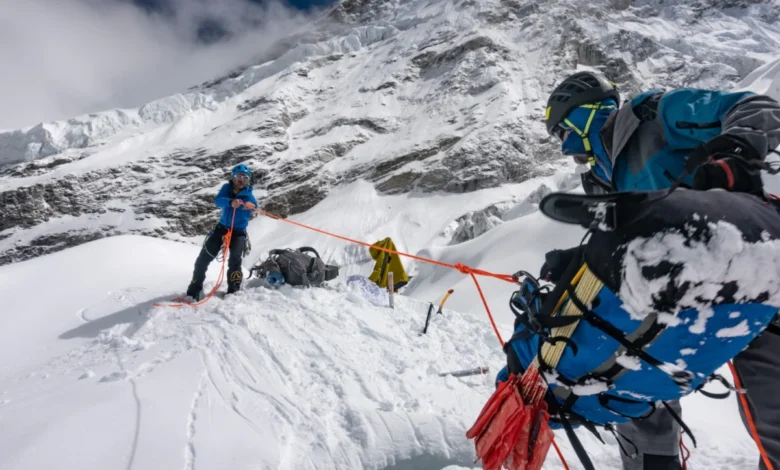
The progression began in earnest last Monday, as the team launched their latest push from their staging area in Lobuche. By Tuesday evening, the climbers had successfully established a high camp at 6,000 meters. The climb during this initial phase was characterized by grueling trail-breaking through deep, unconsolidated snow, which significantly hampered their movement. However, as the climbers transitioned toward steeper, more technical terrain leading toward the West Shoulder, they encountered firmer, more stable ice and snow conditions, some of which bore traces of their previous forays.
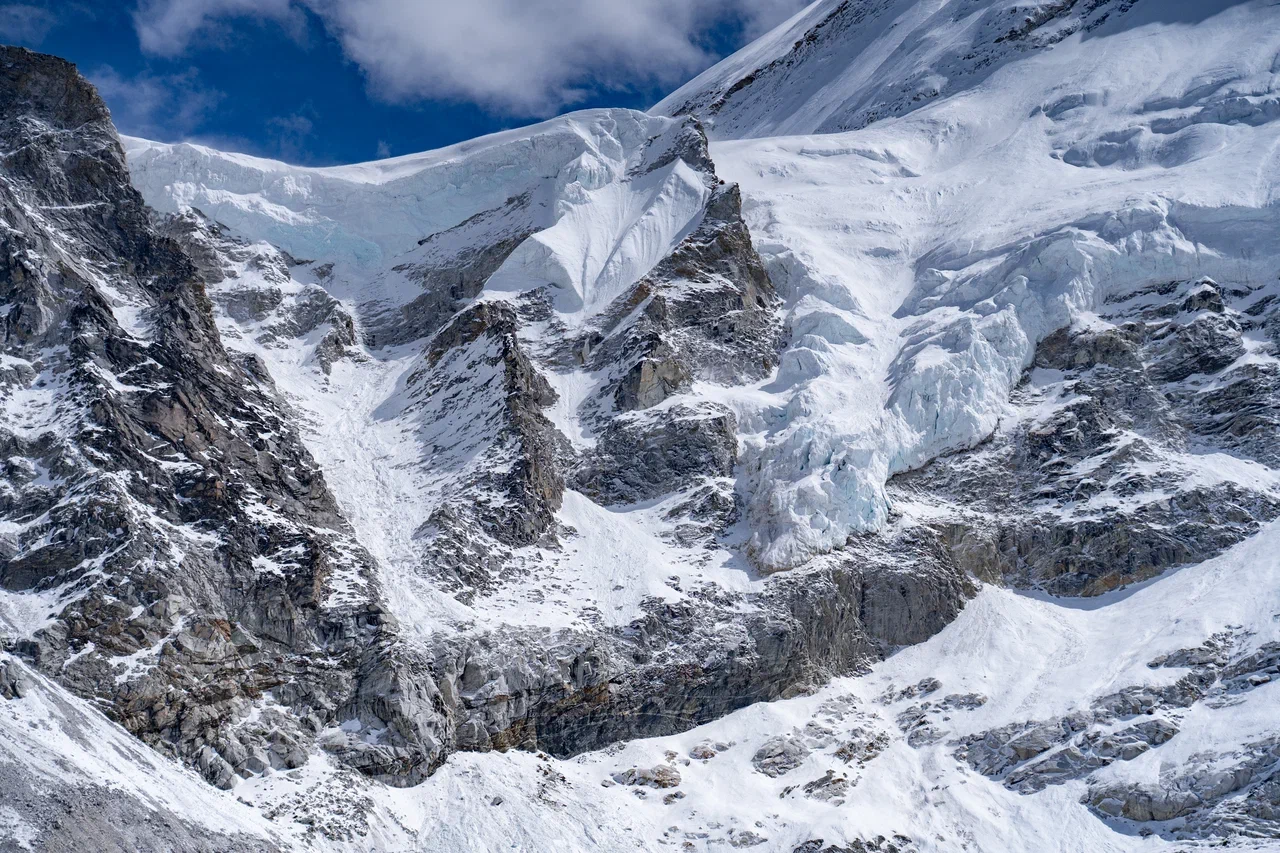
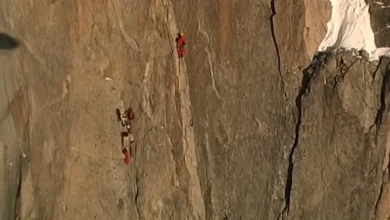
On Wednesday, the momentum appeared to be shifting in their favor. Vasiliev reported that the team had successfully navigated four pitches utilizing existing fixed ropes, followed by an additional eight pitches of original lead climbing. This technical work was vital for navigating the treacherous, mixed-face terrain that defines the West Ridge. By Thursday, however, the meteorological outlook shifted drastically. Despite initial forecasts suggesting a brief window of stability, the jet stream began to exert a powerful influence over the upper reaches of the massif, culminating in the gale-force conditions that halted their progress.
Meteorological Challenges and Forecasting
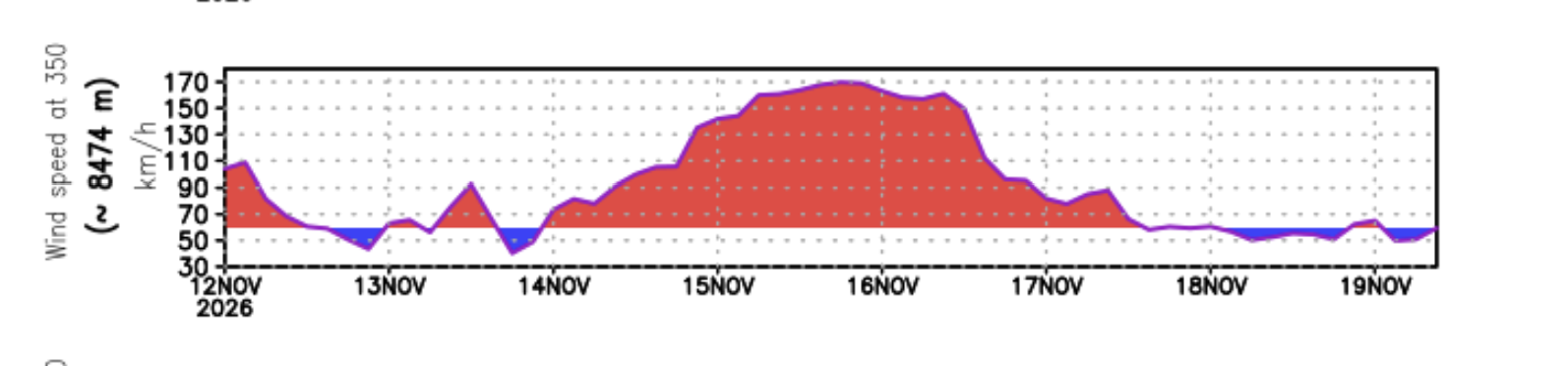
The primary obstacle currently facing the Russian team is the notorious wind behavior of the Everest massif. Meteorologist Vitor Baia, who has been providing critical analytical support to the expedition, noted that while Tuesday and Wednesday offered a brief reprieve, the atmospheric pressure gradients shifted rapidly thereafter. The forecast indicates that the jet stream will continue to batter the summit region with sustained, high-velocity winds through the coming Tuesday.
This specific weather pattern—often referred to as the "Everest wind tunnel"—is a common challenge for high-altitude mountaineers, particularly those attempting to summit outside of the standard spring window. The wind data currently being monitored shows that the wind speeds at the summit altitude are expected to remain at dangerous levels, effectively neutralizing any attempt at a vertical push. It is only toward the middle of next week that models suggest a potential weakening of these forces, leaving the team in a precarious position regarding their remaining supplies and the limited time window available before the seasonal shift makes further climbing untenable.
The Technical Reality of the West Ridge
The West Ridge of Everest is widely regarded as one of the most difficult and dangerous routes on the mountain. Unlike the more traditional South Col or North Ridge routes, the West Ridge offers little in the way of natural protection and requires climbers to spend significant time at extreme altitudes. The team’s approach of fixing ropes only on the most technical sections, rather than the entire route, is a testament to their skill, but it also increases their exposure to environmental hazards.

The current retreat to a base camp at 5,600 meters, located near the Lho La Pass and the Khumbu Glacier, provides the team with a necessary, if temporary, sanctuary. The vertical section leading to the Lho La is a high-risk area prone to icefall and avalanches, making the team’s decision to drop below this point a sound tactical move. The core of their strategy remains intact, but the physical toll of repeatedly climbing and descending, coupled with the psychological strain of waiting out the weather, is significant.
Analysis of Expedition Implications
The success of an unsupported, "alpine-style" ascent on an 8,000-meter peak of this magnitude depends on the convergence of three factors: peak physical conditioning, optimal weather windows, and logistical efficiency. The Russian team has demonstrated their capability in the first two categories, but the volatile weather is pushing their logistical margins to the limit.
The decision now facing Vasiliev and his team is whether to sustain their presence at the base camp in anticipation of a late-season weather lull or to call off the expedition entirely. Historically, the risks of waiting on the mountain increase exponentially as the season progresses. The accumulation of cold, the depletion of food and fuel caches, and the increasing likelihood of extreme temperature drops at the 6,000-meter mark and above often force climbers to choose between a potentially catastrophic final push and a safe, albeit disappointing, withdrawal.
From a mountaineering perspective, the team’s progress to date is notable. By choosing to climb without oxygen, they are operating at a level of physiological stress that makes every hour of exposure to wind and cold potentially debilitating. The decision to retreat is not merely a reaction to current winds, but a recognition that the "margin of error" for their ascent has been eroded by the time lost to the weather.
Official Stance and Future Outlook
As of the latest communication, the team remains in a state of evaluation. The "Mountain Club," which has been tracking the expedition’s progress, has noted that the climbers are safe and are utilizing their shelter to recover from the exhaustion of the past four days. No official statement regarding the abandonment of the project has been released, suggesting that the team is holding out for the possibility of a final, rapid push should the forecast for mid-next week prove accurate.
The broader implications for this style of climbing on Everest are significant. In an era where commercial expeditions often dominate the mountain with extensive support networks, the Russian team’s approach serves as a reminder of the raw, unpredictable nature of high-altitude mountaineering. Their attempt underscores the fact that even with the best meteorological data and seasoned expertise, the mountain retains the final say.
The coming days will be decisive. If the winds persist beyond the Tuesday forecast, the logistical burden of maintaining the high camps will likely force a total retreat. If, however, the jet stream shifts as predicted, the team may find a final, narrow window to attempt their push for the summit. For now, the focus remains on safety, with the team hunkered down at 5,600 meters, waiting for the mountain to grant them a moment of reprieve. Their ability to remain disciplined in the face of such adversity remains the hallmark of their expedition, regardless of whether they ultimately stand on the summit or are forced to return home empty-handed. The resilience displayed by the trio during this arduous period of waiting reflects the extreme dedication required to challenge one of the most formidable natural barriers on the planet.