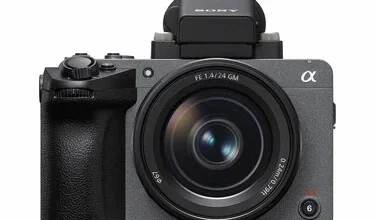
Global Camera Industry Updates: Canon R7 Mark II Rumors Surface, Sony FX5 Faces Further Delays, and Nikon Unveils EVF-Less Z5IIc Concept


The modern digital imaging landscape continues to evolve at a rapid pace, driven by shifting consumer demands, supply chain intricacies, and fierce competition among legacy camera manufacturers. In recent days, the photographic community has been abuzz with significant industry developments involving three of the biggest names in the sector: Canon, Sony, and Nikon. From persistent speculation surrounding upcoming high-performance APS-C bodies to unexpected design departures and ongoing production roadblocks, the camera market is experiencing a period of intense transformation. Industry analysts, professional creators, and casual enthusiasts alike are closely monitoring these updates as manufacturers position their portfolios for the next generation of content creation.
Canon R7 Mark II Rumors Ignite APS-C Enthusiast Discussion
Whispers from the supply chain and industry insiders have reignited speculation regarding the forthcoming Canon EOS R7 Mark II. The original EOS R7, launched to considerable fanfare, established a strong foothold in the enthusiast market by offering a compelling blend of high-speed continuous shooting, robust autofocus capabilities, and a smaller sensor crop that appealed to wildlife and sports photographers. Now, fresh rumors suggest that Canon is actively developing its successor, aiming to address feedback from the initial iteration while pushing the technological boundaries of APS-C mirrorless systems.
Background Context and Market Positioning
When Canon introduced its EOS R system, the company initially focused heavily on full-frame sensors, leaving a gap for dedicated APS-C shooters who had long relied on models like the EOS 7D series. The release of the EOS R7 bridged that gap, providing a high-performance tool at a more accessible price point compared to flagship full-frame bodies like the EOS R3 or R5. However, the rapidly advancing technological standards—particularly in electronic shutter readout speeds, sensor-based stabilization, and artificial intelligence-driven autofocus tracking—have created an expectation for continuous improvement.
Industry analysts note that a potential R7 Mark II could incorporate a stacked or partially stacked CMOS sensor, a technology that has rapidly trickled down from professional sports bodies to mid-range cameras. Such an upgrade would significantly reduce rolling shutter artifacts, allowing for silent electronic shutter use in high-speed action scenarios without compromising image quality. Furthermore, improvements to thermal management are widely anticipated, as modern hybrid shooters increasingly demand extended 4K video recording capabilities without overheating constraints.
Timeline of Rumors and Expected Announcements
While Canon has maintained its customary official silence regarding unannounced products, patent filings and historical release cycles provide a reliable timeline for industry watchers. The original EOS R7 debuted in mid-2022. Given Canon’s typical product lifecycle of three to four years for enthusiast-tier bodies, an announcement in late 2025 or early 2026 aligns with historical precedents. Nevertheless, ongoing global component shortages and logistical adjustments could influence these projections, keeping the exact launch window fluid.
Sony FX5 Cinema Line Camera Delayed Once Again
In the videography and professional cinematography sector, Sony continues to grapple with production and development hurdles. Recent reports indicate that the anticipated Sony FX5 cinema line camera has faced yet another delay. Designed to slot neatly between the compact FX3—which has gained immense popularity among solo shooters and independent filmmakers—and the more robust FX6, the FX5 was widely expected to redefine modular, mid-tier cinema production.
Manufacturing Bottlenecks and Supply Chain Realities
The delay of the Sony FX5 underscores the ongoing fragility of global semiconductor supply chains and precision manufacturing ecosystems. Producing cinema-grade cameras requires rigorous quality control, specialized sensor architecture, and advanced thermal dissipation systems. Industry experts suggest that unforeseen bottlenecks in sourcing specific components, alongside Sony’s stringent internal testing standards, have contributed to the repeated postponement of the device’s official rollout.
Historically, Sony has demonstrated a willingness to delay products rather than release hardware that fails to meet professional reliability standards. The FX series, in particular, occupies a critical market segment where dependability on set is paramount. Production crews and rental houses rely on seamless integration between cameras, color science profiles, and multi-camera setups. Consequently, an unhurried development phase, while frustrating for waiting consumers, is often viewed by market analysts as a prudent strategy to protect brand equity.
Implications for the Independent Filmmaker Market
The delay leaves a temporary void in the modular cinema camera market. Competitors such as Panasonic, Blackmagic Design, and Canon have aggressively expanded their respective cinema lineups, offering robust recording codecs, built-in ND filters, and flexible form factors. The FX3 remains a dominant force, but filmmakers seeking native electronic variable ND filters and dedicated timecode integration—features commonly associated with the FX-series hierarchy—must continue to wait for Sony’s next move. Observers speculate that when the FX5 finally materializes, it will need to feature aggressive specifications, such as open-gate recording and advanced AI-assisted framing tools, to justify the prolonged wait in a fiercely competitive environment.
Nikon Surprises Market with the EVF-Less Z5IIc Design Direction
In a bold and somewhat polarizing move, Nikon has captured the industry’s attention by exploring a radical departure from traditional mirrorless design with the conceptual Z5IIc. Eschewing the traditional Electronic Viewfinder (EVF) hump that has defined single-lens reflex and mirrorless cameras for decades, the Z5IIc represents Nikon’s venture into a streamlined, rangefinder-style or minimalist form factor aimed at street photographers, travel creators, and content producers prioritizing portability.
Evolution of the Nikon Z Series and Compact Integration
Nikon’s entry into the full-frame mirrorless market with the Z system initially focused on ergonomic familiarity, retaining deep handgrips and prominent EVFs to ease the transition for legacy DSLR users. However, the rise of hybrid content creation and the popularity of compact, retro-styled bodies like the Nikon Zfc and Zf have demonstrated a robust consumer appetite for alternative aesthetics and lighter physical footprints.
The Z5IIc proposal takes this philosophy a step further by removing the EVF entirely, relying instead on an articulated rear LCD screen for composition. This design choice dramatically reduces the camera’s profile, making it significantly easier to pack, travel with, and operate inconspicuously in public spaces. By stripping away the viewfinder optics, Nikon may also be able to target a more aggressive price point, potentially lowering the barrier to entry for full-frame sensor photography.
Industry Analysis and Reaction to EVF Removal
The reaction from the photographic community has been mixed, reflecting the diverse needs of modern image-makers. Proponents of the EVF-less design argue that modern high-brightness LCD screens are entirely sufficient for most street and travel scenarios, particularly under bright daylight conditions where tilting screens offer flexible high- and low-angle shooting perspectives. Furthermore, the reduction in weight and physical bulk appeals directly to users transitioning away from bulky professional setups.
Conversely, traditionalists and long-time wildlife or sports photographers have expressed skepticism, noting that shooting without an eye-level viewfinder can be ergonomically challenging in bright sunlight and compromises stability when utilizing telephoto lenses. Editorial and journalistic shooters also point out that framing via a rear screen can reduce immersion and increase vulnerability to glare. Nevertheless, market analysts view Nikon’s willingness to experiment with form factors as a positive sign of corporate agility, proving that the brand is willing to take calculated risks to capture demographic segments that favor minimalism and modern street aesthetics.
Broader Economic and Technological Implications
These three distinct developments across Canon, Sony, and Nikon illustrate the complex dynamics governing the contemporary photographic industry. Manufacturers are no longer competing solely on traditional metrics such as megapixel count and burst rates. Instead, product differentiation increasingly relies on software integration, specialized form factors, thermal engineering, and targeted solutions for specific creator niches.
-
Diversification of Form Factors: As smartphones continue to dominate casual photography, dedicated camera manufacturers are doubling down on specialization. Whether through the rugged, high-speed APS-C approach rumored for Canon’s R7 Mark II, the modular cinema aspirations of Sony’s delayed FX5, or the minimalist, EVF-less experimentation seen in Nikon’s Z5IIc, brands are actively carving out distinct identities to appeal to fragmented consumer bases.
-
Supply Chain Resilience: The repeated delays affecting major hardware rollouts highlight the persistent vulnerabilities within advanced manufacturing networks. Companies that successfully navigate component scarcity while maintaining strict quality assurance standards are better positioned to capture market share during transition phases.
-
The Rise of Hybrid and Content Creator Ecosystems: Software updates, custom presets, cloud-based workflows, and versatile lens ecosystems have become as important as the camera body itself. As manufacturers refine their hardware offerings, the accompanying software infrastructure—from Lightroom presets to advanced autofocus tracking algorithms—will continue to dictate consumer loyalty and adoption rates.
Conclusion
As the photographic year progresses, all eyes remain on these three industry giants. Whether the rumors surrounding the Canon R7 Mark II materialize into a market-leading APS-C powerhouse, Sony resolves its production bottlenecks to deliver the long-awaited FX5, or Nikon successfully redefines entry-level full-frame ergonomics with the EVF-less Z5IIc, the imaging sector remains dynamic, innovative, and fiercely competitive. Professional creators and hobbyists alike will undoubtedly benefit from the technological leaps and design diversification born out of this ongoing corporate rivalry.
Related posts: