Canon Full-Frame Mirrorless Showdown: Comparing the EOS R8, R8 Mark II, and R6 Mark II for Modern Creators

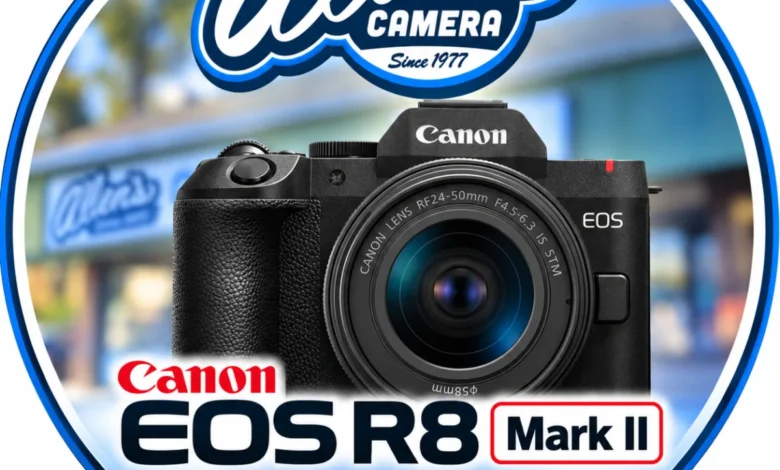
Choosing the right full-frame mirrorless camera has become an increasingly nuanced decision for both professional photographers and emerging content creators. As camera manufacturers push the boundaries of digital imaging technology, product lineups often feature overlapping capabilities, similar form factors, and comparable price points. Canon’s current ecosystem of full-frame mirrorless options presents a classic case of this evolution, particularly when examining the lightweight entry-to-mid-range tier represented by the Canon EOS R8, the newly anticipated Canon EOS R8 Mark II, and the robust, workhorse-oriented Canon EOS R6 Mark II.
Understanding how these three distinct bodies compare requires a comprehensive look at their technical specifications, ergonomic design, target audiences, and the broader context of the evolving mirrorless camera market. As hybrid shooting—the simultaneous capture of high-resolution stills and professional-grade video—becomes the industry standard, evaluating these cameras goes beyond simple megapixels. Photographers must weigh factors such as in-body image stabilization, mechanical shutter options, battery life, and autofocus tracking capabilities to determine which system best fits their workflow.
The Evolution of Canon’s Full-Frame Mirrorless Lineup
To fully appreciate the positioning of the EOS R8, R8 Mark II, and R6 Mark II, it is essential to examine the strategic shift Canon undertook following the introduction of its RF mount system in 2018. Initially, Canon established its territory with high-end professional bodies like the EOS R5 and R6, targeted at working photojournalists, event shooters, and commercial videographers. However, the immense demand for accessible full-frame sensors prompted the company to democratize its technology, trickling down advanced autofocus algorithms and high-speed readout sensors into lighter, more affordable bodies.
The original Canon EOS R8 was released to critical acclaim as an ultra-lightweight full-frame option that inherited much of the sophisticated sensor and processing technology of the more expensive R6 Mark II, albeit in a stripped-down body designed for minimal weight and maximum portability. By removing features like the mechanical shutter and the physical in-body image stabilization (IBIS) system, Canon was able to offer a compelling entry point for creators transitioning from crop-sensor cameras or smartphones.
Following the market reception of the initial R8 and the established success of the R6 Mark II, the introduction of the Canon EOS R8 Mark II represents a refinement phase. While maintaining the core philosophy of a lightweight, travel-friendly full-frame powerhouse, the Mark II iteration addresses several critiques leveled at its predecessor, offering optimized performance metrics, enhanced thermal management for extended video recording, and refined electronic shutter readouts to mitigate rolling shutter artifacts.
Technical Specification Analysis and Core Differences
A side-by-side examination of the Canon EOS R8, EOS R8 Mark II, and EOS R6 Mark II reveals a careful balancing act between weight, power, and professional features. While all three cameras share the foundational benefits of the Canon RF lens ecosystem—allowing users to tap into an increasingly diverse lineup of high-performance glass—their internal hardware dictates distinct operational use cases.
Sensor and Image Quality
At the heart of all three models lies a full-frame CMOS sensor architecture optimized for high dynamic range, low-light performance, and accurate color science. The standard R8 and the R6 Mark II utilize sensors in the vicinity of 24 megapixels, a sweet spot that balances file size with detail retention, making them ideal for fast-paced commercial work, wedding photography, and multi-media journalism. The EOS R8 Mark II builds upon this foundation, introducing fine-tuned sensor micro-lenses and an updated DIGIC image processor that improves high-ISO noise reduction and tonal gradation, particularly in complex mixed-lighting environments.
Stabilization and Build Quality
One of the most critical dividing lines between these models is physical stabilization. The Canon EOS R6 Mark II features robust 5-axis In-Body Image Stabilization (IBIS), which works in tandem with optical IS in compatible RF lenses to provide up to eight stops of shake correction. This makes the R6 Mark II an exceptional tool for handheld long-exposure photography and stable, gimbal-free walking video shots.
Conversely, the original EOS R8 relies exclusively on digital movie digital IS for video and optical stabilization from lenses for stills, entirely omitting physical IBIS to maintain its featherlight footprint of approximately 461 grams. The EOS R8 Mark II bridges this gap cautiously, incorporating advanced digital stabilization enhancements and improved gyroscope data integration, though it still leans toward a lighter physical build than the magnesium-alloy weather-sealed chassis of the R6 Mark II.
Autofocus and Speed
Canon’s Dual Pixel CMOS AF II technology serves as the neural center for all three cameras. Equipped with deep-learning algorithms trained to recognize humans, animals (dogs, cats, birds, and horses), and vehicles (cars, motorcycles, trains, and airplanes), these cameras lock onto subjects with remarkable tenacity.
- Canon EOS R8: Offers blazing-fast electronic shutter continuous shooting speeds of up to 40 frames per second, matching the speed of the much more expensive R6 Mark II. However, the lack of a mechanical first-curtain or full mechanical shutter means users must be mindful of fast-moving subjects where rolling shutter distortion might occur.
- Canon EOS R8 Mark II: Refines the autofocus tracking acquisition time, introducing enhanced subject prioritization modes and improved eye-detection reliability in backlit or obscured conditions. The electronic shutter readout speeds are noticeably accelerated compared to the first-generation R8, reducing artifact distortion significantly.
- Canon EOS R6 Mark II: Retains the dual advantage of rapid 40 fps electronic shooting combined with a mechanical shutter option capable of 12 fps, offering traditional shooters the tactile feedback and distortion-free performance required for high-speed sports and studio flash synchronization.
Video Capabilities and Hybrid Performance
The modern camera market is overwhelmingly driven by hybrid creators who demand cinema-grade video specifications alongside professional stills capabilities. Here, the divergence between the entry-level R8 series and the mid-tier R6 Mark II becomes starkly apparent.
The original EOS R8 surprised the industry by offering uncropped 4K video oversampled from 6K at up to 60p, alongside Canon Log 3 for advanced color grading. However, its compact battery (the smaller LP-E17) and lack of advanced cooling limitations meant extended high-resolution shoots required careful thermal monitoring.
The Canon EOS R8 Mark II improves upon these video parameters by optimizing power draw and introducing smarter thermal warning algorithms. Creators can shoot longer uninterrupted clips, and the inclusion of expanded audio monitoring features makes it a more reliable tool for solo documentary filmmakers and vloggers.
The Canon EOS R6 Mark II, meanwhile, remains the undisputed heavyweight in this comparison for serious videographers. It supports 6K raw video output externally via HDMI to compatible recorders like Atomos devices, offers unlimited recording times under normal temperature conditions, and features a dual card slot system (Dual UHS-II SD slots) compared to the single card slot found on both the R8 and the R8 Mark II. For professional assignments where data redundancy is non-negotiable, the dual slots of the R6 Mark II provide essential peace of mind.
Ergonomics, Battery Life, and Workflow Integration
Physical design dictates how long a photographer can comfortably work in the field. The Canon EOS R8 and R8 Mark II are tailored for minimalists, travel bloggers, and street photographers who prioritize a lightweight bag. Their compact grips, while deeper than traditional mirrorless crop-sensor bodies, may feel undersized for users with larger hands or those pairing the camera with heavy, professional L-series telephoto lenses.
The EOS R6 Mark II features a more substantial, deeply contoured grip, dedicated physical controls including an AF joystick, and a weather-resistant construction designed to withstand inclement weather, dust, and heavy daily use. Furthermore, the R6 Mark II utilizes the larger LP-E6NH battery, yielding significantly more shots per charge than the LP-E17 battery powering the R8 series.
For studio photographers and tethered shooters, all three models integrate seamlessly with Canon’s software ecosystem, supporting wireless file transfer, webcam functionality via UVC/UAC standards, and compatibility with professional color-grading suites and editing workflows like Adobe Lightroom, where custom presets—such as specialized creator packages—can drastically accelerate post-production timelines.
Market Context and Strategic Implications for Buyers
When evaluating the current landscape of full-frame mirrorless options, the decision ultimately boils down to a calculus of budget, weight, and operational requirements.
The standard Canon EOS R8 remains an exceptional value proposition for budget-conscious creators who want uncompromised full-frame image quality and blazing-fast 40 fps burst speeds without investing in a heavy rig. It serves as an ideal stepping stone for hobbyists and emerging professionals.
The Canon EOS R8 Mark II targets the enthusiast who loves the portability of the original R8 but desires refined video reliability, better rolling shutter control, and improved low-light autofocus tracking. It occupies a strategic middle ground, offering near-flagship performance metrics inside an ultra-portable body style.
The Canon EOS R6 Mark II stands firmly as the comprehensive professional tool. With dual card slots, physical in-body image stabilization, a larger battery, a mechanical shutter, and extensive weather sealing, it is engineered for professionals who cannot afford hardware limitations on high-stakes shoots, weddings, or commercial assignments.
As Canon continues to expand its RF lens lineup—ranging from compact, affordable prime lenses to ultra-sharp professional zooms—the body a creator chooses will serve as the foundation of a long-term investment. By carefully assessing whether physical stabilization, dual card slots, and battery endurance outweigh the benefits of a lightweight, travel-friendly chassis, photographers and videographers can make an informed choice that elevates their creative output for years to come.
Related posts: