The Stinking Truth About Solid-Fuel Stoves: Why Outdoor Retailers Are Still Selling 1930s Tech That Modern Backpackers Should Avoid

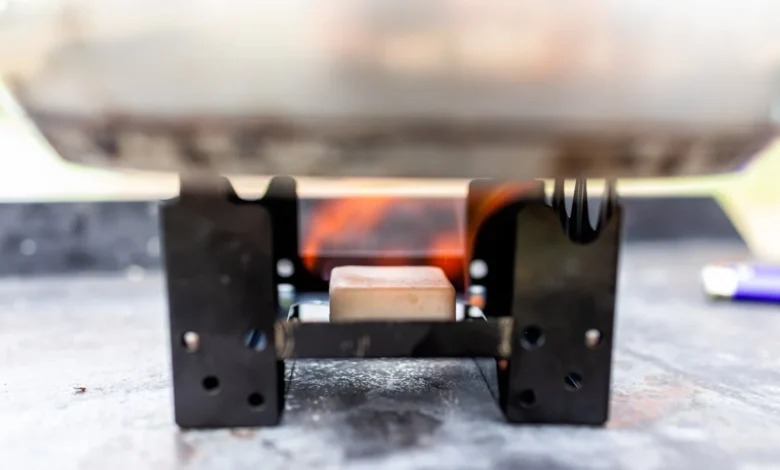
Solid-fuel backpacking stoves, anchored by the enduring popularity of hexamine-based tablets and pocket-sized burners, remain readily available at major outdoor retail outlets worldwide. Despite their low price point and decades of military heritage, a combination of chemical odor issues, poor fuel efficiency, and modern regulatory hurdles has rendered these vintage devices largely obsolete for contemporary hikers and mountaineers.
While outdoor enthusiasts continually search for the lightest, most reliable gear configurations for backcountry expeditions, industry experts and seasoned thru-hikers increasingly advise steering clear of solid-fuel systems in favor of modern pressure-regulated canister stoves or alternative liquid-fuel options.
A Century of Backcountry Utility: The History of Hexamine
The origin of solid-fuel stoves dates back to 1936, when the German company Esbit (Erich Schumm Brennstoff in Tablettenform) revolutionized portable cooking by introducing hexamethylenetetramine—commonly known as hexamine—formed into compressed tablets, accompanied by lightweight, collapsible metal burners.
The utility of these compact systems surged dramatically during the Second World War. Both Axis and Allied forces adopted various iterations of solid-fuel cookers as standard-issue military gear, valuing them for their ability to function without pressurized containers or liquid fuels that could leak or explode under combat conditions.
In the decades following the war, solid-fuel stoves maintained a dedicated following, particularly in European backpacking communities where minimalist camping traditions run deep. However, their adoption in North America has historically lagged, constrained by shifting preferences toward liquid-white-gas stoves and, later, butane-propane canister systems. Today, major online and brick-and-mortar retailers continue to stock Esbit and generic equivalents, appealing primarily to budget-conscious campers, ultralight purists drawn to novelty, and emergency preparedness kits.
The Grand Traverse Test: A Case Study in Chemical Odor
The limitations and distinct drawbacks of solid-fuel systems were highlighted during high-end endurance events such as the Grand Traverse, a grueling 40-mile ski mountaineering race traversing the rugged terrain from Crested Butte to Aspen, Colorado.
To meet stringent safety regulations enforced by race organizers, participating teams must carry mandatory survival kits, which include a functioning stove for melting snow or boiling water in emergency scenarios. Seeking to shave every possible ounce from their packs, competing athletes frequently experiment with minimalist gear setups.
A standard solid-fuel burner paired with a handful of hexamine tablets can weigh as little as five ounces—undercutting the baseline weight of many traditional canister setups. However, practical field application often reveals significant hidden costs. Beyond the mechanical challenges of operating miniature burners in sub-freezing temperatures, hexamine tablets possess a notoriously potent chemical signature.
Unlike the distinct petroleum aroma of white gas or the intentionally added odorants of propane-butane blends, burning or simply storing hexamine releases a strong, marine-like odor. Athletes and outdoor reviewers frequently describe the scent as reminiscent of decaying seafood, rotten shellfish, or stagnant carp. When protective packaging fails during high-vibrational activities like cross-country skiing or trail running, the volatile compounds readily permeate surrounding gear, turning clothing, hats, and sleeping insulation into olfactory liabilities that require extensive laundering and airing out to remediate.
Thermodynamic Realities and Fuel Efficiency
Beyond sensory complaints, thermodynamic analysis reveals stark inefficiencies when comparing solid-fuel tablets to modern canister and liquid-fuel alternatives.
Field testing demonstrates that bringing one liter of water to a rolling boil requires nearly two standard hexamine tablets, translating to approximately one full ounce of fuel mass. In contrast, pressure-regulated canister stoves, such as advanced micro-regulator models, achieve the same benchmark utilizing a fraction of that fuel weight—often around 0.3 ounces under optimal conditions.
While users of canister stoves must account for the tare weight of the metal canister itself, the exponential difference in thermal efficiency means that for any backcountry excursion lasting longer than 48 hours, the initial weight savings of a solid-fuel setup evaporate. Campers are forced to pack an exponentially higher volume of heavy fuel tablets to sustain multi-day itineraries.
Furthermore, operational performance degrades severely in adverse weather. Hexamine tablets are notoriously difficult to ignite in cold, windy conditions and exhibit a remarkably slow burn rate when tasked with melting large quantities of snow for hydration—a critical safety shortfall during winter mountaineering emergencies where rapid water acquisition is paramount.
Regulatory Hurdles and Fire Management Policies
In addition to thermodynamic and olfactory drawbacks, land management policies across North America and parts of Europe present mounting obstacles for solid-fuel stove users.
Federal, state, and provincial forestry agencies routinely implement strict seasonal fire bans during dry summer and autumn months to mitigate wildfire risks. Under standard regulatory frameworks, land managers generally prohibit any camp stove or heating device that lacks an immediate, positive shut-off valve.
Because solid-fuel tablets must burn down completely once ignited and cannot be extinguished and saved for later use, they are frequently categorized alongside open campfires rather than modern controlled-valve backpacking stoves. Consequently, hikers carrying solid-fuel systems may find themselves legally barred from operating them in fire-restricted zones, limiting their utility to specific geographical areas or winter seasons where snow cover minimizes immediate ignition risks.
The Minimalist Argument: Simplicity Versus Practicality
Proponents of solid-fuel stoves frequently cite mechanical simplicity as their primary justification. Unlike complex canister stoves equipped with piezo igniters, delicate fuel valves, and internal pressure regulators that can clog or fail in sub-zero temperatures, traditional metal folding burners feature zero moving parts. They are virtually indestructible; if stepped on or crushed inside a heavily packed rucksack, a solid-fuel burner can simply be bent back into functional shape by hand.
Nevertheless, industry analysts note that alternative minimalist technologies achieve comparable durability without the accompanying chemical odors or efficiency penalties. Ultralight titanium canister stoves, such as micro-burners weighing mere grams, offer instant ignition control, rapid boil times, and standardized fuel availability while adding negligible weight and bulk to a backpacker’s inventory. Similarly, lightweight open-alcohol burners provide an inexpensive, highly packable alternative that burns cleaner and utilizes widely accessible fuel sources.
Industry Implications and Recommendations for Consumers
As the outdoor gear market continues to innovate with advanced materials, improved heat exchangers, and hyper-efficient fuel blends, the market share for solid-fuel stoves remains largely confined to niche historical enthusiasts, military surplus collectors, and emergency kit assemblers.
For the average consumer navigating online retail forums and evaluating gear lists for upcoming backpacking trips, mainstream consensus leans heavily toward established alternatives. While a basic solid-fuel kit may offer an appealing entry price point of approximately $10 to $15, the operational compromises—ranging from sluggish snow-melting capabilities and subpar fuel efficiency to lingering marine odors—lead most modern hikers to upgrade quickly.
Ultimately, investing a modest additional sum into a reliable micro-canister stove or liquid-fuel system eliminates the primary grief points associated with 1930s-era technology, ensuring a more efficient, reliable, and odor-free backcountry experience.