The Village That Built a Restaurant: How Peru’s AMA Is Transforming Single Motherhood Through Community and Travel Partnerships

Nestled in the crisp, high-altitude mountain air of Peru’s Sacred Valley, the town of Urubamba is celebrated for its breathtaking landscapes and its proximity to the historic wonders of Machu Picchu. Yet, for visitors stepping onto the grounds of AMA restaurant, the most striking sensory detail is not the dramatic Andean backdrop or the aroma of local gastronomy, but the sounds of children laughing. Darting through vibrant gardens and clambering over wooden play structures, these youngsters represent a radical reimagining of the modern workplace. Here, 45 working single mothers—ranging from kitchen staff stirring pots of traditional ingredients to artisans weaving bright wool into sweaters—can keep a watchful eye on their children between tasks, effectively dissolving the historical dichotomy between earning a livelihood and active parenting.
Founded by Julio Chemi Sanchez Hernandez, AMA—whose Spanish name translates simply to "love"—was born from a deeply personal mission. Raised alongside four siblings by a single working mother in the high-altitude Andean town of Andahuaylas, Hernandez witnessed firsthand the structural barriers, financial strains, and social stigmas that single mothers routinely face in Peru. Today, AMA operates not merely as a culinary establishment, but as an integrated community hub providing employment, professional training programmes, communal childminding, nutrition initiatives for children, and a fair-trade artisan marketplace. Through a longstanding partnership with global adventure tour operator Intrepid Travel, which accounts for approximately 95% of the restaurant’s business, AMA has evolved into a global blueprint for sustainable, community-led tourism that proves the old proverb: it truly takes a village.
The Genesis of AMA: Overcoming the Hardships of Single Parenthood in the Andes
The conceptual framework of AMA traces its roots back to the late 1980s and 1990s in the Peruvian Andes. Julio Chemi Sanchez Hernandez was born when his mother, Giovanna, was just 19 years old. As the eldest of five siblings, Hernandez watched his mother navigate the daunting socioeconomic realities of single motherhood in Peru. Driven by a desire to secure a viable future for her children, Giovanna eventually relocated from her small mountain community to the sprawling metropolis of Lima, believing the capital city would offer broader economic horizons.
Despite attempting to pursue higher education and launch independent business ventures, Giovanna faced repeated systemic hurdles that many marginalized women encounter in urban environments. Lacking a safety net, she poured her residual time, energy, and financial resources into ensuring her children received a quality education. Hernandez ultimately studied mathematics and science at university, subsequently embarking on a year-long journey across Peru’s diverse coastal, jungle, and mountain landscapes.

It was during his travels—specifically during an extended stay in Cusco—that Hernandez recognized a recurring societal pattern. He observed countless women possessing remarkable talent, local knowledge, and an exceptional work ethic, yet lacking formal employment opportunities and childcare support systems. Inspired by his mother’s resilience and sacrifices, Hernandez made a definitive decision in 2018 to settle in Urubamba and establish a venture dedicated to economically empowering single mothers in the Sacred Valley.
Bridging the Gap: The Operational Model of AMA Restaurant
Operating in a region where economic opportunities for single mothers are scarce, AMA has engineered a holistic support ecosystem designed to tackle the root causes of financial precarity. When travellers arrive at the restaurant—often small tour groups journeying toward Machu Picchu—they are greeted by an atmosphere of collaborative community. Visitors are served hot cocoa, coffee, and chocolate brownies in handmade ceramic mugs and plates crafted by local artisans, while Hernandez recounts the foundational narrative of the enterprise.
Meanwhile, the women who operate the establishment manage their daily responsibilities with their children nearby. Mothers can be found knitting at communal tables while helping children with homework, preparing regional dishes using locally sourced ingredients, tending to the organic gardens, or managing the on-site boutique. The boutique offers shelves of fair-trade goods crafted by women from various communities throughout the Sacred Valley, ensuring that every retail purchase directly stimulates the local economy.
The partnership with Intrepid Travel, established in 2019, has been instrumental in scaling AMA’s operations and financial stability. By funneling the vast majority of the restaurant’s customer base through small-group tourism, Intrepid has provided a reliable revenue stream that allows AMA to expand its social impact initiatives without relying solely on volatile local markets.
Personal Testimonies: Voices from the Heart of AMA

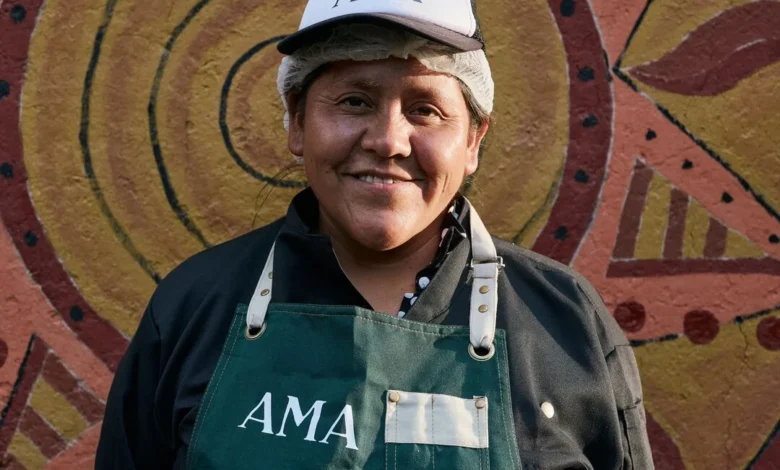
The tangible impact of AMA’s model is best illustrated through the lived experiences of its staff. Lupita Castro Arias, universally known as Lupe, serves as the head chef at AMA and is the mother of an 18-year-old son, Jean Piero. Lupe separated from her husband when Jean Piero was seven years old, initiating a grueling period of trying to balance demanding restaurant and hotel work with the prohibitive costs and logistics of childcare.
"I had to leave him with my mom, and it was very difficult," Lupe recalls, noting that conventional employers strictly prohibited employees from bringing their children to the workplace.
When Lupe met Hernandez in 2019 while working within the local hospitality sector, the encounter marked a turning point in her life. Offered a chef position at AMA, she found an employer who actively welcomed her son into the workspace. "Julio elevates you up the ladder. He has a big heart. That’s why I trust him, and he trusts me," Lupe states. She emphasizes that in the Sacred Valley, such comprehensive support systems are virtually non-existent outside of AMA.
Reflecting on his role as the founder, Hernandez frequently notes the immense weight of his responsibilities. Although he does not have biological children of his own, he views the 45 single working mothers under his employment as his extended family. "That’s 45 families," Hernandez remarks. "I have 45 kids. That’s a lot of responsibility."
Scaling Impact: Chronology of Expansion and Community Initiatives
What began as a single restaurant concept in Urubamba has progressively evolved into a multi-tiered community development initiative, supported by strategic milestones and scaling projections:

- 2018: Julio Chemi Sanchez Hernandez settles in Urubamba, conceptualizing the framework for AMA to address employment gaps for single mothers in the Sacred Valley.
- 2019: AMA officially opens its doors and initiates its partnership with Intrepid Travel, establishing a steady pipeline of international visitors that quickly accounts for 95% of the restaurant’s business. Head chef Lupe Castro Arias joins the team.
- 2024–2025: Recognizing that many local children were arriving at school hungry—having consumed only water, tea, or bread for breakfast—AMA launches a community nutrition initiative. Utilizing a peer-to-peer training model, AMA chefs instruct local mothers on preparing nutrient-dense recipes from regional ingredients. By 2025, the initiative successfully delivers 500 breakfasts to local school children.
- 2026 (Projected Targets): AMA scales its school breakfast initiative with a targeted goal of delivering 2,000 breakfasts to children across the Sacred Valley school system.
- 2027 (Projected Targets & Future Expansions): AMA aims to reach a milestone of 10,000 school breakfasts delivered. Furthermore, Intrepid Travel integrates a new hands-on chocolate-making workshop led by AMA women into its specialized Peru Women’s Expedition itinerary. Concurrently, Hernandez plans to launch a community open-kitchen project near the local market, enabling tourists to participate in cooking classes using locally sourced ingredients.
Fact-Based Economic and Social Analysis
The socio-economic implications of grassroots social enterprises like AMA offer valuable insights into sustainable tourism and community development within developing economies. In regions heavily reliant on tourism, such as Peru’s Sacred Valley, economic leakage often occurs when revenues generated by international visitors flow out of local communities to large, foreign-owned conglomerates. By establishing a localized, worker-centric business model where 95% of patronage is funneled through responsible travel partnerships, AMA retains capital within the local ecosystem.
Furthermore, economists and sociologists note that addressing childcare constraints is one of the most effective catalysts for female labor force participation. In rural and semi-urban Andean regions, lack of affordable childcare frequently forces single mothers into the informal economy, characterized by low wages, lack of labor protections, and high economic vulnerability. By integrating communal childminding and educational support directly into the workplace, AMA successfully bridges the gap between employment and domestic care responsibilities.
Broader Industry Implications and the "Intrepid Effect"
The collaboration between AMA and Intrepid Travel exemplifies a broader industry shift toward regenerative tourism—a model wherein travel companies actively seek to leave destinations better than they found them. Rather than treating local communities as passive backdrops for sightseeing, regenerative itineraries prioritize mutual economic benefit, cultural exchange, and direct investment in local infrastructure.
As AMA prepares for its upcoming expansions—including the scaling of its nutritional outreach programs and the integration of immersive culinary workshops for travellers on specialized expeditions—the enterprise stands as a testament to the viability of compassion-driven commerce. For the 45 single mothers currently employed at AMA, and the growing network of school children benefiting from its nutritional initiatives, the restaurant has redefined the possibilities of community resilience. Through a combination of entrepreneurial tenacity, ethical tourism partnerships, and a foundational belief in shared prosperity, AMA continues to prove that empowering women is the most effective way to build a thriving society.