The Evolution of Everyday Carry: How Outdoor Editors Adapt the Internet Trend for Backcountry Survival

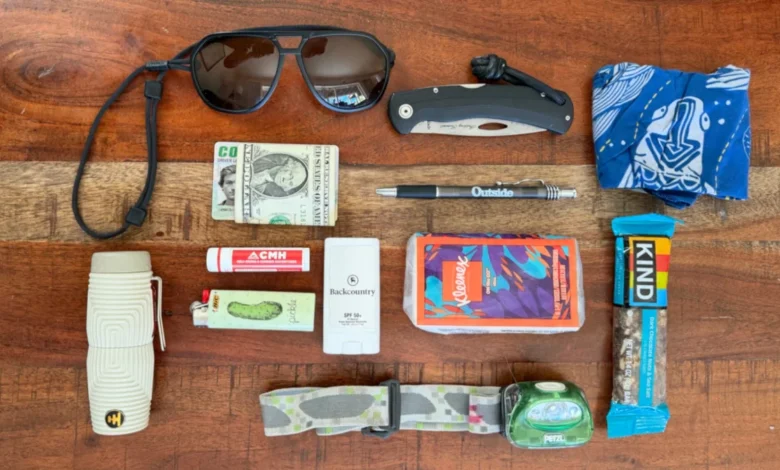
The viral internet phenomenon known as "Every Day Carry" (EDC)—traditionally characterized by meticulously arranged flat-lay photographs of tactical pocket knives, luxury timepieces, minimalist wallets, and firearm key fobs shared across social media platforms by enthusiasts, preppers, and urban professionals—has undergone a distinctly utilitarian transformation. While digital feeds are routinely saturated by urbanites showcasing high-end consumer goods, a parallel movement has taken root among wilderness experts, long-distance backpackers, and outdoor journalists. Rather than focusing on status symbols or tactical displays, the backcountry EDC prioritizes functional redundancy, emergency preparedness, and minimalist weight management. To examine how this philosophy translates to actual wilderness navigation, editorial staff members at Backpacker magazine unpacked their own personal trail kits, revealing a diverse array of pocket-sized essentials required to sustain human life miles away from civilization.
The Cultural Origins of the EDC Movement
The concept of everyday carry originated within the military, law enforcement, and preparedness communities as a method of cataloging the survival tools an individual should keep on their person at all times to handle unexpected contingencies. Over the past decade, this subculture migrated to mainstream digital platforms, evolving into an aesthetic design trend. Urban and suburban EDC hobbyists often spend significant sums curating matched sets of brass flashlights, titanium pry bars, and custom folding blades.
However, market research within the outdoor recreation sector indicates a shifting consumer priority. As participation in hiking, backpacking, and trail running reached record highs following the post-pandemic outdoor recreation boom—with federal agencies reporting steady increases in backcountry permit applications—gear enthusiasts began questioning the applicability of heavy, urban-centric EDC items in natural environments. In response, wilderness travelers adapted the trend, stripping away redundant gadgets in favor of lightweight, multi-use items that address fundamental survival priorities: navigation, hydration, thermal regulation, and signaling for help.
Inside the Backcountry EDC: Editor Profiles
To establish a baseline for what constitutes a functional trail kit, Backpacker editors cataloged the exact items secured in their pockets and waist packs during active excursions. The resulting inventory demonstrates that while core survival principles remain universal, personal methodology dictates vastly different gear selections.
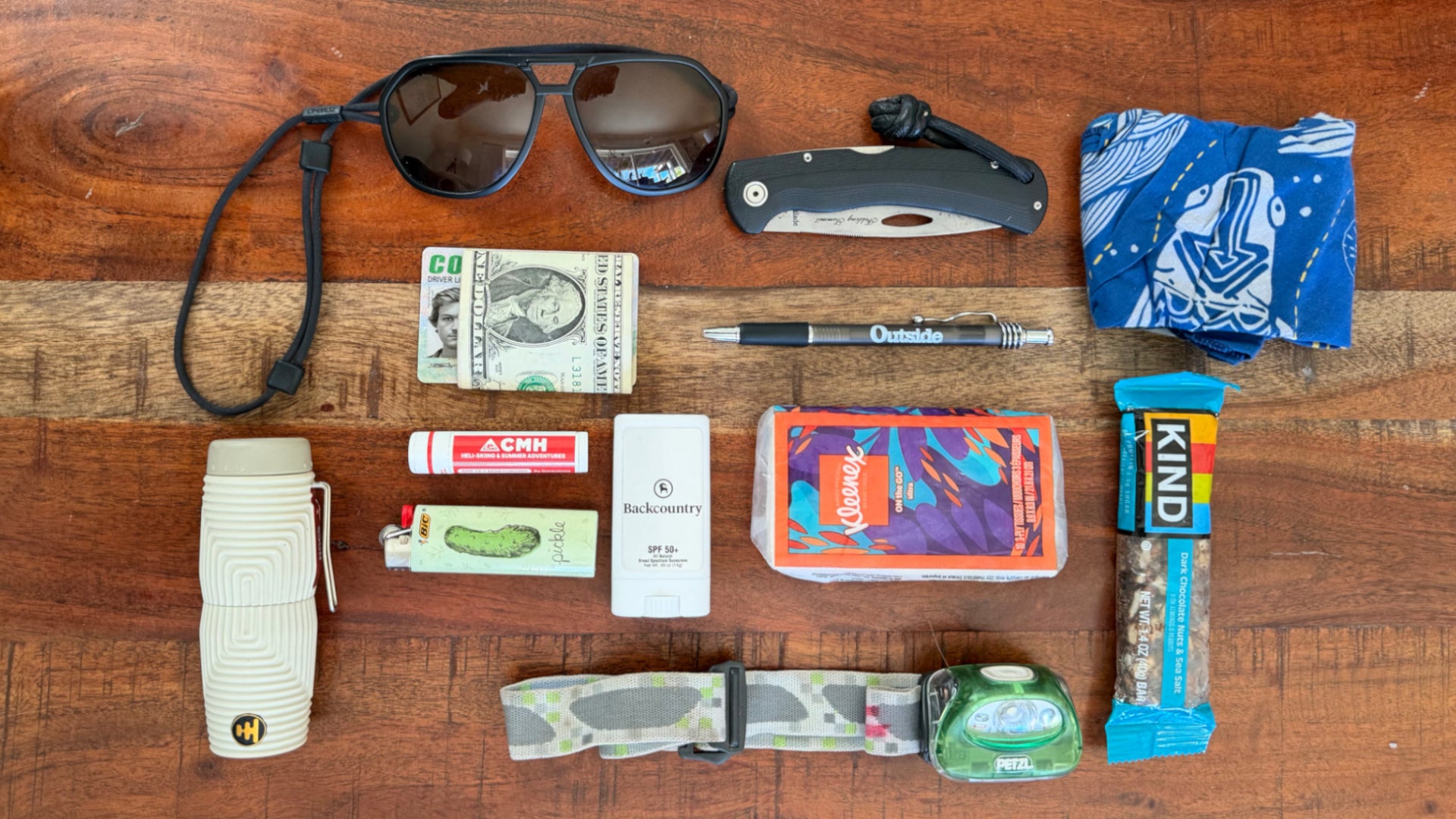
Will Brendza, Associate Editor: The Multi-Use Minimalist
Operating out of a compact configuration requiring just three to four pockets, Associate Editor Will Brendza focuses heavily on optical clarity, emergency lighting, and versatility. Central to his kit are Ombraz armless sunglasses, which utilize a heavy-duty cord system instead of traditional hinges. This design addresses a common pain point for hikers: lost or broken frames caused by dropped gear during strenuous activity or water crossings.
Brendza’s kit emphasizes mechanical reliability over electronic complexity. He carries a folding knife from Knives of Alaska for camp chores, alongside a traditional cotton bandana—widely regarded by survival instructors as the single most adaptable piece of outdoor fabric, functioning variously as a sweatband, pre-filter for water, sling, potholder, and dust mask. For route reconnaissance, Brendza relies on a Nocs Zero Tube Monocular, paired with a classic Petzl headlamp and a standard analog lighter featuring a distinct graphic to prevent gear confusion at shared campsites.
Adam Roy, Editor-in-Chief: Analog Disconnection and Compact Utility
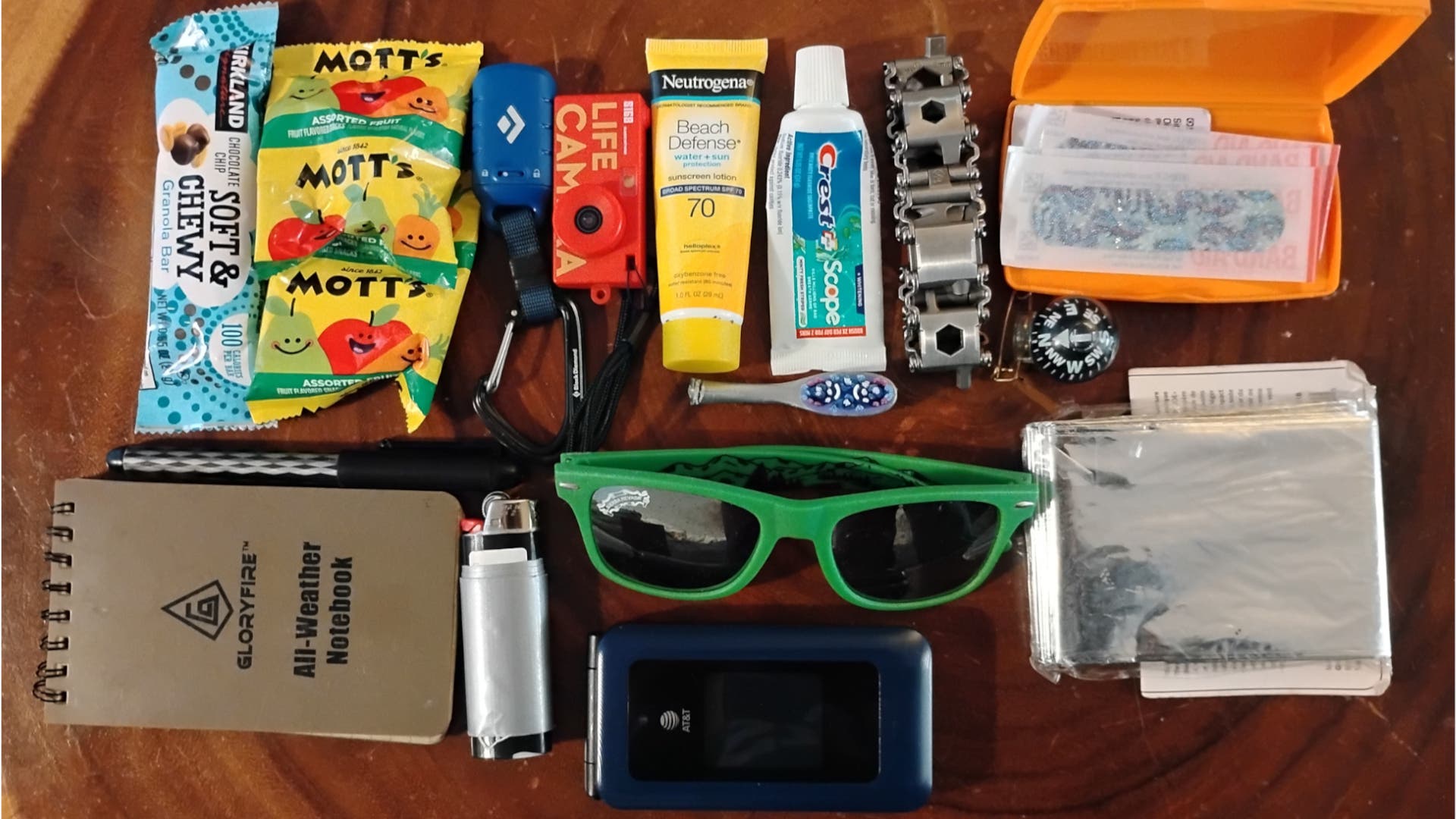
Editor-in-Chief Adam Roy approaches the EDC trend through the lens of intentional digital detachment. Eschewing modern smartphones in favor of mental wellbeing, Roy carries an inexpensive AT&T Cingular Flex 2 flip phone capable of running rudimentary mapping software via the O.map application. This is supplemented by a traditional button compass and a credit-card-sized Life Camera S168 for low-profile digital capture.
Roy’s waist pack reflects a philosophy of preparedness tailored for both solo day hikes and family outings. His kit includes a thermal space blanket, a roll of duct tape wrapped around a standard lighter, and a Leatherman Tread multitool bracelet, which integrates various screwdrivers and cutting edges directly into wearable jewelry without triggering security concerns. Writing implements are equally deliberate: Roy utilizes a Pilot Precise Varsity disposable fountain pen paired with a waterproof field notebook, ensuring notes remain legible despite unexpected downpours or heavy condensation.
Zoe Gates, Senior Editor: The Trail-and-K9 Paradigm
Senior Editor Zoe Gates represents the intersection of ultralight hiking methodology and pet companionship. Traversing local trail systems alongside a canine companion, Gates structures her pocket and hip-pack contents around lightweight efficiency. Her kit invariably features a supply of unscented dog waste bags, high-density calorie sources such as Nerds Gummy Clusters and Honey Stinger Organic Energy Chews, and a 32-ounce Nalgene ultralight wide-mouth water bottle.
For biometric tracking and emergency communication, Gates relies on a Garmin Instinct Solar smartwatch and a Garmin inReach satellite communicator—essential hardware for modern backcountry safety. Her unpictured redundancies include a Kula cloth for hygienic outdoor sanitation, a collapsible silicone dog bowl, and Leukotape wrapped around a sunscreen stick for immediate blister prevention on high-mileage days.
Comparative Inventory of Editor Trail Kits
| Editor | Primary Navigation / Comm | Cutting Tool / Multitool | Illumination | Emergency / Safety | Nutritional & Personal Care |
|---|---|---|---|---|---|
| Will Brendza | Coros Pace 4 Pro Watch | Knives of Alaska Folder | Petzl Headlamp | Compass, Lighter, Bandana | Tissues, Sunscreen, Chapstick |
| Adam Roy | Cingular Flex 2 Flip Phone, Button Compass | Leatherman Tread Bracelet | Black Diamond Ion Keychain Light | Space Blanket, First Aid Kit, Lighter | Granola bars, Toothbrush, Fountain Pen |
| Zoe Gates | Garmin Instinct Solar, Garmin inReach | N/A | Smartphone Flashlight | Dog Waste Bags, Kula Cloth, Leukotape | Gummy Clusters, Energy Chews, Water Bottle |
Industry Implications and Future Trends
The public reception of the Backpacker editorial team’s EDC disclosures highlights a broader transition in outdoor gear marketing. Industry analysts note a growing consumer rejection of over-engineered, heavy tactical gear in favor of modular, lightweight, and multi-functional accessories. Brands specializing in compact optics, sustainable textiles, and low-profile emergency beacons are seeing heightened demand as outdoor recreationists seek to lighten their base weights without compromising safety margins.
Furthermore, the trend underscores a psychological shift regarding technology in nature. While emergency satellite messengers like the Garmin inReach have become standard safety equipment for remote travel, editors’ choices to deliberately carry analog devices—such as flip phones, fountain pens, and button compasses—reflect a broader cultural desire to mitigate screen fatigue while maintaining essential safety protocols.
As the #hikerEDC hashtag continues to gain traction across social media platforms, outdoor safety organizations emphasize that the primary value of any everyday carry kit lies not in its aesthetic appeal, but in the user’s familiarity with the gear. Whether managing a blister miles from the trailhead or navigating an unexpected overnight delay, the contents of a hiker’s pockets remain the ultimate first line of defense against the unpredictable elements of the wild.