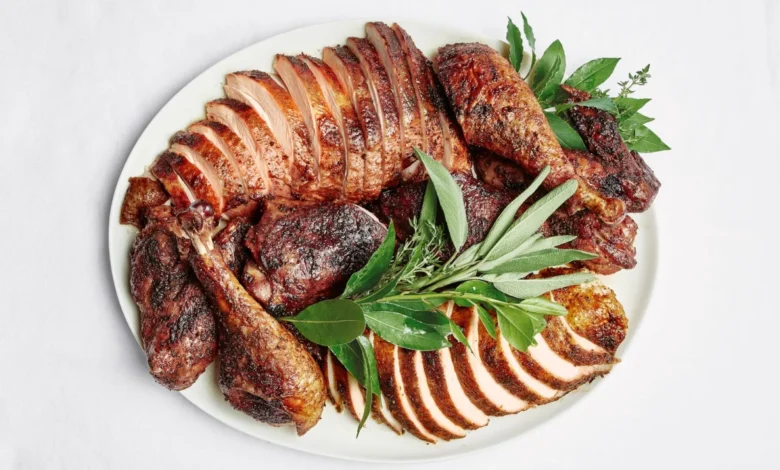
The annual tradition of roasting a whole turkey for major holiday gatherings often results in a culinary paradox: the breast meat is frequently overcooked and desiccated, while the dark meat remains underdone, or the skin is left soft and unappealing. Culinary experts Andy Baraghani and Brad Leone have challenged the traditional approach of roasting a bird whole, proposing a structural intervention that prioritizes even heat distribution and precise temperature control. By segmenting a 12- to 14-pound turkey into five distinct pieces—two wings, two legs, and a whole breast—cooks can address the specific cooking requirements of different muscle groups, ensuring that every portion reaches its ideal internal temperature simultaneously.
The Anatomy of a Better Roast
The primary challenge in roasting a whole turkey lies in the physiological differences between the breast and the legs. The breast muscle, composed of fast-twitch fibers, requires a lower internal temperature (approximately 165°F) to remain moist and tender. Conversely, the dark meat found in the legs and thighs is rich in connective tissue and fat, requiring a higher internal temperature (often 175°F to 180°F) to break down collagen and achieve a desirable texture. When roasted whole, the breast is often subjected to the oven’s heat for too long while waiting for the legs to reach the necessary threshold, leading to the common complaint of dry, chalky white meat.
By breaking the bird down into five pieces, the cook gains the ability to remove each section from the oven as it hits its target temperature. This method eliminates the guesswork associated with thermal inertia and varying muscle density. Furthermore, arranging these pieces on a wire rack within a baking sheet maximizes the surface area exposed to hot air, promoting uniform browning and rendering fat more effectively. This technique, while unconventional in the context of traditional holiday aesthetics, is rooted in professional kitchen practices where efficiency and product quality are paramount.
Chronology of Preparation: The Dry Brining Process
Achieving high-quality results requires a departure from last-minute preparation. The recommended approach involves a dry brine—a method of seasoning the meat 24 to 48 hours before cooking. Unlike traditional wet brining, which can waterlog the meat and dilute the natural flavor of the poultry, dry brining uses osmosis to draw moisture out, dissolve the seasoning, and then reabsorb the concentrated, flavorful liquid back into the muscle fibers.
The recommended rub consists of a mixture of kosher salt, garlic powder, onion powder, and smoked paprika. This seasoning blend not only enhances the savory profile of the bird but also aids in the dehydration of the skin, a necessary step for achieving a crisp, golden-brown exterior. The timing of this process is critical; allowing the bird to sit in the refrigerator for at least 24 hours permits the salt to penetrate deep into the tissue, ensuring seasoning consistency throughout the entire roast.
Glazing and The Maillard Reaction
The visual appeal of a holiday turkey is often defined by its skin, which is the result of the Maillard reaction—a chemical reaction between amino acids and reducing sugars that gives browned food its distinctive flavor and color. To elevate this process, a specialized glaze composed of soy sauce, vinegar, brown sugar, orange zest, and fresh herbs is applied throughout the cooking process.
The soy sauce provides a deep umami base, while the vinegar introduces an acidic counterpoint to the richness of the poultry fat. The brown sugar facilitates caramelization, creating a glossy, deep-brown finish that is both aesthetically pleasing and structurally crisp. Applying the glaze in intervals during the roasting process prevents the sugars from burning prematurely, allowing for a build-up of complex flavor layers that characterize a professional-grade roast.
Practical Implementation and Butcher Collaboration
For home cooks who find the prospect of deconstructing a raw turkey daunting, the industry standard is to delegate the task to a professional. Supermarket butchers are generally equipped to perform this service, provided the request is made in advance. A standard request involves removing the backbone and separating the carcass into the five specified segments.
Data from the poultry industry indicates that the popularity of pre-butchered or "parts-based" roasting has seen a steady increase over the last decade, as consumers prioritize consistent results over the performative aspect of presenting a whole bird at the table. If the butcher is unfamiliar with the specific "five-piece" request, explaining the culinary rationale—namely, the need for even cooking across varying muscle types—is usually sufficient to gain their cooperation. For those who choose to execute the breakdown themselves, utilizing a sharp boning knife and a stable cutting surface is essential for safety and efficiency.
Frequently Asked Questions and Technical Considerations
To ensure the success of this method, it is vital to adhere to specific protocols regarding ingredient selection and post-cooking handling:
- Avoidance of Pre-Brined Birds: Consumers should strictly avoid turkeys labeled as "self-basting," "enhanced," or "contains a solution." These birds have been injected with saline, and applying an additional dry brine will lead to an unpalatably high sodium content. Always check the ingredient list on the packaging to ensure the bird is raw and unprocessed.
- Safety and Hygiene: There is no requirement to rinse the bird before applying the dry brine. Modern food safety guidelines from the USDA and other health organizations explicitly advise against washing raw poultry, as it facilitates the spread of bacteria such as Salmonella and Campylobacter via aerosolization in the kitchen environment.
- Gravy Management: The drippings from this recipe carry a unique profile. Because the turkey is seasoned with a dry brine and finished with a soy-based glaze, the resulting pan drippings are significantly more concentrated in salt than those from a traditional roast. It is advised that home cooks taste the drippings before incorporating them into a gravy base to avoid over-seasoning the final sauce. Alternatively, a pre-prepared gravy may be used to provide a consistent flavor profile that does not rely on the high-sodium drippings of the roasted bird.
Broader Culinary Implications
The shift toward the "five-piece" roasting method represents a broader trend in home cooking: the prioritization of technical efficacy over traditional presentation. By isolating the cooking variables of the turkey, the home cook moves away from the "all-or-nothing" risks of the whole-roast method. This analytical approach to cooking aligns with the modern focus on food science, where understanding the thermal properties of proteins leads to more reliable outcomes.
As consumer interest in high-quality home dining continues to rise, the dissemination of such technical methods is likely to influence how holiday meals are planned and executed. The success of this technique serves as a case study for the application of restaurant-style preparation in a domestic setting, proving that with the right logistical planning and adherence to chemical principles, home cooks can achieve results that are functionally and aesthetically superior to traditional methods.
In conclusion, the decision to break down a turkey is a strategic choice that minimizes the risk of culinary failure. By controlling the heat exposure of the breast and legs independently, utilizing a dry brine for deep flavor penetration, and managing the Maillard reaction through a controlled glazing process, the home cook can ensure a result that is both technically proficient and gastronomically satisfying. Whether the breakdown is performed by a professional butcher or at home, the outcome—a turkey that is uniformly juicy, deeply seasoned, and perfectly browned—stands as a testament to the benefits of prioritizing process over convention.