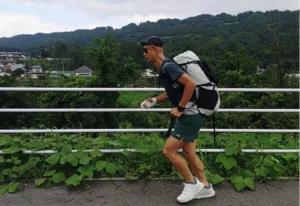
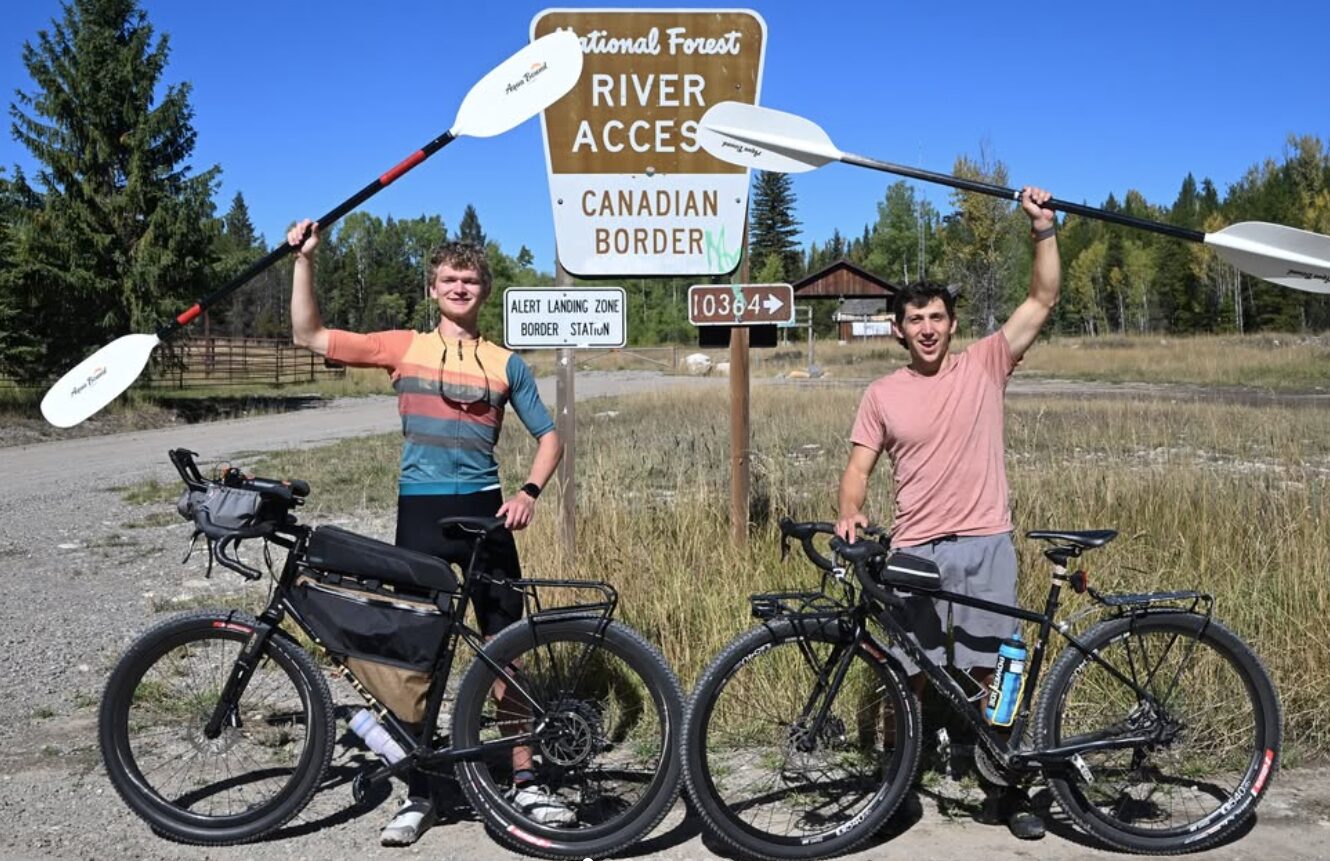
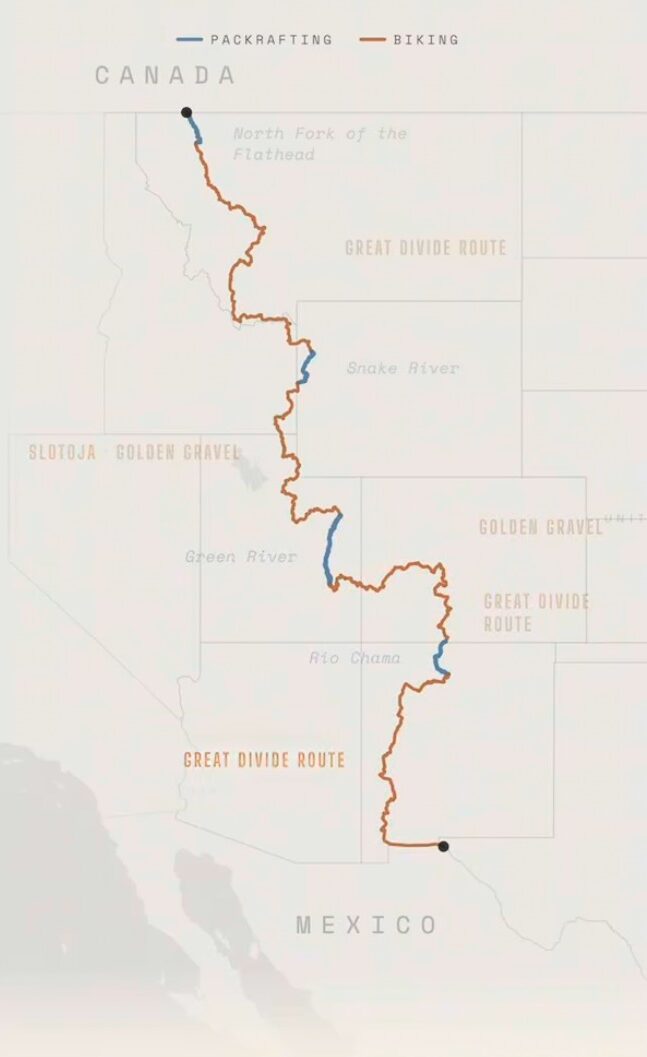
Pete Streufert and his expedition partner, known as Carter, are currently engaged in a pioneering multi-modal traverse of the North American continent, a journey they have termed the "Saddle to Paddle Traverse." This ambitious expedition involves cycling 4,025 kilometers and packrafting 645 kilometers across the United States, stretching from the Canadian border in Montana to the Mexican border in El Paso, Texas. By integrating long-distance cycling corridors with major river systems, the pair is navigating a route that bridges diverse ecosystems and terrains, effectively stitching together a path that has—according to preliminary records—never been completed in this specific configuration.
The expedition, which commenced on September 17, represents a sophisticated intersection of modern geospatial mapping and human-powered endurance. Streufert, whose professional background as a geospatial wildfire scientist and cartographer was instrumental in the route’s development, utilized data from Bikepacking.com, American Whitewater, and OpenStreetMap to identify potential "connectors" where rugged cycling trails converge with navigable waterways. The result is a hybrid transit system that allows the duo to bypass traditional obstacles by transitioning from wheels to rafts and back again, a logistical feat that requires precision, physical resilience, and specialized gear.
A Chronology of the Saddle to Paddle Traverse
The expedition began in the shadow of Glacier National Park, Montana, a starting point chosen for its proximity to the Canadian border and its rugged, high-altitude terrain. The initial phase of the journey saw the pair complete a 115-kilometer descent of the North Fork of the Flathead River. This stretch, which delineates part of the western boundary of Glacier National Park, served as a rigorous introduction to the physical demands of bikerafting, requiring the duo to manage the weight of their bicycles—Rodeo Labs Flaanimal 6.0 steel bikes—while navigating a dynamic river environment.
Following the Flathead River descent, the team transitioned to the Great Divide Mountain Bike Route (GDMBR). For the next 1,107 kilometers, the GDMBR served as their primary artery through the heart of Montana and toward Jackson Lake, Wyoming. This section highlights the core philosophy of the traverse: the seamless integration of established cycling infrastructure with the untamed wilderness of the American West. Upon reaching the Snake River, the team engaged in their second major paddling phase, covering 130 kilometers downstream.
The route then shifted toward the SLoToJa corridor, a path spanning Idaho, Wyoming, and Utah. This segment facilitated their traversal through some of the most geologically significant landscapes in the country, including a transition onto the recently developed Golden Gravel Trail. After approximately 860 kilometers of cycling, the team arrived at the Green River in Utah, which presented some of the most technical water navigation of the entire expedition.
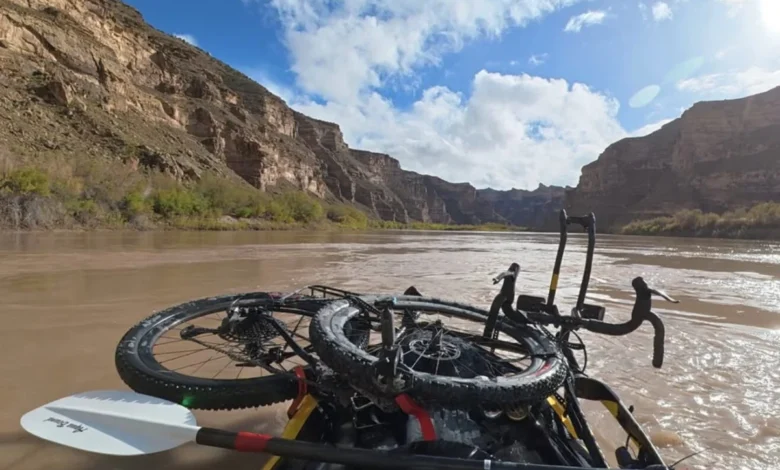
The Green River phase involved a 328-kilometer stretch through Desolation and Gray Canyons. This segment included several Class III rapids and the expedition’s singular Class IV rapid, testing the limits of their Kokopelli packrafts and the security of their bike-mounting systems. Following the completion of this river section, the duo transitioned to the White Rim Trail, eventually reaching Moab, Utah, for a brief period of maintenance and logistical reset.
Technical Logistics and Equipment
The success of the Saddle to Paddle Traverse relies heavily on the specific equipment selection, designed to handle both high-speed gravel riding and whitewater conditions. The decision to utilize Rodeo Labs Flaanimal 6.0 steel frames, paired with 29-inch Vittoria Mezcal tires, reflects a priority on durability and versatility. The steel frame offers the vibration damping necessary for thousands of kilometers of gravel riding, while the wide, high-volume tires provide the stability required for loaded cycling on unpredictable terrain.
The packrafting equipment, specifically the Kokopelli systems, allows the team to lash their bicycles securely to the bow of the rafts. This method, while common in small-scale bikerafting trips, is rarely tested over such long distances and through varying water classes. Each transition—from "saddle" to "paddle"—requires the complete deflation of the rafts, the breakdown of paddles, and the secure attachment of these items to the bike frames, a process that adds significant time and labor to each day’s itinerary.
From a geospatial perspective, Streufert’s planning methodology is noteworthy. By layering cycling corridors against river data, he effectively created a "path of least resistance" across the Rocky Mountains and the Colorado Plateau. This method minimizes the need for high-altitude mountain passes that are often impassable in late autumn, instead opting for lower-elevation river corridors where topography allows for downstream movement.
Broader Implications for Adventure Sports
The Saddle to Paddle Traverse sits at the vanguard of a growing trend in endurance sports: the "hybrid adventure." As traditional long-distance routes like the Great Divide Mountain Bike Route become more popular, experienced adventurers are increasingly seeking ways to iterate on these classic paths. By incorporating packrafting, Streufert and his partner are effectively expanding the definition of what constitutes a "long-distance trail."
The logistical complexity of this journey also provides a case study for future expeditions. The ability to source supplies in small towns while remaining self-supported in the wilderness creates a balance between extreme isolation and modern connectivity. The team’s usage of GPS-enabled tracking and real-time mapping updates serves as a bridge for the public to engage with the expedition, turning a solitary endeavor into a shared learning experience for the cycling and paddling communities.
From an environmental standpoint, the route is designed to follow existing, established trails and riverways, minimizing the impact on sensitive ecosystems. However, the sheer distance—exceeding 4,600 kilometers in total—highlights the fragility of these corridors. As climate patterns shift and precipitation levels change in the American West, the viability of such routes may fluctuate, making the team’s documentation of river levels and trail conditions a valuable resource for future, similar expeditions.
Future Stages and Conclusion
As the team prepares for the final legs of their journey, they face a challenging route through the La Sal Mountains in Utah and across the state of Colorado. Following this, they will return to the Great Divide Mountain Bike Route for the final push through New Mexico. The concluding segment of the expedition will feature a final, significant paddling phase on the Rio Chama, a river known for its scenic beauty and technical challenges.
The final 950-kilometer cycling leg will take them directly into El Paso, Texas, marking the official end of their two-month timeline. The completion of this journey will not only be a personal achievement for Streufert and Carter but also a significant addition to the annals of North American endurance travel. By successfully navigating four major rivers and six states, the pair has demonstrated that the boundaries between cycling and waterborne travel are increasingly fluid, limited only by the cartographic ingenuity of the adventurers willing to bridge them.
For those following their progress, the team’s ongoing reliance on digital platforms provides a unique window into the daily realities of long-distance expeditionary travel. Whether navigating the complexities of Class IV rapids or the grueling gravel climbs of the Rockies, their progress serves as a testament to the intersection of modern technology and human grit. As they approach the Mexican border, the legacy of the Saddle to Paddle Traverse will likely inspire a new generation of explorers to look at a map not just as a set of separate paths, but as a potential network of interconnected, multi-modal adventures.