The Ultimate Culinary Expedition: A Comprehensive Guide to Melaka’s Historic Food Landscape and Top Gastronomic Destinations

The coastal city of Melaka, situated along the Straits of Malacca in Peninsular Malaysia, occupies a singular position in the nation’s cultural and gastronomic geography. Recognized globally as a UNESCO World Heritage site, Melaka’s culinary identity is a direct manifestation of its centuries-long history as a bustling maritime trading port. This heritage is characterized by an intricate fusion of Malay, Chinese, Indian, and Peranakan (Straits Chinese) culinary traditions. The resulting gastronomy is distinguished by heavy usage of indigenous herbs, potent chili varieties, and complex spice matrices. Recent culinary tourism data indicates that regional destination diners increasingly prioritize authentic, heritage-driven food trails, positioning Melaka as a premier focal point for international culinary exploration.
Historical Context and Cultural Significance of Melaka’s Cuisine
To understand the culinary significance of Melaka, one must examine its trajectory as a major trading hub from the 15th century onward. Merchants from China, India, the Middle East, and the Indonesian archipelago converged on its shores, introducing ingredients, cooking techniques, and preservation methods that permanently altered the local palate.

The Peranakan community, descendants of early Chinese migrants who intermarried with local Malay women, played a particularly pivotal role in shaping the region’s distinct flavor profiles. This synthesis produced Nonya cuisine, which marries Chinese wok-cooking techniques with Southeast Asian aromatics such as galangal, lemongrass, kaffir lime leaves, and belacan (fermented shrimp paste). According to regional tourism analysts, culinary tourism accounts for a substantial percentage of visitor expenditures in Peninsular Malaysia, with Melaka serving as a primary driver of domestic and international food-focused travel.
Chronological Culinary Itinerary: Top Dining Destinations in Melaka

Structuring a comprehensive food tour of Melaka requires navigating both historical inner-city establishments and suburban culinary institutions. Below is an analytical breakdown of five foundational dining locations that define the contemporary Melaka food landscape.
- Kedai Kopi Chung Wah: The Pinnacle of Hainanese Chicken Rice
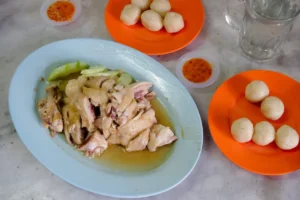
Situated at the intersection of Melaka’s historic Jonker Street, Kedai Kopi Chung Wah represents a cornerstone of traditional Hainanese-Chinese kopitiam (coffee shop) culture. Operating within a traditional shophouse setting, the establishment is renowned for its specific iteration of Hainanese chicken rice—notably served as compressed rice balls rather than loose grains.

The preparation methodology involves boiling whole chickens in a seasoned broth infused with ginger and scallions, resulting in meat characterized by taut skin and tender, gelatinous connective tissues. The accompanying rice is cooked in chicken fat and rich poultry broth, then manually compressed into spherical shapes while hot. This technique imparts a distinct smokiness and a pronounced garlic profile. The dish is traditionally served with a specialized vinegar and garlic-chili dipping sauce that provides a sharp, acidic counterpoint to the rich poultry. Historical records within local food circles note that establishments of this vintage maintain strict, time-tested recipes passed down through generations, drawing substantial queues daily.
- Asam Pedas Pak Man: Mastery of Sour and Spicy Curry
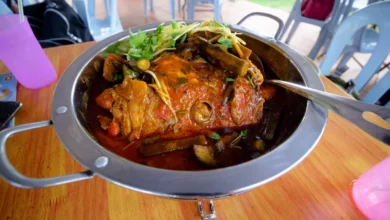
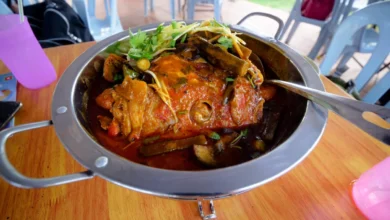
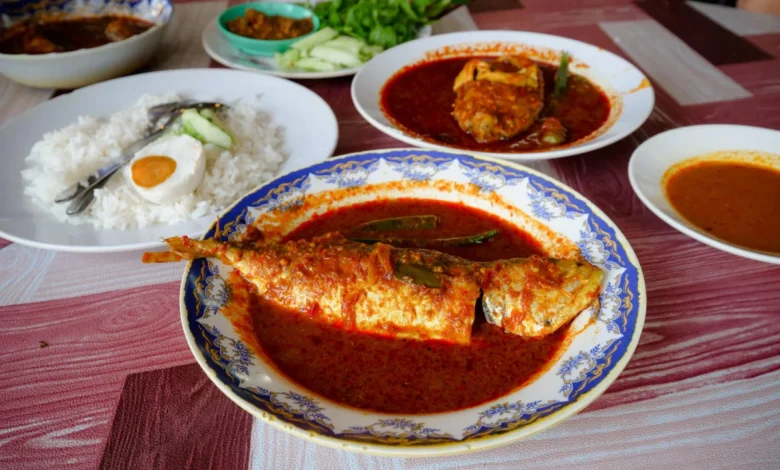
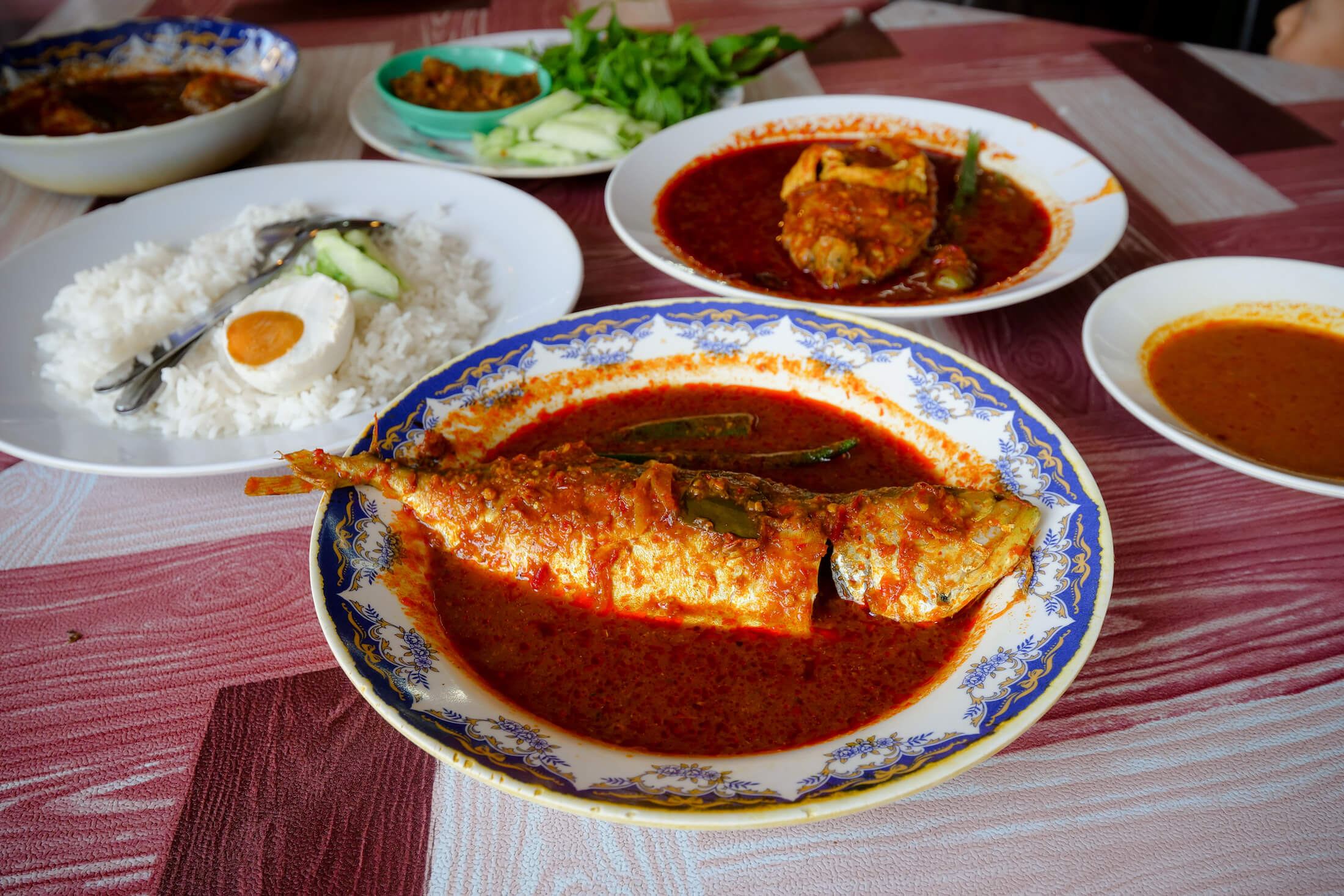
Moving deeper into the regional lexicon of Malay-Minangkabau influences, Asam Pedas Pak Man specializes in asam pedas, a sour and spicy fish curry that holds iconic status in southern Peninsular Malaysia. The term asam denotes acidity (typically derived from tamarind or assam gelugor), while pedas translates to spicy.

The preparation of the soup base requires hours of simmering a complex paste composed of dried chili peppers, shallots, garlic, lemongrass, and tamarind juice. Freshly caught regional seafood—most notably baramundi (locally known as ikan siakap), skipjack tuna, or stingray (ikan pari)—is simmered directly in the broth, allowing the proteins to absorb the robust, fiery liquid. Culinary experts often cite asam pedas as a prime example of balancing opposing flavor profiles, where intense heat is tempered by sharp citrus notes and herbal bitterness. Alongside its signature curries, the restaurant serves traditional Peranakan snacks known as kuih and griddle-cooked roti canai, contributing to its high volume of local patronage.
- Klebang Original Coconut Shake: Modern Refinements in Beverage Culture
Reflecting the evolution of contemporary Malaysian beverage culture, the Klebang Original Coconut Shake has emerged as a staple of suburban Melaka gastronomy. Located a short distance from the city center near the coastline, the enterprise transformed a modest roadside stall into a high-capacity operation driven by a singular, proprietary recipe.

The beverage is formulated by blending fresh coconut water and scraped young coconut flesh with crushed ice, subsequently topped with a generous scoop of vanilla ice cream. This formulation merges traditional tropical refreshment with Western dairy elements, creating a texturally rich, cooling beverage tailored to the equatorial climate of Peninsular Malaysia. Economic analyses of such localized food phenomena indicate that viral consumer popularity, amplified by digital mapping and social media platforms, can significantly alter suburban traffic patterns and elevate regional micro-economies.
- Ban Lee Siang Satay Celup: The Communal Skewer Experience
Satay celup represents a distinct regional variation of the traditional Malaysian satay. While standard satay features skewered meat grilled over charcoal and served with a side peanut sauce, the celup (dipping) variant, popularized at venues such as Ban Lee Siang, adapts this concept into a communal hot-pot format.

Patrons select from a vast array of raw and semi-processed ingredients—including meats, seafood, quail eggs, mushrooms, and various vegetables—mounted on long wooden skewers. These skewers are then immersed directly into a communal urn of rich, simmering peanut-and-spices gravy stationed at each table. The sauce, thickened with ground peanuts and infused with chili oil, deepens in flavor as various proteins and vegetables impart their juices throughout the dining session. The final bill is calculated simply by counting the discarded wooden sticks remaining at the table, a practical and iconic operational hallmark of this dining style.
- Ikan Bakar Hj Musa: Charcoal-Grilled Seafood Excellence
Concluding the culinary tour at the coastal fringe of Melaka, Ikan Bakar Hj Musa exemplifies the coastal Malay tradition of ikan bakar (charcoal-grilled fish). Operating in an open-air seaside environment, the establishment allows diners to select fresh catch directly from iced displays by weight, specifying both the type of seafood—ranging from stingray and squid to tiger prawns—and the desired preparation method.

The defining characteristic of this establishment is its proprietary chili sambal glaze. Applied to the seafood during the final stages of the charcoal grilling process, the sambal comprises pounded chilies, shallots, and fermented shrimp paste (belacan). The intense heat of the charcoal causes the sugars and aromatics in the sambal to caramelize, forming a jam-like, savory crust over the succulent marine proteins. Industry observers frequently categorize such open-air seafood operations as vital cultural spaces that preserve traditional open-flame cooking methodologies utilizing locally sourced marine resources.
Broader Economic and Cultural Implications

The enduring popularity of Melaka’s traditional food establishments underscores the economic viability of heritage tourism. Gastronomy acts as a primary vehicle for cultural preservation, ensuring that traditional preparation techniques—such as manual rice-ball compression, complex tamarind-chili paste formulation, and communal hot-pot dining—persist in an increasingly globalized commercial environment.
Furthermore, the integration of traditional kopitiams, specialized curry houses, and modern beverage vendors creates a diverse micro-economy that sustains multi-generational family businesses and supports regional supply chains spanning agriculture, aquaculture, and retail. As international travel patterns continue to evolve, destinations like Melaka demonstrate that authentic, regionally distinct culinary offerings remain central to sustainable tourism development and cultural continuity within Southeast Asia.