Uncovering the Past in Prishtina: How Reporting House Preserves the Journalistic Legacy of the 1999 Kosovo War

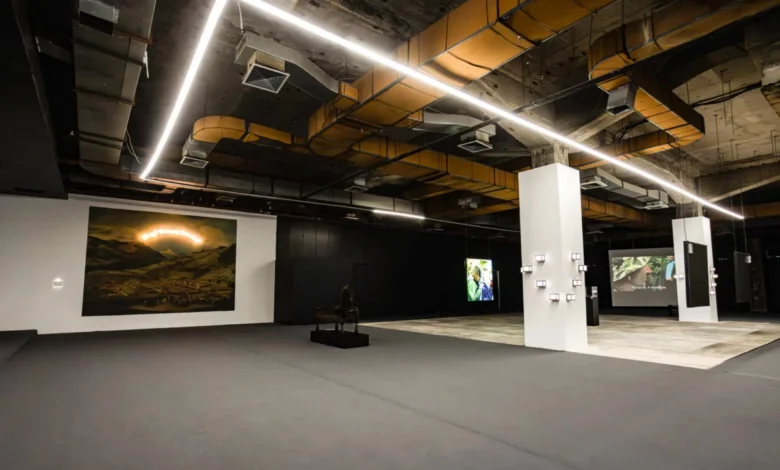
Decades after NATO fighter jets crisscrossed the Balkan skies and tens of thousands of displaced civilians sought refuge across neighboring borders, the capital of Kosovo has unveiled a powerful cultural institution dedicated to the memory of that tumultuous era. Situated along Mother Teresa Avenue in the heart of Prishtina, Reporting House has rapidly emerged as a vital historical repository. Occupying the industrial-stripped shell of a former Yugoslav-era department store, the museum bridges the gap between historical archiving and modern experiential art, offering a sobering look at the intersection of conflict, humanitarian crisis, and international journalism.
For veteran foreign correspondents who witnessed the unfolding tragedy firsthand, the establishment of Reporting House represents an unexpected and deeply moving milestone. When British journalist Christian Jennings first arrived in Kosovo in June 1999, the landscape was defined by chaos: returning Kosovo Albanian refugees poured back from exile in Albania and North Macedonia (then Macedonia), international peacekeeping forces from dozens of nations choked the streets, and the physical and psychological scars of war were raw. Returning nearly twenty-seven years later, Jennings and thousands of other visitors have found a permanent space dedicated to contextualizing those defining historical moments through the eyes of those who documented them.
The Genesis of a Unique Cultural Institution
Since opening its doors two years ago, Reporting House has welcomed approximately 30,000 visitors, drawing international tourists, historians, and locals alike. The museum’s physical architecture mirrors its subject matter. Stripped back to industrial, quasi-industrial basics with exposed ductwork and linear lighting, the cavernous interior provides an unvarnished backdrop for a sprawling collection of multimedia exhibits. Outside, a striking architectural installation constructed from the scarred, fire-damaged timbers of homes destroyed during the conflict sets a solemn tone for the visitor experience.
Unlike traditional history museums that rely primarily on dry chronological text, Reporting House leverages the visceral power of frontline journalism. The institution houses approximately 500 photographs, 150 television reports, diverse mixed-media art installations contributed by local and international artists from the Balkans and as far away as Mozambique, and deeply personal artifacts that tell the human story of the war.
Among the most arresting initial exhibits is an ordinary Sony mobile phone, visibly shattered and pierced by a high-velocity rifle bullet. The device was recovered from the belt-bag of a BBC television cameraman who came under direct fire while filming Serbian military forces in 1998. The ruined phone, which likely saved the cameraman’s life, stands as a tangible testament to the immense physical risks undertaken by international press corps. The footage captured by journalists during 1998 and 1999 played a critical role in shaping global public opinion, ultimately helping to mobilize international political will for the NATO airstrikes and subsequent humanitarian intervention that brought an end to the hostilities.

A Tapestry of Personal Testimonies and Conflict Artifacts
Beyond the media equipment, Reporting House curates intimate glimpses into the lives of those who fought and suffered during the conflict. The exhibits feature poignant personal effects, including the preserved love letters exchanged between Fehmi and Xheve Lladrovci. The couple served as rebel fighters within the ranks of the Kosovo Liberation Army (KLA), hiding out in the rugged hills, fighting side-by-side, and ultimately perishing together in a fierce firefight against Serbian forces in September 1998.
Balancing these delicate personal histories with the heavy machinery of war, the museum also displays an original, battle-scarred Land Rover Defender armored vehicle. Heavily dented and bearing the structural wear and tear typical of hostile-environment reporting, the vehicle served as vital transport for journalists navigating the dangerous terrain of wartime Kosovo. Through these varied mediums, the museum challenges visitors to reconsider the complex dynamics of armed conflict, the mechanics of mass population displacement, and the profound weight of historical fortune.
Expanding the Narrative: The Launch of Exodus ’99
Building upon the success of its primary location on Mother Teresa Avenue, Reporting House has expanded its footprint across the city with the opening of a secondary site. Located at the Prishtina Train Station, the new installation is appropriately titled Exodus ’99.
This satellite museum is housed directly inside an authentic railway wagon that was utilized during the war to transport desperate refugees away from the conflict zones. Flanking the historic car is a dedicated gallery space displaying photographs, documents, and artifacts directly linked to the harrowing experiences of the displaced populations. Together, the two sites offer a comprehensive, dual-perspective look at both the chronicling of the war through media and the humanitarian catastrophe experienced by everyday citizens on the ground.
Broader Impact, Visitor Information, and Cultural Legacy
The establishment of Reporting House and Exodus ’99 arrives at a critical juncture for Kosovo as the nation continues to define its post-war identity and build its tourism infrastructure. By preserving the unfiltered reality of the late 1990s, the institutions provide invaluable educational resources for younger generations who have no living memory of the war, as well as international travelers seeking a deeper understanding of modern Balkan history.
Cultural analysts note that museums focused on recent conflicts play an essential role in post-conflict reconciliation and historical preservation, ensuring that the sacrifices of civilians and journalists alike are neither forgotten nor revised. By demonstrating how documentation and the written word can alter the course of military intervention, Reporting House underscores the timeless adage that the pen can indeed be as formidable as the sword.

Both museum locations maintain accessible schedules and policies designed to encourage widespread public engagement. Admission to both Reporting House and Exodus ’99 is completely free of charge, allowing all members of the public and visitors to explore the exhibitions independently or via guided tours.
Visitor Information:
Reporting House
- Location: Mother Teresa Avenue (adjacent to the Skanderbeg Statue), Prishtina
- Opening Hours: Tuesday to Sunday, 10:00 – 18:00 (Closed Mondays)
Exodus ’99
-
Location: Prishtina Train Station, Prishtina
-
Opening Hours: Tuesday to Sunday, 12:00 – 18:00 (Closed Mondays)

-
Contact Phone: +383 48 831 998
-
Instagram: @reportinghouse
-
Facebook: Reporting House
Related posts: