The Ultimate Guide to European Travel Connectivity: Navigating eSIM Data Plans, Costs, and Carrier Options for Modern Travelers


Staying connected while traveling abroad has transitioned from a luxury to an absolute necessity, fundamentally shifting how tourists navigate foreign infrastructure. Traditional methods of maintaining high-speed mobile data—such as hunting down physical local SIM cards upon arrival or paying exorbitant international roaming fees through domestic carriers—are rapidly being phased out by embedded electronic SIM, or eSIM, technology. For travelers heading to Europe, this digital evolution offers unprecedented convenience, allowing users to connect to regional mobile carriers remotely without ever opening their phone’s physical SIM tray. However, navigating the modern landscape of prepaid eSIM data plans requires an understanding of regional coverage nuances, data caps, device compatibility, and pricing structures among competing third-party providers and major telecommunications companies.

The Evolution of Mobile Connectivity and the Rise of eSIM Technology
The telecommunications sector has undergone a seismic shift over the past decade, moving away from rigid, hardware-bound identification modules toward flexible, software-driven solutions. Historically, international travelers faced a frustrating ritual upon landing in a foreign airport: locating a kiosk, standing in long lines, presenting a passport, and swapping out their home-country SIM card for a local prepaid alternative. This physical process carried inherent risks, including the potential loss or damage of the original SIM card and the temporary forfeiture of access to home-country text messages required for two-factor authentication and banking alerts.

The introduction of eSIM technology—standardized by the GSMA and widely adopted by major smartphone manufacturers since roughly 2019—eliminated these physical friction points. An eSIM is a programmable digital SIM chip permanently soldered onto a smartphone’s motherboard. Users can download and install multiple carrier profiles digitally via a QR code or an application interface. The regulatory landscape has accelerated this transition; notably, the United States versions of the iPhone 14, iPhone 15, and subsequent generations have completely removed the physical SIM card tray, forcing consumers to rely entirely on dual-eSIM functionality. Consequently, international travelers are no longer asking whether they should use digital plans, but rather which provider offers the most reliable, cost-effective coverage for their specific itineraries.
Comparative Analysis of Domestic Roaming Versus Prepaid eSIMs
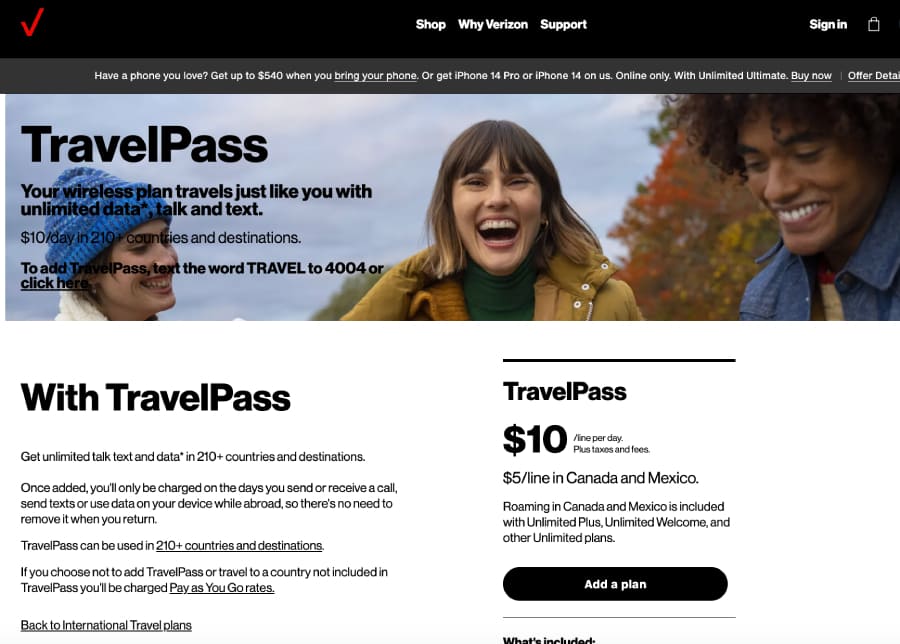
For travelers hailing from North America or Australia, relying on domestic mobile providers—such as AT&T, Verizon, or T-Mobile—for international travel remains a common pitfall due to hidden costs and severe throttling policies. Major North American carriers heavily market their international daily passes or roaming add-ons, but a closer examination of their terms reveals significant financial and performance drawbacks.

For instance, standard daily international passes typically cost approximately $10 per day, accumulating to roughly $300 for a standard month-long excursion. Furthermore, these plans often impose aggressive restrictions. Verizon, for example, reduces users to sluggish 3G speeds after exhausting a meager two-gigabyte daily allowance. Similarly, while T-Mobile frequently advertises "free" international data, customers are typically throttled to outdated 2G speeds after consuming a cumulative five gigabytes over the course of a trip—speeds that struggle to load basic mapping software, web pages, or email clients.
In stark contrast, third-party prepaid eSIM providers and European carrier subsidiaries offer high-speed data packages that are frequently up to five times more economical. Travelers can secure robust data allotments through specialized platforms for prices ranging between $2.00 and $5.00 per day, completely bypassing the punitive overage fees and data throttling imposed by domestic home networks.

Comprehensive Review of Top European eSIM Providers and Plans
The European market features a diverse ecosystem of eSIM options, ranging from regional unlimited data specialists to digital storefronts representing major European telecommunications infrastructure giants. Because the European Union outlawed mobile roaming fees across member states, a data plan purchased from a carrier in one EU nation can be utilized seamlessly across the entire bloc, though non-EU nations like the United Kingdom and Switzerland require careful verification.
Holafly: Unlimited Data for Flexible Itineraries
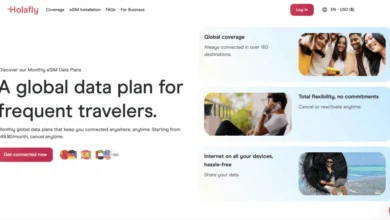
Holafly, a prominent Europe-headquartered eSIM provider, has carved out a distinct market niche by offering unlimited high-speed data plans with customizable durations ranging from 1 to 90 days. This model is particularly advantageous for travelers seeking to avoid the anxiety of monitoring data consumption. While daily rates decrease for longer-duration packages—typically averaging between $2.50 and $5.00 per day—users should note that Holafly plans are data-only and restrict mobile hotspot tethering to prevent network abuse. This makes Holafly ideal for solo smartphone users who require constant, unmetered access to navigation, translation, and web browsing applications.
SimOptions and Major European Carrier Offerings
For travelers requiring traditional carrier backing, platforms like SimOptions serve as official digital retailers for major European telecommunications providers, including Orange, Bouygues Telecom, and O2. These established operators provide superior network reliability, broader geographic coverage, and faster data speeds because they own and operate the underlying physical cell towers.
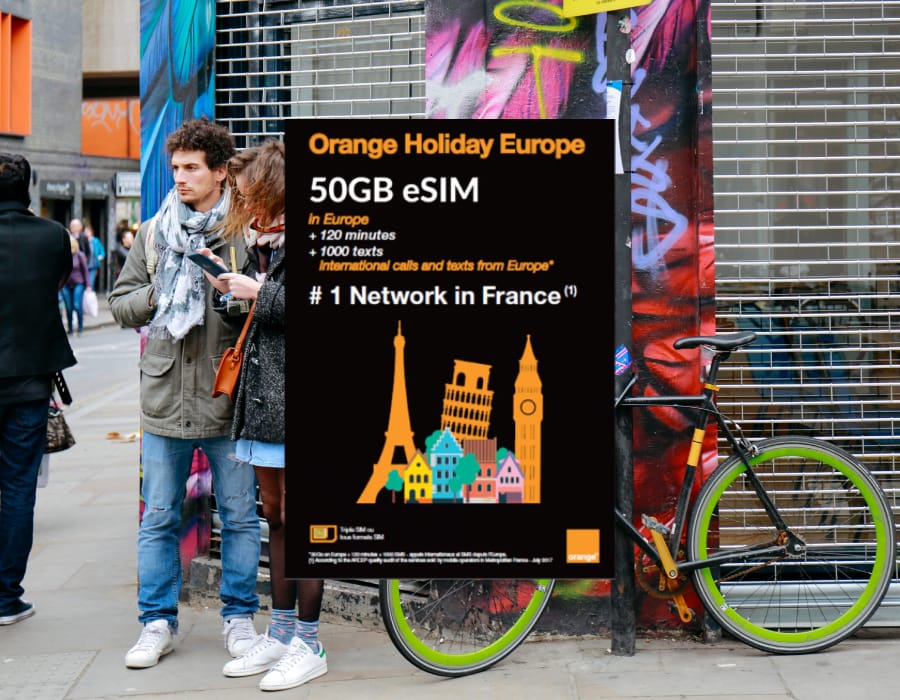
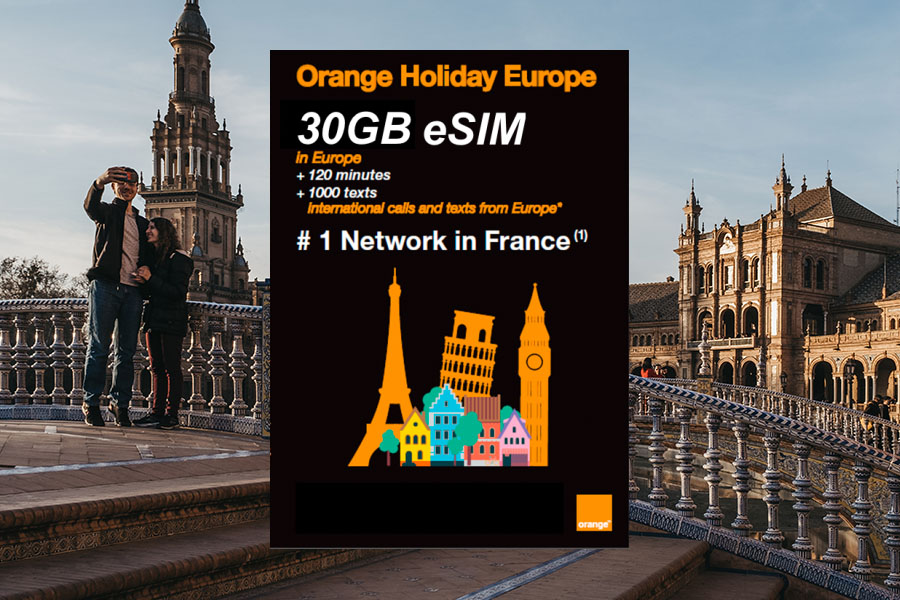
- Orange Holiday Europe eSIM (50GB / 70GB Variants): Orange represents the gold standard for heavy data users and traditionalists. Their robust regional packages—such as the 50GB or newly updated 70GB plans valid for 28 days—include a distinct advantage: a legitimate French phone number that allows for international voice calls and text messages across Europe. Additionally, these plans fully support mobile hotspot tethering, enabling users to share their high-speed connection with laptops or travel companions. The primary limitation is their strict validity period, requiring careful trip timing to maximize utility.
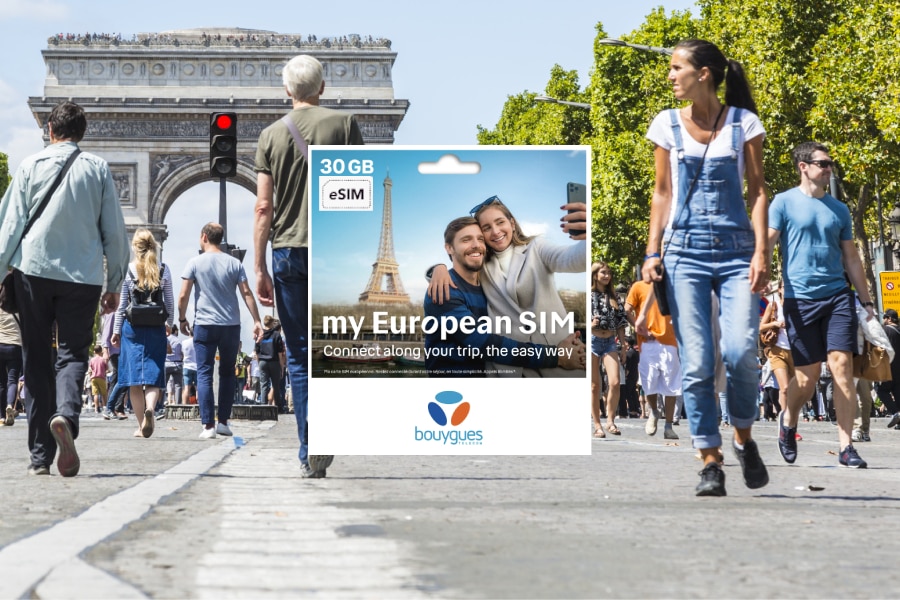
- Bouygues My European eSIM: Competing directly in the French carrier space, Bouygues offers a 30-day prepaid eSIM plan featuring 30GB of high-speed data alongside unlimited voice calls within Europe. This plan strikes an optimal balance for month-long backpacking trips or extended business travel, providing ample data paired with traditional telephony capabilities.
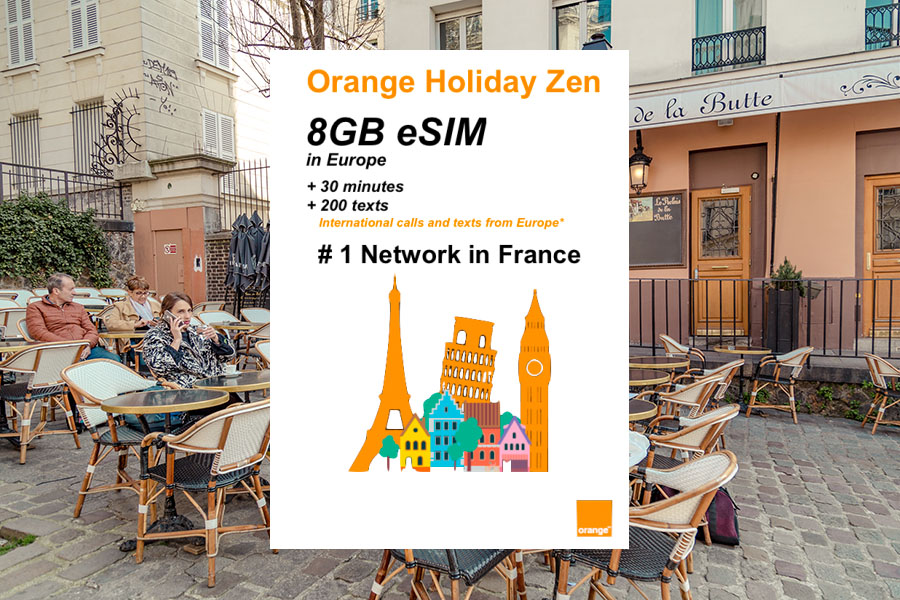
- Orange Holiday Zen eSIM: Tailored for moderate data users, the Orange Holiday Zen plan delivers 15GB of mobile data over a 14-day window, complemented by unlimited calls and texts within Europe and limited credit for international communications outside the EU.
- Smart Comfort X eSIM: For budget-conscious consumers with minimal data requirements, international data-only eSIMs like Smart Comfort X provide a modest 5GB data allowance without voice or text features. Operating as an aggregator plan, it dynamically connects to partner networks across various countries—such as Bouygues in France, O2 in Germany, and Telefónica in Spain—making it a cost-effective choice for short trips centered around light browsing and messaging.
Practical Implications and the Modern European Infrastructure
The transition toward ubiquitous digital connectivity is not merely a matter of personal convenience; it reflects a broader structural change in how European society operates. Modern tourism and daily life across the continent rely heavily on digital infrastructure. Physical train tickets have largely been replaced by digital QR codes accessible via smartphone apps. Reliable high-speed data is mandatory for real-time public transportation updates, rideshare services like Uber, digital restaurant menus accessed via table-side scanning, and cashless mobile payment systems implemented widely in urban centers.

Failing to secure reliable mobile data upon arrival in Europe can severely disrupt travel logistics, leading to missed transit connections, difficulties communicating with accommodation hosts, and restricted access to emergency services or digital navigation. Industry analysts emphasize that travelers must verify device compatibility—ensuring their smartphone is fully carrier-unlocked before departure—and carefully coordinate the activation timeline. Because validity countdowns typically begin the moment an eSIM profile is activated on the device, experts strongly recommend downloading the carrier application prior to departure but delaying final network activation until the plane touches down on European soil.

Ultimately, the proliferation of prepaid eSIM technology has democratized international telecommunications. By bypassing the predatory fee structures of legacy domestic carriers and leveraging the robust networks of established European operators, modern travelers can secure fast, reliable, and cost-effective connectivity, ensuring a seamless journey across borders.