Panasonic Lumix S 20mm f/2.5 Review: A Paradoxical Full-Frame Prime Tests L-Mount Shooter Loyalties

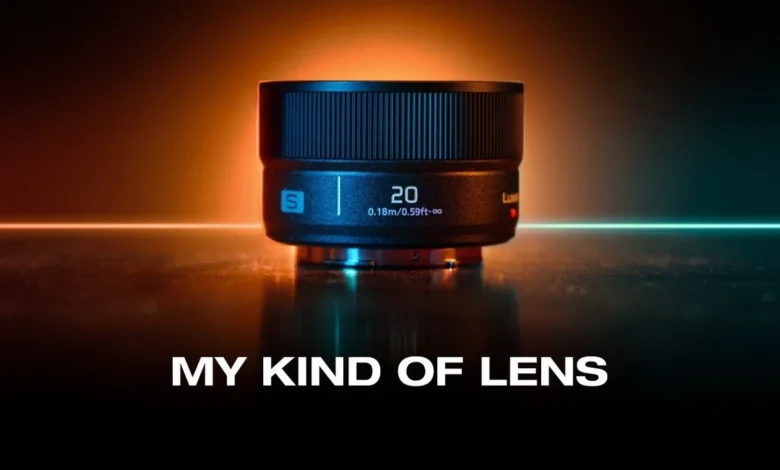
Panasonic’s ongoing expansion of its full-frame L-mount ecosystem has consistently targeted a specific demographic of hybrid creators: those who prioritize compact ergonomics, mobility, and dependable video performance without sacrificing sensor coverage. The introduction of the Panasonic Lumix S 20mm f/2.5 prime lens represents a significant milestone in this strategy. Retailing at $498, this ultra-lightweight optic enters a crowded and competitive focal range. Crucially, it shares its exact focal length with the ubiquitous Lumix S 20-60mm f/3.5-5.6 kit zoom that has accompanied countless Lumix bodies since the launch of the alliance. This overlap raises fundamental questions regarding optical redundancy, value proposition, and the exact niche a dedicated prime lens must occupy in a modern photographer’s bag.
Recent hands-on field testing by creator Pav SZ, who paired the new 20mm f/2.5 with prominent L-mount camera bodies including the Lumix S5IIX, the compact Lumix S9, and the high-resolution Lumix S1II, reveals an optic defined by stark contradictions. Rather than presenting a clean, uniformly clinical performance curve typical of modern computational-era glass, the Lumix S 20mm f/2.5 delivers a polarized user experience. It shifts dynamically from modern reliability to vintage-style optical imperfections depending entirely on the lighting environment, presenting a fascinating study in lens design compromises.
Main Facts and Optical Performance Breakdown
At its core, the Panasonic Lumix S 20mm f/2.5 is designed around extreme portability. Weighing a mere 142 grams, the lens alters the physical handling dynamics of full-frame mirrorless setups. While it does not transform a robust body like the Lumix S5IIX into a pocketable device, it significantly reduces cumulative fatigue during extended handheld shooting sessions or long days of travel. Furthermore, its discreet physical footprint draws substantially less attention during street photography assignments compared to heavier, faster aperture alternatives.
Constructed to withstand adverse weather conditions, the lens features a comprehensive weather-sealed design, ensuring that a sudden downpour or dusty environment will not prematurely truncate a field shoot. Mechanically, it boasts a minimum focusing distance of 18 centimeters. This close-focus capability allows photographers to incorporate expansive environmental context into macro-style compositions without suffering from the extreme geometric stretching and barrel distortion typically associated with ultra-wide 14mm or 16mm lenses.
Optically, however, the lens exhibits a Jekyll-and-Hyde personality. In diffuse, ordinary daylight, it functions much like any contemporary Lumix glass: autofocus acquisition is rapid and precise, images boast ample contrast, and color rendition is pleasingly accurate. The complications begin when the lens is pointed directly toward high-intensity light sources. Under harsh backlighting conditions, large veiling flares propagate rapidly across the frame, accompanied by a noticeable drop in overall contrast.
Furthermore, high-contrast edges frequently exhibit heavy chromatic aberration, while corners display softness when shooting wide open at f/2.5. Close-up photography at the maximum aperture occasionally introduces an ethereal glow around subjects—a characteristic more commonly attributed to vintage or budget-tier lenses than a modern Panasonic prime. Despite these technical flaws, field testers note an inexplicable affinity for the lens, often finding themselves reaching for it instinctively over technically superior alternatives.
Chronology and Ecosystem Integration
The arrival of the Lumix S 20mm f/2.5 must be viewed within the historical chronology of the L-Mount Alliance, which was formally established in 2018 by Panasonic, Leica, and Sigma to create a unified mirrorless lens mount. Over the subsequent six years, Panasonic systematically populated the system with high-end, weather-sealed f/1.8 primes (including the 18mm, 24mm, 35mm, 50mm, and 85mm variants), alongside a series of smaller, more specialized lenses like the Lumix S 40mm f/2.
The physical design of the new 20mm f/2.5 closely mirrors that of the existing 40mm f/2, suggesting a concerted effort by Panasonic to establish a standardized family of compact, lightweight primes optimized for gimbals and minimalist travel kits. However, the introduction of a dedicated 20mm prime creates immediate internal competition within the Lumix lineup. Most L-mount users already own the Lumix S 20-60mm f/3.5-5.6 kit lens, which covers the exact same wide-angle boundary at its widest setting.
A side-by-side comparative analysis yields surprising insights. At the 20mm focal length, the sharpness discrepancy between the f/2.5 prime and the variable-aperture kit zoom is remarkably narrow. While the prime offers a slightly brighter maximum aperture of f/2.5 compared to the zoom’s f/3.5 at 20mm, the zoom lens actually boasts a closer macro focusing distance in certain configurations, neutralizing one of the prime’s primary selling points. For videographers, the prime exhibits minor focus breathing during rack-focus sequences, though electronic image stabilization handles wide-angle corner wobbles commendably well.
Embracing Imperfection: The Intentional Aesthetic
The market reception of the Lumix S 20mm f/2.5 is deeply intertwined with broader shifts in contemporary photographic aesthetics. In recent years, both stills and video creators have actively sought out optical flaws that lend organic character to digital imagery. The explosive popularity of diffusion filters—such as the Tiffen Black Pro-Mist series—alongside a booming market for adapted vintage manual-focus glass, underscores a widespread desire to temper the hyper-clinical sharpness of modern sensors with bloom, halation, and reduced contrast.
The Lumix S 20mm f/2.5 effectively offers a dual personality that caters to this aesthetic movement. By maintaining clean, high-contrast rendering in flat or controlled lighting while willingly surrendering to flare and glow under direct sunlight, the lens provides two distinct visual signatures in a single, lightweight package. Mastering the lens requires learning its precise operational thresholds. Photographers can effortlessly reclaim clean rendering by shading the front element or slightly repositioning light sources just outside the frame. Conversely, intentionally placing the sun in a corner or filtering it through tree branches allows creators to harness dramatic flare creatively.
Stopping the lens down past f/2.5 yields tangible improvements, tightening corner sharpness and mitigating close-focus glowing artifacts. Consequently, shooting at maximum aperture becomes an intentional artistic choice designed for subject separation rather than a default technical necessity. Additionally, the lens produces a distinctive starburst pattern featuring seven prominent points interspersed with seven secondary points, offering a recognizable signature across a series of images. Because ultra-wide 20mm compositions frequently incorporate bright skies and force the photographer into close proximity with their subjects, optical handling of light plays an outsized role in shaping the final frame.
Broader Impact and Market Implications
Priced at $498, the Lumix S 20mm f/2.5 enters a fiercely contested market segment where several third-party manufacturers already offer affordable autofocus 20mm lenses for L-mount systems. This competitive pressure forces potential buyers to weigh the value of native integration, weather sealing, and physical harmonization against raw optical perfection and cost.
From an industry perspective, Panasonic’s release highlights a maturing product philosophy. Rather than engineering every lens to achieve flawless laboratory MTF charts, manufacturers are increasingly acknowledging the emotional and artistic value of character-driven optics. For hybrid creators operating within the L-mount ecosystem—particularly those utilizing platforms like the S5IIX and S9 for run-and-gun documentary work, vlogging, or street photography—the decision to purchase the 20mm f/2.5 transcends simple specifications. It is a calculated trade-off between physical convenience and optical temperament, inviting users to embrace the unpredictable interplay between light and glass.