Franconia Notch State Park Reopens Historic Falling Waters Trail Just in Time for Peak New England Fall Foliage

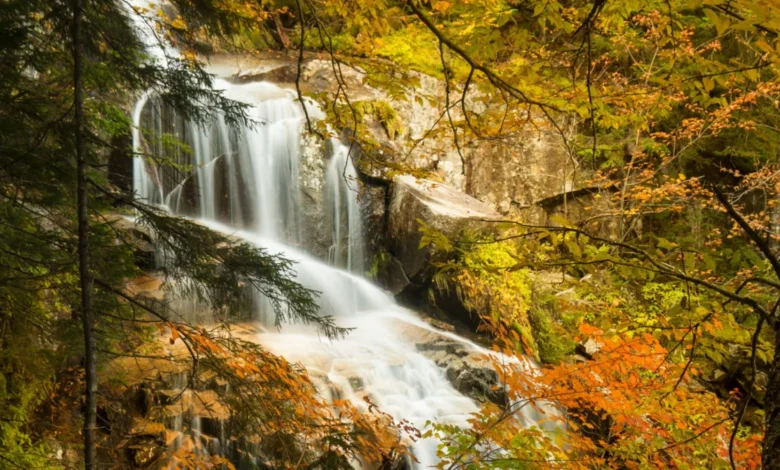
New Hampshire’s White Mountains are experiencing their annual transformation, drawing outdoor enthusiasts from across the United States to witness the vibrant reds, yellows, and oranges blanketing the region’s hardwood forests. Amid this peak autumn tourism window, state and federal land managers have announced the official reopening of the newly reconstructed Falling Waters Trail within Franconia Notch State Park. The trail, a premier route leading toward the summit of 4,760-foot Little Haystack Mountain, features extensive engineering improvements designed to combat years of severe environmental degradation and erosion.
The reopening coincides with peak foliage conditions across northern New Hampshire. While the timing offers hikers an optimal window to experience panoramic views framed by autumn canopies, officials emphasize the importance of preparedness, early arrivals, and strict adherence to updated trail configurations as visitor volume surges across the White Mountain National Forest region.
Main Facts of the Trail Reconstruction and Current Access
The Falling Waters Trail, renowned for its cascading waterfalls and rugged ascents, underwent a multi-year rehabilitation project managed by conservation crews and park authorities. Years of heavy foot traffic, combined with intense seasonal weather events typical of northern New Hampshire, had severely eroded the original treadpath, creating deep ruts, exposed tree roots, and widening trails that threatened fragile alpine and sub-alpine ecosystems.
The newly rebuilt path addresses these environmental challenges by implementing a more sustainable alignment. The upgraded route features a smoother, more gradual ascent through the forest, utilizing meticulously hand-placed stone stairs and stabilized stone dust treadpaths. Although the rerouting successfully mitigates erosion hazards, it has shifted the trail slightly away from some of the lower cascades. However, the park service has preserved direct access to the iconic Cloudland Falls via a newly designated short spur trail, ensuring hikers can still experience the primary water feature that gives the route its name.
Park authorities have issued a critical advisory regarding digital navigation: standard commercial mapping platforms and GPS applications have not yet updated their databases to reflect the new Falling Waters Trail alignment. Hikers are strongly urged to rely exclusively on physical trail blazes, posted park signage, and the official updated trail map published by New Hampshire State Parks to avoid off-trail travel and potential disorientation.
Chronology of Environmental Pressures in Franconia Notch
The degradation and subsequent closure of the Falling Waters Trail are part of a broader, decades-long challenge facing public lands throughout New England.
During the late 20th century, outdoor recreation in the White Mountains experienced a steady, exponential increase. The proliferation of digital mapping tools, social media geotagging, and post-pandemic shifts toward outdoor recreation accelerated visitor volume dramatically between 2020 and 2025. Franconia Notch State Park, bounded by narrow highway corridors and steep topography, faced unprecedented parking congestion and trail impacts.
By the early 2020s, sections of the Falling Waters Trail had become unsustainable. Heavy rainstorms, intensified by changing regional climate patterns, regularly washed out sections of the unpaved path. The state park system, in coordination with forestry partners, initiated comprehensive master planning to rehabilitate high-impact trails within the Franconia Ridge ecosystem. Construction and maintenance work spanned multiple seasons, restricting access to key segments of the trail network until the recent completion and safety clearance finalized this month.
Supporting Data and Tourism Economics in the White Mountains
Fall foliage tourism represents a vital economic engine for rural New Hampshire, generating hundreds of millions of dollars annually in lodging, dining, retail, and outdoor gear sales. According to regional tourism metrics, October routinely records some of the highest hospitality occupancy rates of the calendar year in Grafton County.
However, this economic boon places immense strain on local infrastructure:
- Parking Capacity: Major trailheads within Franconia Notch—including the Old Bridle Path, Falling Waters, and Lafayette Place campgrounds—frequently reach 100% capacity by 7:00 AM on weekends during peak October foliage weeks.
- Search and Rescue Operations: The New Hampshire Fish and Game Department reports that autumn shoulder seasons account for a significant percentage of annual backcountry rescue missions. Unprepared hikers frequently encounter sudden hypothermic conditions, darkness, or rugged terrain without adequate illumination, warm layers, or navigation tools.
- Erosion Metrics: Popular routes along the Franconia Ridge traverse fragile alpine tundra environments above tree line, where vegetation takes decades to recover from trampling. Sustainable trail engineering, such as the stone staircases recently installed on Falling Waters Trail, is statistically proven to reduce trail widening and soil loss by up to 80% in high-traffic zones.
Official Responses and Management Statements
State land managers, park rangers, and environmental conservation groups have maintained a coordinated communication strategy regarding the trail’s reopening.
"The completion of the Falling Waters Trail reconstruction represents a major milestone in our ongoing commitment to balancing public access with resource protection," stated a representative from the New Hampshire Division of Parks and Recreation. "Trails like Falling Waters are national treasures. Without aggressive intervention, stabilization, and rerouting, the natural beauty that draws millions of visitors here would be permanently compromised."
Conservation groups have praised the incorporation of modern trail design principles, noting that the gradual switchbacks and stone reinforcement will protect the watershed of Walker Brook and surrounding forest ecosystems for decades. At the same time, municipal leaders in surrounding towns have echoed calls for responsible recreation, urging tourists to respect private property, utilize designated overflow parking areas, and avoid dangerous roadside parking along Interstate 93 and the Franconia Notch Parkway.
Broader Impact and Implications for High-Country Recreation
The reopening of Falling Waters Trail highlights a paradigm shift in how public lands are managed across the United States. As outdoor recreation demand continues to outpace the physical capacity of historic trail systems, land management agencies are increasingly forced to choose between permanent closures, permit systems, or extensive capital investments in hardened trail infrastructure.
For Franconia Notch State Park, the successful rehabilitation of Falling Waters sets a precedent for upcoming maintenance projects across the White Mountain National Forest. Yet, infrastructure improvements alone cannot solve the challenges posed by concentrated visitor volume.
Experts emphasize that visitor education remains the ultimate line of defense. Hikers planning to tackle the Falling Waters Trail—whether connecting to the summit of Little Haystack Mountain, traversing the exposed alpine expanses of the Franconia Ridge Loop via the Appalachian Trail, or turning back at Cloudland Falls—must approach the mountains with heightened situational awareness. With October weather capable of delivering sudden sub-freezing temperatures, high-velocity winds, and unexpected snow squalls above tree line, the margin for error in the White Mountains narrows significantly during the autumn shoulder season.
Visitors are advised to monitor high-country weather forecasts independently from valley reports, carry full winter safety kits including windproof and waterproof layers, and maintain a flexible itinerary that includes pre-planned alternative destinations in the event that primary parking lots and trailheads are fully occupied.